Introduction: The Connection Between the Topic and al-Qada’ and al-Qadar
In the name of Allah, the Most Merciful, the Compassionate. Peace be upon you and Allah’s mercy and blessings.
Welcome, noble brothers, viewers of Al-Waqiyah Channel, and all those watching through any means.
I welcome you to a new episode of Halaqa on Air.
In this session, we continue with what may be termed applications of belief in al-Qada’ and al-Qadar. In a previous episode titled ‘Al-Qada’ and al-Qadar in the Actions of Servants: What Man Is Compelled in and What He Is Free to Choose’, we concluded that man lives within two spheres: a sphere that dominates him, in which he cannot choose the actions that occur from him or to him. We said that he is not held accountable before Allah, exalted be He, for this sphere.
The second sphere in which man also exists is one over which he has control—here, he performs actions through his own will and volition. It is he who executes these deeds; thus, he alone bears responsibility before Allah, exalted be He: if good, then good; if evil, then evil.
In a subsequent session, we addressed the topic of guidance and misguidance to determine whether these fall within the sphere that controls man or the sphere over which he has control—that is, whether he chooses to be guided or to stray. Through decisive evidence, we concluded that it is man who chooses to be guided and man who chooses to stray; he selects between faith and disbelief, obedience and disobedience. Consequently, he will be held accountable for his guidance—for being rightly directed—with a reward from Allah, exalted be He, including Paradise as vast as the heavens and earth, and for his misguidance, disbelief, and disobedience with whatever punishment he deserves.
The Question of Death and the Lifespan (ajal)
Today we turn to an issue that may perplex people—namely, the matter of death: does it fall within human control and dominion, or is it something over which humanity has no power, leaving no agency to avert or invite it?
In general, Muslims affirm that lifespans are in Allah’s hands—exalted be He—and that a person dies on the day and at the moment decreed by Allah, exalted be He. There is no disagreement among them regarding this.
Yet when this is applied, we find some difficulties among certain Muslims. For example, you may hear someone say: ‘The causes are many, but death is one.’
This statement indicates that some people think the circumstances of death they observe are causes. If this conviction seeps into a person’s thinking, mind and self—even if he accepts in theory that the lifespan is in Allah’s hands, exalted be He, and calls others to that belief—but it seeps into him that the circumstances in which a person dies, the circumstances that lead to death, are causes, then he says: ‘The causes are many, but death is one.’
If this conviction subtly permeates his mind, it leads him to regard these circumstances as causes—he supposes and imagines that he can avoid them. As a result, the acceptance that the termination of the lifespan is in Allah’s hands becomes merely theoretical, failing to manifest in the believer’s conduct, actions or responses.
Physical circumstances are not causes of death
Some people mistakenly believe—or observe these circumstances—and conclude that certain conditions lead to death. They immediately assert that there exist inherent qualities in the human body, within a person’s physical form or life itself; if these cease, then human life ceases. They argue: we see that when a bullet pierces the heart, it kills a person; that severing their head from their body—cutting their neck—results in death; that drinking poison leads to death; that jumping from a towering structure causes death; and that drowning or suffocation results in death—and so on.
Over time, this conviction solidifies within him into the belief that these are the very causes of death. Consequently, he holds accountable—or blames—those who die: How did you not avoid these causes to evade death? Yet in reality, this is nothing but illusion.
It is true that among the established laws of Allah, exalted be He, in His creation is that if the head is separated from the body, this results in death; if the heart ceases to function, man dies; and if breathing stops for a duration, he dies. However, these are characteristics that Allah, exalted be He, has established within human physiology and His own creation.
These attributes do not act independently—they require an external agent to initiate them into action. The head does not detach from the body spontaneously; nor does a person fall from a great height without some force inducing movement. These characteristics themselves do not determine when severance occurs, when they manifest, or when motion takes place—so we cannot attribute causality to them.
The suspected cause of death is therefore not these properties or their cessation. Rather, it is what brought that about: what caused the head to be separated from the body, what caused the bullet to pierce the heart, or what cut off a person’s air and oxygen. What brought that about is what may be suspected of being the cause.
Is killing and death within human control?
Someone might object here: this implies that killing and death are within human control—because it is the human who fires a bullet that pierces the heart, causing death; or who wields a sword and strikes the neck, severing the head from the body, resulting in death. It is also within human capability to ingest poison and die.
This misleads humans into believing that these inherent traits leading to death are under their control, thereby attributing a person’s death either to another’s actions or—if they attempt suicide—to their own doing.
The truth is that this claim is incorrect. Why?
Because the observable reality shows that in many cases, a person may attempt to kill—whether another or themselves—and yet fail; something prevents them from completing their act, or they carry it out but death does not follow.
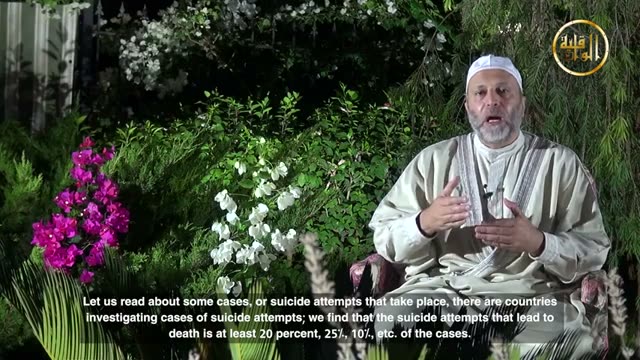
Let us examine the circumstances or attempts at suicide that occur. Some countries record cases of attempted suicide and find that only a small proportion—such as twenty per cent, one quarter, ten per cent, and so forth—result in death.
Why did the others fail even though they deliberately tried to kill themselves? Quite simply, because they were not enabled to do so, and the decision was not theirs.
Similarly, many people have attempted to kill others; some of these attempts result in death, while others do not.
This means that a person does not have the final decision over whether he kills or is killed. He may be enabled to do so, or he may not. Since in many cases he is not enabled, this means that killing is not in his hands. He directly undertakes the act of killing, but the result of that act—the result of the attempted killing—is not in his hands. Therefore, it cannot be said that the cause of death is these things that we observe.
Evidence from reality that circumstances do not cause death
In many statistics and news reports that we read each day, we hear of patients entering critical conditions. Doctors say that such a condition would invariably lead to death. Yet they are sometimes surprised when the person recovers and returns to full health. Doctors are well aware of this. They say: ‘In our judgement, we thought he was heading towards death, yet he recovers and then lives for years, perhaps for decades.’
Conversely, doctors also say: this person’s condition has passed the critical stage; it is now stable, and we are no longer concerned. Yet suddenly, without warning, they deteriorate and die.
How many people have ingested poison yet survived? How many have been afflicted—something we hear daily—with cancer, which is said to be almost always fatal? Yet we also hear of cases where individuals have recovered from this deadly disease.
All of this shows that these are circumstances, not causes. A knife strike is not the cause of death, because death may result from it or may not. If death does result, then it occurred in the circumstance of a knife strike.
The person who died after being shot was in the circumstance of having been fired upon—that is one of the circumstances of death. The individual who died from a heart attack had his death occur under the circumstance of a cardiac arrest, yet the heart attack itself was not the cause of his death.
These are circumstances, not causes. Therefore it is correct to say: ‘The circumstances vary but death remains singular’, whereas it is incorrect to say: ‘The causes vary but death remains singular’.
I return once more to this point. We have already established that the false notion—that man employs these attributes and thereby kills—is invalid; for in many cases, a person has attempted [to cause death] yet failed, achieved nothing, and succeeded not at all. All of this serves as evidence that those attributes are not what caused death, nor is any human action in attempting to kill another or oneself the true cause of death. Instead, what is observed and perceived is that the actual cause of death lies elsewhere—unlike those circumstances which people mistakenly regard as causes.
What is the genuine cause of death?
Here, a questioner asks: if none of these circumstances are causes of death, then what is the true cause of death?
We say: were a person left to reflect with his intellect in order to arrive at the true, unseen cause of death—something neither tangible nor perceptible—he would never attain it. A person senses and perceives that those imagined causes which people assume are not the actual cause of death.
Yet he cannot, through his intellect alone or by sheer reason, arrive at knowledge of the true cause of death.
Here is the transmitted evidence—the revelation from Allah, exalted be He. This is a defining trait of believers who have faith in Allah, His Book, and His Messenger whom He sent.
Thus, the believer who possesses knowledge from Allah, the Exalted—knowledge revealed by Him—is the one who can definitively affirm that the sole cause of death is the termination of the lifespan (ajal).
This matter is confirmed in several Qur’anic verses and also in numerous hadiths of the Prophet (saw).
Come, let us look together at some of these verses.
Transmitted Evidence that the Termination of the Lifespan (ajal) Is the Cause of Death
Here I shall read specifically from The Islamic Personality, Volume One, by Imam Taqi al-Din al-Nabhani, may Allah have mercy upon him. In a discussion entitled ‘The Termination of the Life-Span [ajal] is the Sole Cause of Death’, he says.
He says: ‘This has been mentioned in numerous verses.’ He, exalted be He, says:
﴿ وَمَا كَانَ لِنَفْسٍ أَن تَمُوتَ إِلَّا بِإِذْنِ ٱللَّهِ كِتَـٰبًا مُّؤَجَّلًا ﴾
‘No soul can ever die except by Allah’s leave and at a term appointed’ [3:145].
That is, death is fixed with Allah, exalted be He; He has written it at the time of its appointed lifespan, meaning that He has placed it at a specific time.
﴿ كِتَـٰبًا مُّؤَجَّلًا ﴾
‘at a term appointed’ [3:145],
meaning fixed for an appointment with a defined, limited and timed lifespan. That is, He has written death as an appointed, timed decree until a known lifespan that is neither advanced nor delayed.
And He, exalted be He, says:
﴿ ٱللَّهُ يَتَوَفَّى ٱلْأَنفُسَ حِينَ مَوْتِهَا ﴾
‘It is Allah Who takes away the souls at the time of their death’ [39:42].
That is, He is the One who causes the souls to die when they die, and He removes that by which they are alive: He takes from a person their heartbeat, or the connection of their head to their body, or the air they breathe. Thus He, glorified be He, determines when death occurs and how—that is, the circumstance in which death occurs.
And He, exalted be He, said, reporting the words of His Prophet Ibrahim, peace be upon him:
﴿ رَبِّىَ ٱلَّذِى يُحْىِۦ وَيُمِيتُ ﴾
‘My Lord is He Who gives life and causes death’ [2:258].
Among the names of Allah, exalted be He, are the Giver of Life and the Bringer of Death. That is, He is the One who directly creates life and brings it into existence, and He is the One who directly brings about the act and occurrence of death.
And He, exalted be He, says:
﴿ وَٱللَّهُ يُحْىِۦ وَيُمِيتُ ﴾
‘It is Allah Who gives life and causes death’ [3:156].
Allah, exalted be He, said this in response to the statement of those who disbelieved. The verse is:
﴿ يَـٰٓأَيُّهَا ٱلَّذِينَ ءَامَنُوا۟ لَا تَكُونُوا۟ كَٱلَّذِينَ كَفَرُوا۟ وَقَالُوا۟ لِإِخْوَٰنِهِمْ إِذَا ضَرَبُوا۟ فِى ٱلْأَرْضِ أَوْ كَانُوا۟ غُزًّى لَّوْ كَانُوا۟ عِندَنَا مَا مَاتُوا۟ وَمَا قُتِلُوا۟ لِيَجْعَلَ ٱللَّهُ ذَٰلِكَ حَسْرَةً فِى قُلُوبِهِمْ ۗ وَٱللَّهُ يُحْىِۦ وَيُمِيتُ ۗ وَٱللَّهُ بِمَا تَعْمَلُونَ بَصِيرٌ ﴾
‘O you who believe! Be not like those who disbelieve and who say to their brethren when they travel through the earth or go out to fight, “If they had stayed with us, they would not have died or been killed,” so that Allah may make it a cause of regret in their hearts. It is Allah Who gives life and causes death, and Allah is All-Seer of what you do’ [3:156].
That is, the matter is in Allah’s hands. He may keep the traveller and fighter alive and cause the resident and the one who remains at home to die, as He wills.
And He, exalted be He, says:
﴿ أَيْنَمَا تَكُونُوا۟ يُدْرِككُّمُ ٱلْمَوْتُ وَلَوْ كُنتُمْ فِى بُرُوجٍ مُّشَيَّدَةٍ ﴾
‘Wheresoever you may be, death will overtake you even if you are in fortresses built up strong and high’ [4:78].
People think that if they shelter in fortifications, they will be safe from death. Allah, exalted be He, tells them:
﴿ وَلَوْ كُنتُمْ فِى بُرُوجٍ مُّشَيَّدَةٍ ﴾
‘even if you are in fortresses built up strong and high’ [4:78],
meaning in fortresses.
And He, exalted be He, says:
﴿ قُلْ يَتَوَفَّىٰكُم مَّلَكُ ٱلْمَوْتِ ٱلَّذِى وُكِّلَ بِكُمْ ﴾
‘Say: “The angel of death, who is set over you, will take your souls”’ [32:11].
He was appointed—who appointed him? Allah, exalted be He. The One who appointed the angel of death is Allah. Allah, exalted be He, is therefore the One Who gives life and causes death, and it is Allah, the Mighty and Majestic, Who takes a person’s soul.
﴿ قُلْ يَتَوَفَّىٰكُم مَّلَكُ ٱلْمَوْتِ ٱلَّذِى وُكِّلَ بِكُمْ ﴾
‘Say: “The angel of death, who is set over you, will take your souls”’ [32:11].
This is an answer to the words of the disbelievers, who expressed astonishment and denial: how can a person live again after becoming dust and after his body has become lost in the earth?
﴿ وَقَالُوٓا۟ أَءِذَا ضَلَلْنَا فِى ٱلْأَرْضِ أَءِنَّا لَفِى خَلْقٍ جَدِيدٍۭ ۚ بَلْ هُم بِلِقَآءِ رَبِّهِمْ كَـٰفِرُونَ ﴾
‘And they say, “When we are lost in the earth, shall we indeed be created anew?” Nay, but they deny the meeting with their Lord!’ [32:10].
﴿ قُلْ يَتَوَفَّىٰكُم مَّلَكُ ٱلْمَوْتِ ٱلَّذِى وُكِّلَ بِكُمْ ثُمَّ إِلَىٰ رَبِّكُمْ تُرْجَعُونَ ﴾
‘Say: “The angel of death, who is set over you, will take your souls, then you shall be brought to your Lord!”’ [32:11].
That is, he takes your souls in full; tawaffi means taking the soul in full.
And He, exalted be He, says:
﴿ قُلْ إِنَّ ٱلْمَوْتَ ٱلَّذِى تَفِرُّونَ مِنْهُ فَإِنَّهُۥ مُلَـٰقِيكُمْ ﴾
‘Say: “Verily, the death from which you flee will surely meet you”’ [62:8].
Observe and consider this magnificent expression, this great eloquence: a very frightening comparison. Imagine a person fleeing from a beast, thinking that it is pursuing him from behind, only to find it in front of him, meeting him face to face. He thinks the beast is behind him and runs forward to flee from it, only to see it ahead of him. Death is like this:
﴿ قُلْ إِنَّ ٱلْمَوْتَ ٱلَّذِى تَفِرُّونَ مِنْهُ فَإِنَّهُۥ مُلَـٰقِيكُمْ ۖ ثُمَّ تُرَدُّونَ إِلَىٰ عَـٰلِمِ ٱلْغَيْبِ وَٱلشَّهَـٰدَةِ فَيُنَبِّئُكُم بِمَا كُنتُمْ تَعْمَلُونَ ﴾
‘Say: “Verily, the death from which you flee will surely meet you. Then you will be returned to the Knower of the unseen and the seen, and He will inform you of what you used to do”’ [62:8].
And He, exalted be He, says:
﴿ إِذَا جَآءَ أَجَلُهُمْ فَلَا يَسْتَـْٔخِرُونَ سَاعَةً ۖ وَلَا يَسْتَقْدِمُونَ ﴾
‘When their term is reached, they can neither delay it an hour nor advance it’ [10:49].
The expression ‘hour’ here does not mean the sixty minutes we understand by it in this age. In Arabic, it refers to a short period of time.
﴿ فَلَا يَسْتَـْٔخِرُونَ سَاعَةً ۖ وَلَا يَسْتَقْدِمُونَ ﴾
‘They can neither delay it an hour nor advance it’ [10:49].
And He, exalted be He, says:
﴿ نَحْنُ قَدَّرْنَا بَيْنَكُمُ ٱلْمَوْتَ ﴾
‘And We have decreed death to you all’ [56:60].
That is, We have assigned every person a death determined for its appointed time. In other words:
﴿ نَحْنُ قَدَّرْنَا بَيْنَكُمُ ٱلْمَوْتَ ﴾
‘And We have decreed death to you all’ [56:60]:
We determined it and apportioned it among you as provision is apportioned, with differences and variation as Our volition (mashi’ah) requires. Thus your lifespans differ: short, long and medium.
These verses—and others that are definitive in authenticity (qat‘ī al-thubūt) and definitive in meaning (qat‘ī al-dalālah)—clearly indicate one unmistakable meaning: it is Allah, exalted be He, who gives life and causes death in reality, without any cause or effect being present. Human death occurs solely through the termination of one’s lifespan (ajal), not as a result of any circumstance that may have arisen, which someone might mistakenly take to be the cause.
The Meaning of the Verses: The Lifespan Can Neither Be Advanced nor Delayed
Thus, noble brothers, when we read the Book of Allah—exalted is He—and these clear, decisive verses that admit no doubt, it becomes evident that death has but one cause: the termination of a person’s lifespan (ajal).
For when the termination of a person’s lifespan (ajal) arrives, there is no means to advance it and none to postpone it.
Allah, exalted be He, exposed the hypocrites when they said:
﴿ يَقُولُونَ لَوْ كَانَ لَنَا مِنَ ٱلْأَمْرِ شَىْءٌ مَّا قُتِلْنَا هَـٰهُنَا ﴾
‘They say, “If we had any say in the matter, we would not have been killed here”’ [3:154].
Allah, exalted be He, replies to them:
﴿ قُل لَّوْ كُنتُمْ فِى بُيُوتِكُمْ لَبَرَزَ ٱلَّذِينَ كُتِبَ عَلَيْهِمُ ٱلْقَتْلُ إِلَىٰ مَضَاجِعِهِمْ ﴾
‘Say, “Even if you had been in your homes, those for whom death had been decreed would still have gone forth to the places where they were to die”’ [3:154].
﴿ يَقُولُونَ لَوْ كَانَ لَنَا مِنَ ٱلْأَمْرِ شَىْءٌ مَّا قُتِلْنَا هَـٰهُنَا ﴾
‘They say, “If we had any say in the matter, we would not have been killed here”’ [3:154].
That is, if we had decided this battle, its place, its time and its arrangement,
﴿ مَّا قُتِلْنَا هَـٰهُنَا ﴾
‘we would not have been killed here’ [3:154].
This is hypocritical speech.
﴿ قُل لَّوْ كُنتُمْ فِى بُيُوتِكُمْ لَبَرَزَ ٱلَّذِينَ كُتِبَ عَلَيْهِمُ ٱلْقَتْلُ إِلَىٰ مَضَاجِعِهِمْ ﴾
‘Say, “Even if you had been in your homes, those for whom death had been decreed would still have gone forth to the places where they were to die”’ [3:154].
That is, each one of them would have gone out to the place where he was to die, because Allah, exalted be He, had decreed death for him.
Real-Life Evidence that the Appointed Lifespan Is Inevitable
This is something we see in our lives every day and hear about every day. How many people have moved from one place to another to flee death? Have you not heard of those tens—indeed, hundreds—who fled wars, took to the sea to escape death and headed for safe countries, only for the sea to swallow them? Their lifespan ended at that time and in that place, and drowning was the circumstance of their death. They wanted to flee bombardment and fire, only to be killed by water, by drowning.
How many people have fled a suspected killer, believing that such-and-such was pursuing them with intent to kill—only to find themselves meeting their killer in another place where they had no knowledge of him? How often have we witnessed fathers sending their children away from their homeland out of fear for their safety, only for those children to meet their fate there instead?
How many times does one find the circumstance where a person says while driving: ‘This is a hazardous road; I will steer clear of it’—only to choose an alternative path and then meet their end there?
Taking Precautions Does Not Change the Lifespan
Of course, this does not open the door to saying that a person may neglect to seek circumstances of safety and avoid circumstances of danger. It is a person’s duty to investigate circumstances of danger and circumstances of safety and to strive in this regard. This is a Shari’ah ruling concerning human actions.
Faith means that a person cannot escape their appointed time of death; neither can they advance it nor postpone it.
But Allah, exalted be He, commanded man to take precautions:
﴿ يَـٰٓأَيُّهَا ٱلَّذِينَ ءَامَنُوا۟ خُذُوا۟ حِذْرَكُمْ ﴾
‘O you who believe, take your precautions’ [4:71].
Taking precautions, exercising caution and seeking safety are therefore a Shari’ah ruling commanded by Allah, exalted be He.
To believe—or even to suppose—that such vigilance and foresight can change the predetermined time of your death is another matter entirely. The moment of the termination of one’s lifespan cannot be brought forward or postponed in any way.
The Effect of Belief in the Lifespan (ajal) on the Self and Conduct
Faith in the believer is not merely a theoretical belief without any reflection upon human life. Every act of faith that Allah, exalted be He, has commanded is commanded because it affects one’s self, one’s life and conduct.
How? Do you not see the difference between a believer who goes to jihad in high spirits, neither anxious nor afraid, because he knows with absolute certainty that he will die only on his appointed day and at the lifespan determined for him? Do you not see the difference between him and someone who goes to fight under compulsion because of mandatory service imposed by the law of his state, and who fears that death may come to him at any moment?
The believer remains in a state of calm and trust in Allah, exalted be He. He has entrusted and submitted his affair to Allah. He knows that Allah, exalted be He, Who gave him life is the One Who will cause him to die, and that his death does not depend on his going to the battlefield. When his lifespan ends, he will die even if he is in his bed:
﴿ لَبَرَزَ ٱلَّذِينَ كُتِبَ عَلَيْهِمُ ٱلْقَتْلُ إِلَىٰ مَضَاجِعِهِمْ ﴾
‘Those for whom death had been decreed would still have gone forth to the places where they were to die’ [3:154].
He who does not believe that the termination of his lifespan (ajal) lies solely with Allah—exalted and glorified be He—will find himself in a state of terror, fear, and agitation whenever he hears mention of death. Whenever he senses he is in a place where danger may lurk—or even where there is any trace of risk—he will be overwhelmed by such emotions.
Observe the reality of the believer who lives in lands where wars have broken out. You will find him placing reliance on Allah, the Exalted, while danger encircles him on all sides.
The disbeliever who does not believe that the termination of his lifespan (ajal) lies solely in Allah’s hands—exalted and glorified be He—will find himself in a state of agitation and panic. Indeed, if he is told there is even the slightest possibility of danger, he may suffer what is known as hysteria. This is because he assumes that it is within his own power to avoid such danger, and thus he must take every measure to prevent it. He believes that this danger alone brings about death, so he falls into a state of terror, feeling as though some monstrous creature is lurking, ready to kill him at any moment.
When the believer is certain that his lifespan (ajal) rests solely with Allah, exalted is He, he rises above all fears that afflict people. He does not spend his life in fear of a tyrant’s oppression, nor dreading that illness may strike and kill him, nor fearing danger or war or any sudden calamity that might take his life. Instead, he fulfils what is required of him in terms of precaution—taking the necessary measures—and executes Allah’s command by exercising caution. Yet he remains firmly convinced that his destiny and soul are in Allah’s hands alone. There is no scope for advancing or delaying this lifespan (ajal), so he remains at peace, with a tranquil mind and contented heart, proceeding towards his Lord with complete assurance.
We ask Allah, the Exalted, that He makes us among those who believe with certainty—while we are fully convinced by His grace. We ask Allah, the Mighty and Majestic, to sustain this faith in us and to keep it ever-present within our souls at every moment: that the termination of our lifespan (ajal) is in the hands of Allah alone; He is the One who causes death, and no human, nor danger, nor illness can shorten our life before its appointed time arrives. Our ajal is what carries us from this world, and as long as our ajal has not come to pass, we remain alive until Allah permits it.
Let us fill these days that Allah, the Exalted, has decreed for us in this life—days whose span we do not know—with obedience to Him, with striving for His religion’s support and elevating His word. It is He, the Exalted, who grants success, and it is He who makes easy for every person what they were created for.
O Allah, make us among those who are enabled to do good, stand between us and evil, and make us among Your righteous servants. We send prayers and peace upon our master Muhammad, his family, his companions, and those who follow his guidance with excellence until the Day of Judgement.
Questions and Discussion
A question from my brother Nadhir ibn Salih: May Allah bless you for what you have presented. May Allah honour you. To what extent does the correct understanding that the lifespan is in Allah’s hands influence a person’s conduct, especially for da‘wah carriers and those who openly proclaim the truth?
I think that my noble brother has already heard the answer at the conclusion of this topic, following his question. Yes.
The Effect of Belief in the Lifespan (ajal) on the Da‘wah Carrier
Belief that the lifespan is in Allah’s hands, exalted be He, is among the greatest weapons with which the da‘wah carrier who struggles for this religion and undertakes political struggle against unjust rulers and tyrants can arm himself. The same applies to the mujahid who faces horrors, crosses minefields and walks amid shells and bullets, so long as he is reassured that the lifespan is in Allah’s hands, exalted be He. No one but the believer possesses this.
How Do Taking Precautions and Belief in the Lifespan Fit Together?
A question from Hamid al-Tunisi: Could you elaborate on how to apply caution as a Shari’ah ruling while upholding the belief that one’s lifespan is in Allah’s hands—without experiencing any contradiction between these two matters?
My dear brother Hāmid, there is a fundamental difference between believing that the termination of your lifespan (ajal) lies in Allah’s hands—exalted and glorified be He—and thus remaining at ease knowing you will only die at the moment written for you.
The other matter is that you must adhere in your actions to what Allah, exalted be He, has commanded you. Allah, the Mighty and Majestic, commanded you to take precautions. He, exalted be He, says:
﴿ يَـٰٓأَيُّهَا ٱلَّذِينَ ءَامَنُوا۟ خُذُوا۟ حِذْرَكُمْ ﴾
‘O you who believe, take your precautions’ [4:71].
And He, exalted be He, says:
﴿ وَلَا تُلْقُوا۟ بِأَيْدِيكُمْ إِلَى ٱلتَّهْلُكَةِ ۛ وَأَحْسِنُوٓا۟ ﴾
‘Do not cast yourselves into destruction with your own hands, and do good’ [2:195].
Here the scholars explained that the verse has the following meaning, as its context indicates:
﴿ وَأَنفِقُوا۟ فِى سَبِيلِ ٱللَّهِ وَلَا تُلْقُوا۟ بِأَيْدِيكُمْ إِلَى ٱلتَّهْلُكَةِ ﴾
‘Spend in the way of Allah, and do not cast yourselves into destruction with your own hands’ [2:195].
That is:
﴿ وَأَنفِقُوا۟ فِى سَبِيلِ ٱللَّهِ ﴾
‘Spend in the way of Allah’ [2:195],
meaning: spend on preparation, because preparation is among the means of strength, and strength is among the means of defending oneself, the Ummah and the religion. If you take the available practical means, you have done what Allah, exalted be He, commanded you. If you do not, you have cast yourself into destruction because you failed to do what Allah, exalted be He, commanded you.
Here the distinction becomes clear between one who deliberately courted destruction and was killed—yet died only at his predetermined lifespan (ajal)—but will still be held accountable for his actions in this regard, and another who was killed while fulfilling Allah’s obligations upon him: taking necessary precautions, exercising due caution, and understanding the patterns of life.
The difference between the believer and others is therefore that when he takes precautions and relies on the established laws of life, he knows, while doing so, that they are not the decisive cause and that they will not inevitably prevent his destruction or what Allah, exalted be He, has determined and decreed for him. He therefore does not sanctify these means or treat them as sacred.
Observe how the West, in its current thinking, has sanctified science and made it an idol besides Allah, exalted is He. They believe that if they perfect taking the available practical means, then they will inevitably attain their desired result.
I still recall from many years ago when a hurricane and earthquakes struck an area in the United States, and the American president stood in a state of confusion saying: ‘We were unable to control this matter.’ He was astonished. They believe that if they grasp the causes of material things and the laws governing them—and if they seize the causes of life—they will inevitably reach their desired outcome; so how did this happen?
As for the believer, he says: «قَدَرُ اللَّهِ وَمَا شَاءَ فَعَلَ» — ‘Allah has decreed, and whatever He wills He does’ [Sahih Muslim 2664]. It is within our power to follow the laws of life and discover the properties of things—the characteristics of things—so that we can use them, benefit from them and try to avert certain dangers.
But these matters are not in our hands; we do not control them. The final matter remains that Allah, exalted be He, has decreed when a particular person will die and when he will not. A person therefore neither exalts himself nor blames himself at every moment by asking: ‘Why was I unable to prevent this death from occurring?’
Observe those who do not believe that the termination of the lifespan (ajal) is in Allah’s hand—when sudden death occurs, they refuse to accept it or submit. What does this mean? It was an outcome they rejected as possible. They then seek someone to blame: How did so-and-so die?
Do you not find that many people, when a patient close to them dies in hospital, will accept nothing short of holding the doctors responsible?
If only they were certain that the termination of one’s lifespan (ajal) is in Allah’s hands, they would have entrusted their affairs entirely to Him—exalted be He—and not treated the physician as though he could give life or take it away.
This is the great difference between believing that the lifespan is in Allah’s hands and working to understand the established laws of life, taking precautions and so on, while remaining certain that their results are not inevitable.
Comment on the Effect of These Ideas
A comment from Brother Bilal Mustafa: ‘These ideas are sound and powerful, and Muslims are capable of regaining their dignity through these ideas. May Allah help you in this.’
May Allah reward you on our behalf with the best reward. We ask Allah, exalted be He, to accept your supplication, to make us among those who excel in word and deed, and to accept from us.
Conclusion
This is what we have for today, dear brothers. We ask Allah, exalted be He, to accept it from us, to protect us from slips and errors, and to forgive us for any slips and errors we have made. He, exalted be He, is All-Hearing and Responsive. Peace, mercy and blessings of Allah be upon you.