Introduction
Peace be upon you, mercy and blessings of Allah. In the name of Allah, the Most Merciful, the Most Compassionate. All praise is due to Allah, and peace and blessings be upon His Messenger, his family, companions, and those who follow them in truth. Dear brothers, welcome to another session of Halaqa Online. We continue discussing the Sunnah.
We discussed the definition of the Sunnah and its authority as the second source of legislation after the Book of Allah, glorified and exalted be He. We established the authority of the Sunnah and dispelled the misconceptions of those who call for limiting oneself to the Qur’an—the Book of Allah, exalted be He—and claim that there is no revelation other than the Qur’an. We proved with definitive evidence that the Prophetic Sunnah, about which he, may Allah bless him and grant him peace, said, «أُوتِيتُ القرآنَ ومثلَه معه»—“I was given the Qur’an and something like it along with it” [see Sunan Abi Dawud, 4604]—is revelation from Allah, exalted be He, and a source of legislation just like the Noble Qur’an. We discussed this in detail.
Objections Directed at the Hadith Heritage
To complete this topic today, I would like to address some objections raised by those who doubt the Sunnah and seek its exclusion as a source of legislation. These are doubts they raise—doubts that we would not have engaged with had it not been for their agitation. They are thoroughly discussed in specialised books, particularly in works on the science of hadith terminology. However, since this matter is being heavily scrutinised by doubters of Islamic Shari’ah who aim to dismantle most of its legal rulings and abolish them entirely, I intend to briefly touch upon some of the issues and objections they raise concerning the Sunnah—specifically regarding the transmission of noble hadiths.
They question whether the hadith heritage in our hands has been transmitted correctly from the Messenger of Allah, may Allah bless him and grant him peace. After denying that the Prophet’s words, actions and tacit approvals are a source of legislation, they deny that they represent revelation. To continue their attack on the Prophetic Sunnah, they therefore began attacking the hadith heritage.
The Allegation of Delayed Hadith Compilation
Among the issues they raise about what has been transmitted to us and compiled in the Sahih collections, the Sunan works and hadith books generally is the question of when the reports were transmitted or written down. Most of the hadiths we read today were compiled in the third century AH. They ask: How can we trust that hadiths attributed to the Prophet, may Allah bless him and grant him peace, are authentic after more than two and a half centuries have passed—and in the case of some books slightly longer? Or further still: how can we believe that what was recorded approximately two and a half centuries, or three centuries, after the time of the Prophet, may Allah bless him and grant him peace, actually reflects words spoken by him? Some resort to exaggeration, relying on ordinary people’s limited knowledge of Islamic history, hadith terminology and how the hadiths were transmitted. They claim that the hadiths were recorded only after the time of the Prophet, may Allah bless him and grant him peace, then the time of the Rightly Guided Caliphs, followed by the Umayyad caliphs and the Umayyad Caliphate, all the way to the beginning of the Abbasid Caliphate. They depict many eras and generations passing before authors appeared and wrote down reports that they attributed to the Messenger of Allah, may Allah bless him and grant him peace. Some even go so far as to count the caliphs who succeeded one another from the Prophet’s death until the period of hadith compilation. They say: First came the periods of the four Rightly Guided Caliphs, then all the Umayyad caliphs, and so on. This gives people the false impression that many eras and generations separated the time of the Prophet, may Allah bless him and grant him peace, from the writing and compilation of hadith.
The truth is that this constitutes a form of deception—indeed, more than mere deception; it is a deliberate distortion and fabrication. The issue at stake is not how many years have passed nor what number of caliphs succeeded one another. A caliph’s reign might last months, a year, or just a few years. Nor does the matter concern which eras elapsed from the time of the Prophet may Allah bless him and grant him peace through that of the Rightly Guided Caliphs, then to the Umayyad era, and onward—this is not what we are addressing here.
The Three Generations and the Chain of Transmission
The real question is simply this: through which generations was the noble Prophetic hadith transmitted before it was compiled? Dear brothers, compilation took place by receiving reports from the Followers of the Followers. In other words, the hadith passed through three generations before it was compiled. The overwhelming majority of hadiths were compiled through reports from the Followers of the Followers, from the Followers, from the Companions who narrated from the Messenger of Allah, may Allah bless him and grant him peace. Three generations. The sceptic relies on people’s limited knowledge and leads them to imagine that many eras and generations had passed and that the chain he calls fabricated and imaginary consists of a long series of narrators.
The fact is that the period in which the hadiths were compiled was the time of the Followers of the Followers. This was the generation—or qarn, as it is called in Arabic. In the original Arabic usage, a qarn does not mean one hundred years, as it does by present-day convention; it means a generation. The Prophet, may Allah bless him and grant him peace, said, «خير الناس قرني»—“The best people are my generation”—meaning the Companions; «ثم الذين يلونهم»—“then those who follow them”—meaning the Followers; «ثم الذين يلونهم»—“then those who follow them”—meaning the Followers of the Followers; and «ثم يفشو الكذب بعد ذلك»—“then lying will become widespread after that” [see Sahih al-Bukhari, 6695; Sahih Muslim, 2536]. Notice that the compilation took place through receiving reports from the generation of the Followers of the Followers, who narrated from the Followers. They, in turn, narrated from the Companions, who transmitted what they had heard from the Messenger of Allah, may Allah bless him and grant him peace.
It is therefore not as they lead people to believe—that the Prophetic heritage was written down after many eras and generations had passed since the time of the Messenger of Allah, may Allah bless him and grant him peace. No. Any one of you can open Sahih al-Bukhari, Sahih Muslim, Sunan al-Tirmidhi, Musnad Imam Ahmad or another collection and examine the chain of transmission. You will find that the narrators belong to these generations.
Yes, the chain may include more than three narrators because a Successor to the Successors might transmit from someone in his own generation among them, who relates from a Successor. That Successor, in turn, might relate from one of his contemporaries among the Successors, who transmits from a Companion of the Messenger of Allah may Allah bless him and grant him peace. Thus sometimes the chain is limited—directly connected: one Successor to the Successors narrates from one Successor, who relates from one Companion, who transmitted from the Prophet may Allah bless him and grant him peace. Consequently, it is not as some suggest that a long period separates those who recorded hadiths from the time of the Messenger of Allah may Allah bless him and grant him peace. There are no intervening centuries or generations between them—this is the key point.
Conditions of the Chain of Transmission and Narrator
The most important aspect—and the one we have mentioned in previous sessions—is that transmission was never confined merely to naming the narrators. Rather, strict conditions were imposed on the chain connecting the compiler back to the Messenger of Allah, may Allah bless him and grant him peace. These are fundamental requirements distinct from those pertaining to the hadith text itself and form part of what is known as critical hadith analysis. As previously noted, an authentic transmission must have an unbroken chain from beginning to end. The compiler must be connected to the Follower of the Followers who transmitted to him, that person to the narrator above him, and so on until the chain reaches the Messenger of Allah, may Allah bless him and grant him peace. The chain must be fully connected without interruption.
And that each one of these narrators must be attested as trustworthy (thiqah). What does this term mean here? Certainly, it is not what people might assume—that we attribute infallibility to them. If they were infallible, there would have been no need for the science of narrator criticism and accreditation (al-jarh wa al-ta’dil), nor for studies on narrators that examine their biographies in detail to determine whether each was trustworthy or not.
A trustworthy narrator is upright. Uprightness does not mean that a person is infallible or has never committed a sin: «كُلُّ ابْنِ آدَمَ خَطَّاءٌ، وَخَيْرُ الْخَطَّائِينَ التَّوَّابُونَ»—“Every son of Adam commits sins, and the best of those who commit sins are those who repent” [al-Tirmidhi, 2499]. No one is infallible except the Messenger of Allah, may Allah bless him and grant him peace. Upright means that the person is not known for immorality or lying and is not known for anything that undermines honourable conduct; he displays none of the traits that undermine it. In addition to uprightness, he must possess precision: he must be known to transmit hadith well and to memorise and transmit accurately. If it is established that he does not transmit accurately, that he becomes confused while transmitting, forgets and unintentionally distorts the report, or transmits it incorrectly, he is excluded from the trustworthy narrators from whom hadiths are accepted.
Whoever examines the science of hadith terminology will see how scholars meticulously scrutinised these individuals, classifying them into ranks: the highest layer being the most trusted, followed by those below in rank. They categorised narrators between those who deviated and those who generally conformed, and so on.
Through their rigorous examination of these matters, they established principles no other nation has ever applied within its cultural heritage—principles that elevate the transmission of hadith to an exceptionally high level of trustworthiness, even if it does not reach definitive certainty (qat’i). As previously mentioned, definitive authenticity is unnecessary for Shari’ah rulings and even for reports that are not foundational to the religion.
Critique of Narration and Critical Study
Scholars made an immense effort to filter weak reports from hadith through the science of transmission, but their work was not limited to examining the chain of transmission. An authentic hadith has a continuous chain in which every narrator, from the beginning of the chain to its end, is upright and precise. It must also be neither irregular nor affected by a hidden defect. An irregular report is one in which someone narrates the same hadith in a way that differs from other, more reliable narrations. That divergence can undermine its authenticity even when examination of its chain otherwise fulfils all the conditions. The hadith scholars therefore also required that a hadith contain no irregularity and no defect that undermines its authenticity.
The defect may lie in the matn—the text of the noble hadith itself. If, for example, a hadith conflicts with verses from Allah’s Book that are definitive in meaning—we say definitive in meaning, not in confirmation, because the entire Qur’an is definitive in confirmation—and the conflict cannot be reconciled with the Qur’an’s definitive meanings, this constitutes a defect for which the hadith is rejected. It has, for example, been narrated from the Prophet, may Allah bless him and grant him peace, that he said: “Allah, glorified and exalted be He, provides for His servant in proportion to his effort”—or words to that effect: in proportion to his striving.
This hadith is rejected outright—not only because its chain of transmission fails to meet the conditions for authenticity—but also due to its content alone. Scholars relied on this meaning to reject it, as the Qur’an contains definitive verses with clear indication that Allah, exalted is He, is the Provider (Ar-Razzaq), and provision does not depend upon a servant’s striving. A person may be provided while striving or without striving; they may be denied provision even if they strive, or granted it without any effort at all. This content alone suffices to reject this hadith, for its meaning contradicts the definitive verses of the Qur’an—so much so that scholars of transmission (muḥaddithūn) have indeed rejected it.
I am not now listing examples, as they would be lengthy; each of us can consult hadith books. Here I refer to a valuable work in this field: Manhaj al-Naqd fi ‘Ulum al-Hadith by Shaykh Nur ad-Din ‘Itr, which is highly regarded in this discipline.
Historical Evidence for the Method of Hadith Scholars
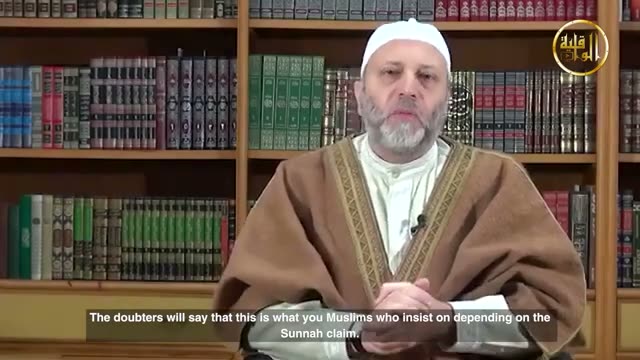
Dear brothers, no other nation has known efforts like those made by Muslim scholars in this field. The sceptics may say: “That is merely what you Muslims say, because you insist on relying on the Prophetic Sunnah.” The truth, however, is that objective and fair non-Muslim researchers have also recorded these facts. With complete confidence and clarity, I have brought one of the finest examples of this today.
He was a professor specialising in history who had studied at American universities and lived in the twentieth century. He died in 1965. He was a Christian, not a Muslim, from the Mount Lebanon region, and his name was Asad Rustum.
He wrote—and authored—a book outlining methodology for historical writing, verifying reports of history, and distinguishing between authentic and unauthentic historical accounts. So deeply impressed was he by the science of hadith terminology that he titled his work Mustalah al-Tarikh. This book remains taught to this day; it is still studied in universities—though not Islamic ones—for they possess their own extensive works on hadith terminology, rendering reliance on this text unnecessary.
However, this book is taught at universities concerned with history—that is, in university history departments. Personally, when I studied history at the Lebanese University, Asad Rustum’s book Mustalah al-Tarikh was among the works on my syllabus.
From the Introduction to The Terminology of History
Listen, I will read an excerpt from the introduction to Professor Asad Rustum’s book Mustalah al-Tarikh. He says: ‘I immersed myself in studying books on terminology and collected most of them. The more knowledge I gained about them, the greater my admiration for their authors became. I still recall an incident that occurred to me in 1936 in Damascus when the Syrian government celebrated a thousand years since al-Mutanabbi’s death. I was among those who arrived at the Umayyad capital to commemorate the poet of the Arabs and stayed there for some time, during which I examined manuscripts in the Zahiriyah Library.’
As soon as I began working, I realised that I was confronted with the greatest collection of books on Prophetic hadith in the world. Within this library’s archives are numerous master manuscripts in this field, some bearing the handwriting of leading authorities in hadith. Among what I found there was an ancient copy of a treatise on the science of hadith terminology by Qadi Iyad, who died in 544 AH. The copy had been made by his nephew in 595 AH. I had previously read about the work in some treatises on terminology, so I copied it and began studying it and understanding its meanings.
It is therefore among the most valuable works written on its subject, and through it al-Qadi Iyad rose to the highest levels of scholarship and precision in his age. In fact—and these are still Asad Rustum’s words—not even the leading historians of Europe and America are capable of writing anything better than it in some respects, despite seven centuries having passed since it was written.
The precision of thought and deduction it displays under the heading “Verifying the Report and Establishing the Wording” matches what appears on the same subject in the most important European works from Germany, France, America and England. We have quoted extensively from Qadi Iyad’s discussion of this subject in the chapter of our book entitled “Verifying the Text and Establishing the Wording”.
I am reading directly from Asad Rustum’s Mustalah al-Tarikh. At the beginning of his introduction, he wrote the following with complete clarity: «The first to organise the criticism of historical reports and establish rules for it were the scholars of the Islamic religion. They were compelled to pay close attention to the Prophet’s words and actions in order to understand the Qur’an and administer justice. They said:
﴿ إِنْ هُوَ إِلَّا وَحْىٌۭ يُوحَىٰ ﴾
“It is nothing but revelation revealed.” [53:4]
What was recited from him is the Qur’an, and what was not recited from him is the Sunnah. They therefore set about collecting, studying and scrutinising the hadiths, thereby enriching the discipline of history with rules whose foundations and essence remain respected in academic circles to this day.» These are the words of a distinguished historian, testifying to the science of hadith terminology and to the immense role it played in scrutinising the reports transmitted from the Messenger of Allah, may Allah bless him and grant him peace.
The Allegation of Hundreds of Thousands of Hadiths
I have answered one objection. I am not setting out everything that distinguishes the science of hadith terminology, for it is a vast discipline. I am now answering another objection they raise about hadiths and their sources. This is extremely important, and the subject must be examined carefully because it is unknown even to many Muslims. When they hear the sceptics, they become confused; some are surprised and unsettled by the Prophetic heritage. As is well known, there are hundreds of thousands of hadith reports from the Messenger of Allah, may Allah bless him and grant him peace. Anyone hearing this may naturally be surprised and wonder: How could hundreds of thousands of hadiths have been transmitted from the Messenger of Allah, may Allah bless him and grant him peace?
It is reported of Imam al-Bukhari—although he did not write this in his own books—that he compiled his work after examining six hundred thousand hadiths, or that he selected from six hundred thousand hadiths narrated from the Messenger of Allah, may Allah bless him and grant him peace, when he compiled al-Jami al-Sahih, known as Sahih al-Bukhari. The sceptics then ask how the Messenger of Allah, whose prophethood lasted twenty-three years, could have narrated six hundred thousand hadiths. They count the days of his prophethood, subtract the nights and the hours spent sleeping, working and so on, and then calculate how many hours he could have spent conveying these hadiths to his Companions. They conclude that the hours of the Prophet’s life, may Allah bless him and grant him peace, would not have been enough for him to utter all these hadiths, let alone more.
The Reality of What al-Bukhari Selected
How could al-Bukhari collect six hundred thousand hadiths and then select the ones he included in his book known as Sahih al-Bukhari, which contains fewer than three thousand? Where did he get them from? There is, of course, some deception in this claim. Let me quickly refute or disprove that last idea.
They attribute to al-Bukhari the claim that he gathered these hadiths and then selected from what he had gathered. Al-Bukhari did not say that. He said that he selected these hadiths from six hundred thousand that existed in his time, many of which had already been written down.
Writing of the Hadith and its Compilation before al-Bukhari and Muslim
Here, another point must be made. Those who cast doubt create the impression—often while knowing the facts themselves—that hadith was first written down in the time of Imam Ahmad, al-Bukhari and Muslim, whose hadith collections we consult today. They rely on people’s ignorance and lead them to believe something that is untrue. The hadiths of the Prophet, may Allah bless him and grant him peace, began to be written during his lifetime, although compilation was not widespread either in his time or in the time of the Companions. It is true that the Messenger of Allah, may Allah bless him and grant him peace, is reported to have prohibited writing hadith, saying, «لا تكتبوا عني إلا القرآن، ومن كتب عني غير القرآن فليمحه»—“Do not write anything from me except the Qur’an, and whoever has written anything from me other than the Qur’an should erase it” [see Sahih Muslim, 3004]. But it is also established that he, may Allah bless him and grant him peace, permitted hadith to be written and, in some cases, ordered it to be written. The command and prohibition have been reconciled in a completely clear manner.
He prohibited the writing of hadith when writing it could cause it to be confused with the Qur’an. At that time, he was keen for the Qur’an to be recorded without being confused with anything else, especially his own hadith, may Allah bless him and grant him peace. When the circumstances ensured that the writing of hadith would not be confused with the Qur’an, he permitted the writing of the Qur’an. There are hadiths concerning this. In any event, after the time of the Companions had passed and the era of the Followers had begun, increasing numbers of people started collecting and writing down the hadiths. Al-Bukhari—and before him Imam Ahmad, and others before him—as well as Muslim, Ibn Majah, al-Tirmidhi and the rest were therefore not the first people to compile hadiths, contrary to what some people imagine.
These scholars took upon themselves the task of collecting hadiths from their time that had been transmitted orally to them. They recorded both these oral transmissions and those already written down; some of their teachers would pass on to them manuscripts containing noble traditions. We know that books of hadith existed, as well as major works in jurisprudence composed before this period of systematic recording began. This jurisprudence was based upon the Book of Allah Most High and the Sunnah of His Messenger may Allah bless him and grant him peace. Imam al-Shafi‘i—who passed away early in the third century AH, in 205 AH—had works recorded from him: al-Umm and ar-Risalah. If we read al-Umm, which is a book of jurisprudence by al-Shafi‘i, we find it filled with hundreds of hadiths about the Prophet may Allah bless him and grant him peace, for he relied upon them as evidence.
Hadiths were already present among jurists, who used them as legal evidence and transmitted them orally. Some traditions circulated by word of mouth alone, while most were recorded—either in dedicated manuscripts for hadith compilation or within the jurisprudential works that scholars had begun to author. Imam Malik composed al-Muwatta’, which serves today as a primary reference for hadith. However, he wrote it fundamentally as a book of jurisprudence, arranging the traditions according to legal topics based on fiqh chapters. Thus, the hadith was already widespread and in circulation among people.
Then came the work of the famous compilers. The greatest and most authentic of these works was the book of Imam al-Bukhari, followed by that of his student Muslim, and then the other books. Some had been compiled before al-Bukhari and Muslim, while others were compiled afterwards and carried the work forward.
The Status of al-Bukhari and Muslim’s Two Authentic Collections
The difference between al-Bukhari and Muslim, on the one hand, and the other books, on the other, is that al-Bukhari and Muslim, may Allah have mercy on them, followed a very strict method when compiling and selecting hadiths. They confined themselves to hadiths of the highest strength. They were extremely meticulous when assessing narrators, the form and precision of the chain of transmission, whether a narrator’s report agreed with those of other narrators, and so on. Al-Bukhari and Muslim were meticulous in applying hadith terminology when selecting narrators and chains of transmission and in examining the content of the hadith through critical study. After Sahih al-Bukhari and Sahih Muslim had been compiled, scholars examined these two collections thoroughly and subjected them to extensive study. They concluded that the two books represented the highest level of precision in transmitting hadith. The majority of scholars therefore agreed that almost everything contained in al-Bukhari and Muslim is authentic.
Everything contained in al-Bukhari and Muslim is authentic—not out of reverence or elevation for their persons, nor because they were granted infallibility. Their status alone does not account for it. Before them stood scholars of even greater eminence: Imam al-Shafi‘i, Imam Malik, and Imam Ahmad—these luminaries are stars in the Islamic world, society, and culture.
But why did al-Bukhari’s book—and by extension Muslim’s—become the two most authentic hadith collections? It was said that after Allah’s Book, these are the next two most authentic works of human authorship: those of al-Bukhari and then Muslim.
This occurred after al-Bukhari and Muslim compiled their books, when jurists, scholars, and specialists in the science of hadith terminology examined them. They found within them an unparalleled precision and strictness in accepting or verifying and scrutinising hadiths, ruling that these were authentic.
Ranks of Hadith by Strength
For this reason, when classifying hadiths by their strength, those reported by both al-Bukhari and Muslim occupy the first rank; then what al-Bukhari alone reported comes next in the second rank, followed by what Muslim alone reported in the third. Then come those recorded according to al-Bukhari’s and Muslim’s conditions, followed by those written according to al-Bukhari’s conditions and then those written and compiled according to Muslim’s conditions. Thus, a precise standard and filter emerged, providing a very high degree of purity in selecting authentic hadiths from the Messenger of Allah, may Allah bless him and grant him peace.
Multiple Narrations, Not Multiple Texts
I now return to the claim about the enormous number of hadiths. The claim attributed to Imam al-Bukhari—that he collected six hundred thousand hadiths—is false. He said that he selected and recorded from six hundred thousand hadiths that existed in his time when compiling al-Jami al-Sahih. But we must also pause over the meaning of this number. When people hear of six hundred thousand hadiths, or see the numbers found today in the books of the pure Sunnah and noble hadith, they form a mistaken impression about what is being counted.
Now, we have—meaning most importantly—that the majority of hadiths we derive for matters of fiqh and beyond come from fourteen books in order: al-Bukhari and Muslim lead, followed by four others known as ‘the six’ or ‘the group’, then two more, making eight. Beyond these, there is generally a limited number of other reference works on hadiths. If we gather the narrations within these books, we find tens of thousands—indeed over hundreds of thousands—of reports about the Messenger of Allah may Allah bless him and grant him peace. But pay attention to this point: those tens or even hundreds of thousands ultimately reduce to a few thousand distinct hadiths transmitted from the Prophet may Allah bless him and grant him peace. What is meant by this?
Hadith scholars classify each report as separate ahadith when it reaches them from multiple sources. If a single tradition comes to them from two transmitters, they categorise it as two ahadith; if from three, then three ahadith; and if from ten, then ten ahadith—even though it remains one single hadith concerning the Messenger of Allah may Allah bless him and grant him peace.
As time progresses and narrators multiply, initially the Companions would transmit from the Messenger of Allah may Allah bless him and grant him peace: a single Companion might relate it alone, or two, three, four—or even more—of his Companions would do so. We know that some ahadith are classified under mass transmission (tawatur), meaning they were transmitted continuously since the top of their chain—that is, from the Companions who heard them directly—and thus certain ahadith were narrated by a group of Companions.
From this starting point, each report is classified as a hadith: every Companion’s report from the Messenger of Allah, may Allah bless him and grant him peace, is classified as one hadith. Umar’s report from the Messenger of Allah is called one hadith, while Abu Hurayrah’s report of the same hadith is called another. That makes two. Ibn Umar’s report from the Messenger of Allah is likewise a hadith. The count therefore increases with the number of narrators. Imagine how this multiplies afterwards: the Followers narrated from the Companions, and each Companion was not necessarily narrated from by only one Follower, but by several. Every Follower’s report is counted as a hadith. Imagine how many Followers would narrate from each Companion. The number of reports from the Messenger of Allah, may Allah bless him and grant him peace, therefore increases.
In the terminology of hadith scholars, all these transmissions are called hadiths. The hadiths are counted according to the number of narrations, not according to the number of distinct texts. In the following generation, the Followers of the Followers would in turn transmit the hadiths narrated by the many Followers. A still greater number of Followers of the Followers would transmit them because each succeeding generation was larger and contained more narrators. A single hadith would therefore acquire many routes of transmission.
These numerous transmission routes—through which a single hadith may be narrated via dozens of distinct paths—are collectively referred to as ahadith (plural). Consequently, once hundreds of thousands of these transmissions reached the hands of the scholars of hadith (muhaddithun), they represented hundreds of thousands of reports converging upon a fixed number of individual hadiths.
The Actual Number of Hadiths
Is this number unknown? Is it an obscure secret? No. Earlier scholars stated that the authentic hadiths of the Messenger of Allah, may Allah bless him and grant him peace, number no more than four thousand, or perhaps slightly over four thousand. This is a perfectly natural number—perfectly natural. I will now show you how modern research has found even this number to be lower, and I will present the matter clearly and precisely.
Today, all our hadith sources have been brought together, and modern tools—computers and so on—have made it easier to consult them, count the hadiths, sift through them and perform similar work.
Landmarks of the Prophetic Sunnah and the Counting of Hadiths
Here I will give an example of excellent work by a distinguished researcher. I believe his name is Salih Ahmad al-Shami—or Ahmad Salih al-Shami. He authored a compilation entitled Ma‘alim al-Hadith al-Sharif or Ma‘alim al-Sunnah al-Nabawiyyah. What did he do in this book? He collected material from fourteen sources of Prophetic hadith, including al-Bukhari, Muslim, the Musnad of Imam Ahmad, Abu Dawud, al-Nasa’i, Ibn Majah, al-Hakim and others—a large collection of sources.
These fourteen hadith sources are so comprehensive that hardly any hadith of the Prophet, may Allah bless him and grant him peace, lies outside them. If we find a hadith in another reference, we will generally also find it in these fourteen books. What did the author do? He created a collection of the hadiths contained in all these works. When the same hadith was repeated in al-Bukhari, Muslim, Sunan Abi Dawud, Musnad Imam Ahmad, al-Nasa’i, Ibn Majah, al-Hakim and elsewhere, he brought those occurrences together and recorded the hadith only once.
However, he said that he did not count a hadith narrated by two Companions as only one hadith. When a hadith was narrated by two, three or four Companions, he counted each Companion’s narration as a separate hadith, even when all of them narrated the same hadith from the Messenger of Allah, may Allah bless him and grant him peace. His book therefore still contains some repetition. The same hadith might be narrated by Umar ibn al-Khattab, may Allah be pleased with him, and also by Abu Hurayrah, Ibn Umar, Ibn Abbas or others. He counted these narrations of the same hadith separately and included them all.
However, he did not record repeated narrations from generations after the Companions—those transmitted by Successors or successors to them. A hadith narrated by a Companion directly from the Prophet may Allah bless him and grant him peace was recorded only once. And as mentioned earlier, there are hadiths reported by multiple Companions from the Prophet; he included all their versions in his work.
What, then, was the total number of these hadiths? Fewer than four thousand. This is the heritage of the Messenger of Allah, may Allah bless him and grant him peace. In fact, the number is lower still. If we remove the repetition among the Companions’ narrations from the Messenger of Allah, may Allah bless him and grant him peace, it falls considerably—perhaps by hundreds of hadiths. We are therefore dealing with a little over three thousand hadiths at most. These are the hadiths of the Messenger of Allah, may Allah bless him and grant him peace—not the hundreds of thousands of distinct hadith texts people are led to imagine were actually narrated from him.
The Value of al-Bukhari and Muslim in Preserving the Sunnah
Here is a very important point: once counted, these hadiths do not even reach four thousand. This should be made clear to those who attack hadith, especially those who target al-Bukhari and Muslim. They know that Muslims regard Sahih al-Bukhari and then Sahih Muslim as the most authentic books. If they undermine al-Bukhari, they undermine the entire Sunnah of the Messenger of Allah, may Allah bless him and grant him peace.
Fifty-five per cent of these hadiths are found in Sahih al-Bukhari and Sahih Muslim. We are speaking, of course, about the authentic hadiths, after the weak ones have been excluded from this collection of the hadiths of the Messenger of Allah, may Allah bless him and grant him peace, that has reached us. Fifty-five per cent of these hadiths are contained in the two Sahih collections of al-Bukhari and Muslim. Do you now recognise their value?
If we add the fifty-five percent of these hadiths that were documented in Sahih al-Bukhari and Sahih Muslim—the collection encompassed by those two books—and further include what was gathered and recorded according to the conditions set by al-Bukhari and Muslim, then most of the hadiths we possess will be at the highest level of authenticity established by Imam al-Bukhari and Imam Muslim.
Refuting the Doubt Regarding the Excessive Number of Hadiths
Do not let these liars, who seek to make Muslims doubt the heritage of their Prophet, may Allah bless him and grant him peace, deceive you. They ask: How could the number of the Prophet’s hadiths be small in the time of the Companions and the Followers, then grow and multiply in the time of the Followers of the Followers, when compilation began? Is a spring not strongest at its source—its flow most abundant there? How, then, could hadith become more numerous in later generations?
This argument relies on Muslims’ limited knowledge and perhaps their ignorance. We do not even know whether the person making it understands the matter. He boasts, speaks pretentiously to people and presents himself as a researcher, editor and meticulous scholar, saying: “This proves that these reports are fabricated. How could the hadiths have multiplied centuries after the time of the Messenger of Allah, may Allah bless him and grant him peace?” The hadiths themselves did not multiply; the number of their narrations increased as the number of narrators grew over time. If each generation contains more narrators than the preceding one, and each generation transmits to the next, the number of narrations of the same hadiths naturally expands. It is not as the sceptics say: “Where did hundreds of thousands of hadiths of the Messenger of Allah, may Allah bless him and grant him peace, come from in the third century when their number was much smaller in the first?” Either these people are ignorant intruders into this discipline, or they are liars who know the truth but want to mislead people.
These are the hadiths of the Messenger of Allah, may Allah bless him and grant him peace: several thousand established through authentic routes, with the weak reports excluded according to the precise and remarkable science of hadith terminology, the like of which no other nation has known. The hadiths of the Messenger of Allah, may Allah bless him and grant him peace, therefore form a rich and immense body of material that produced the broadest and greatest Shari’ah in history, because it rests on the two revelations: the Book of Allah, exalted be He, and the Sunnah of His Messenger, may Allah bless him and grant him peace.
The Danger of Attacking the Hadith Heritage
This is my response to some of the doubts repeated by those who call themselves People of the Qur’an or Quranists, as well as by those who doubt the Prophetic tradition. Unfortunately, it is not only these individuals who launch campaigns against al-Bukhari and Muslim to cast doubt on the source and authority of the Prophetic tradition; there is also a massive effort from some who operate from sectarian backgrounds—meaning they claim to be Muslims, acknowledge, and affirm that the two primary sources for legislation are indeed the Book and the Sunnah. Yet they seek to undermine this vast heritage because it does not align with their school of thought.
They eagerly adopted these fallacies from secularists and liars against Allah’s religion, using them to vent their sectarian frustrations by repeating such claims about al-Bukhari and Muslim. Yet this criticism does not apply only to al-Bukhari and Muslim; it extends to every scholar engaged in the Prophetic legacy—whether those who exercised rigorous precision in hadith scrutiny like al-Bukhari and Muslim, or others whose works were filled with fabricated, false, and weak reports.
Dear brothers, I have devoted this halaqa to the subject because I know how dangerous and fierce this attack is and what it seeks to achieve: to destroy Muslims’ trust in their Prophetic heritage and the noble hadith. Its aim is to open the way to removing three-quarters of the Shari’ah, because most of its details come from the hadiths of the Prophet, may Allah bless him and grant him peace. We know that the Qur’an contains the broad outlines and foundations. As I mentioned in an earlier halaqa, the Prophetic Sunnah came to clarify, specify and explain them, and so on.
I ask Allah, the Exalted, to frustrate the schemes of these people, turning their plots against them, and causing them to fail utterly in this world before the Hereafter—so that they fall into ruin while all can see. I also ask Allah, the Exalted, to enlighten the minds of Muslims with Islamic culture, His Book, and the noble legacy of their Prophet through his authentic hadiths may Allah bless him and grant him peace—and thus restore this magnificent edifice as a beacon for all humanity: legislation governing Muslim life while carrying a message to the world. I send prayers upon the Messenger of Allah, his family, his Companions, and those who follow them.
Continuing Criticism of Hadiths and Their Refinement
A brother named al-Abid from Jerusalem asks about recent calls to authenticate and filter the noble hadiths. Strangely, those making these calls are followers of Salafism, who call day and night for the Sunnah to be authenticated. Will what has already been authenticated be authenticated again, or will what they previously classified as weak now become authentic? Do you not see in such calls a veiled attack on the Prophetic Sunnah? My dear brother, regardless of whom you are referring to, the effort to authenticate hadiths or classify them as weak has never been confined to a particular period. Earlier scholars certainly made immense efforts to examine which hadiths were authentic and which were weak, but that does not mean the work has ended or its door has been closed.
Examining this matter is comparable to ijtihad. Just as the door of ijtihad may not be closed in any age, and there must be mujtahids in every age, so too may no one close the door to filtering and scrutinising hadiths and examining whether they are authentic. This is especially so because hadith scholars continue to disagree about a proportion of the hadiths.
We know that there is broad agreement about a very large proportion of the hadiths: this one is authentic and that one is weak. But there is disagreement even over some applications of these rules. The hasan hadith, for example, is accepted by jurists, yet one scholar may classify a particular hadith as hasan while another considers that it has not reached that level and classifies it as weak. Just as mujtahids continue to differ in their ijtihad, scholars who study hadith terminology and examine hadiths also continue to differ. They are entitled to state their conclusions: one authenticates a hadith while another does not; one calls it hasan while another calls it weak.
Yet here, we must note that some have gone too far in dismissing the hadith classified as hasan (good)—the very type relied upon by jurists in their foundational works of jurisprudence, such as those of al-Shafi‘i and Malik. This hadith does not fully meet all the criteria of a sahih (authentic) tradition regarding meticulous scrutiny of its chain; some argue that major jurists’ reliance on it elevates it to the rank of hasan hadith, one worthy of acceptance. Others have exaggerated in weakening these reports, excluding them from the realm of accepted transmissions and severing their connection with authentic ones.
In any event, this remains an open field. There are still scholars examining hadiths, and scholars in every age will continue to do so. They are entitled to differ over the authenticity or weakness of particular hadiths.
Multiple Narrations and Rules of Preference
Brother Abd al-Fattah al-Najjar asks: “You know that a hadith has more than one version from its narrators, so how do we settle on one version that establishes the point at issue?” The question is not entirely clear, of course. As far as I can understand it, the questioner is asking: when a hadith has more than one narration, how do we adopt one of them? Multiple narrations do not all take the same form. Sometimes a single hadith is narrated through more than one route and the narrations match. At other times, there is a slight difference in the wording and expressions. Take, for example, the hadith of the Messenger of Allah, may Allah bless him and grant him peace, narrated by al-Bukhari and Muslim: «كانت بنو إسرائيل تسوسهم الأنبياء كلما هلك نبي خلفه نبي، وإنه لا نبي من بعد وستكون خلفاء فتكثر»—“The Children of Israel were governed by the prophets. Whenever one prophet died, another succeeded him. There will be no prophet after me, but there will be caliphs, and they will be many.” This is al-Bukhari’s narration. Imam Muslim’s narration says: «وسيكون خلفاء فيكثرون»—“There will be caliphs, and they will become many” [see Sahih al-Bukhari, 3455; Sahih Muslim, 1842]. This does not mean… The wording differs slightly, and we know that it is permissible to narrate a hadith by meaning, provided the person transmitting it knows the language and does not alter the meaning by narrating it in different words.
When several narrations reinforce the same meaning, there is no real conflict between them. But when the differences between narrations lead to differences in content, number or another matter, the scholars apply preference. This belongs to the science of hadith terminology, and the scholars have rules for it. If we were to discuss those rules now, we would never finish. The science of hadith terminology is recorded in large and extensive works containing many examples that one can consult.
What do the scholars do, then? First, they try to reconcile the narrations. This follows the well-known principle: applying a statement is preferable to disregarding it.
If the two narrations can be reconciled in some way, both are acted upon. If the two—or several—narrations cannot be reconciled, preference is then given to one over the others. This process has established principles recorded in the relevant books, and we are not going to discuss it in detail now.
The Chapter Arrangement of Sahih al-Bukhari
Peace be upon you and Allah’s mercy and blessings. Sahih al-Bukhari is regarded as one of the most authentic books relied upon, and al-Bukhari divided it into numerous chapters. My question is: Does repeating hadiths that address the same issue in different chapters of al-Bukhari’s book not make matters harder for researchers? If the opposite is true, how? In fact, al-Bukhari arranged his book according to a jurisprudential method, like Imam Malik’s al-Muwatta and similar works. Imam Ahmad’s Musnad, for example, is arranged by narrator. He gathered all the hadiths narrated by a particular Companion from the Messenger of Allah, may Allah bless him and grant him peace, regardless of their content. He made one section or book for one person’s narrations and another for someone else’s, devoting a section to the hadiths of each narrator.
This compilation is not jurisprudential in nature. Al-Bukhari, however, compiled his hadiths according to a jurisprudential arrangement. He began with the Book of Revelation and made separate books for faith, prayer, and so on—that is, he structured his work as a legal treatise. Sometimes a single hadith contains evidence for an issue in faith (eemaan) and also evidence for matters of rulings—whether in worships, transactions, inheritance, or punishments. Thus, he would place that hadith under the chapter where it serves as proof regarding faith, but if the same narration also indicates a legal ruling in another chapter, he would include it there too. This is not difficult at all; rather, during his time, this method made understanding easier for people.
Someone looking for hadiths about prayer can go directly to the hadiths classified under the heading and chapter on prayer and find them there, instead of searching through the entire book. Al-Bukhari’s classification and arrangement of these subjects therefore made matters easier. It helps anyone consulting the work to find in each chapter what they are seeking on that subject. It is a matter of making things easier, not harder.
The Prophetic Biography as Part of the Sunnah
Brother Abdullah asks: Is the Prophetic biography part of the Sunnah? If so, then what appears in biographical works like that of Ibn Hisham would be added to the transmitted corpus of the Sunnah and increase its volume. Yes; the Prophet’s biography consists of his actions, and his actions are part of his Sunnah. The Sunnah encompasses everything attributed to him—whether speech, action or tacit approval.
The part of the Prophet’s biography that contains his actions after revelation descended belongs to the Sunnah. The biography also contains sections about his birth and upbringing, as well as reports from before his prophethood. Those reports are not a basis for evidence or legislation, because revelation had not yet descended; there was no revelation before prophethood. Every reported action of the Messenger of Allah, may Allah bless him and grant him peace, after revelation descended is part of the Sunnah—the practical Sunnah—and his actions are evidence for legislation. Of course, it is not as my brother suggests that adding Ibn Hisham’s biography to the transmitted Sunnah greatly increases its size. In terms of number and volume, the biography represents only a proportion of what is reported about the Prophet, may Allah bless him and grant him peace, in the hadith collections. Consider Sahih al-Bukhari and Sahih Muslim and the thousands of hadiths they contain: close to four thousand distinct hadiths of the Prophet, may Allah bless him and grant him peace, each with multiple narrations. The biography is added to these. It should also be noted that scholars disagreed about the biography transmitted by Ibn Hisham, not about Ibn Hisham himself, may Allah have mercy on him. Ibn Hisham transmitted his biography from Ibn Ishaq. Only parts of Ibn Ishaq’s book have reached us, as most of it was lost, but it was preserved in what Ibn Hisham transmitted from him. If you read Ibn Hisham’s Sirah, you will find him saying, “Ibn Ishaq informed us” and “Ibn Ishaq said”. He narrates most of the biography from Ibn Ishaq; Ibn Ishaq is the source of Ibn Hisham’s narration.
Scholars differed over Ibn Ishaq. Some accepted him as a narrator, while others rejected him and refused to take reports from him. Most scholars accepted Ibn Ishaq’s narrations on condition that they did not concern matters in which he was accused of Shi‘i tendencies. They transmitted some matters from him and left others. This points to another issue. We have long said that the biography of the Messenger of Allah, may Allah bless him and grant him peace, must be followed as an example in the work to establish Islamic life, bring an Islamic society into being and build the Islamic state. Some people responded that the obligatory example is found in the Sunnah, not the biography. They separated the Sunnah from the biography and said: “We are not bound by the biography; we are only bound by the Sunnah.”
This is false. The Prophetic biography cannot be excluded from the Sunnah, because it is a collection of the actions of the Prophet, may Allah bless him and grant him peace, and his actions are part of the Sunnah. A person is certainly entitled to scrutinise the reports in the biography and say that one is authentic and another is not. It is worth noting that some scholars made an immense effort to collect the narrations that complete the Prophetic biography. If we comb through—if the expression is appropriate—the collections of Sunnah by al-Bukhari, Muslim, Abu Dawud, Ibn Majah, al-Darimi and others, we find reports from the life of the Prophet, may Allah bless him and grant him peace, that together provide an almost complete picture of the Prophetic biography.
One scholar of our time made an immense effort and compiled a book entitled The Authentic Prophetic Biography. He excluded the weak reports and gathered the authentic ones. It was an excellent piece of work: he brought together material from Ibn Hisham’s biography and the hadith collections and, after great effort, produced this book for us. I believe the author was Shaykh Akram Diya al-Umari, may Allah have mercy on him. Shaykh Akram Diya al-Umari made an immense contribution concerning the Prophetic Sunnah—or The Authentic Prophetic Biography.
May a Hadith in the Two Sahih Collections Be Rejected?
Our respected brother Abbasi Amjad asks: “Peace be upon you and Allah’s mercy and blessings. Our esteemed teacher, has anyone rejected a hadith, or some of al-Bukhari’s hadiths, even though his collection is one of the most authentic books of hadith?” My dear brother, in principle no one is infallible. Everyone’s words may be accepted or rejected except those of the infallible Prophet, may Allah bless him and grant him peace. Al-Bukhari, Muslim, Abu Dawud, Imam Ahmad, everyone who compiled hadiths, and everyone who used hadiths as evidence before the period of compilation were human beings. They could be mistaken or correct.
In principle, there is nothing to prevent someone from saying: “After scrutinising this hadith narrated by al-Bukhari, or that hadith narrated by Muslim, I found it to be weak, so I do not accept it.” Al-Bukhari was a man, and so is he. If he has reached the required level and considers himself a scholar in this field, he is entitled to do so. The reality, however, is that after Sahih al-Bukhari and Sahih Muslim had been compiled—and even before centuries had passed—almost every recognised scholar who examined these two great works agreed that all the hadiths collected by al-Bukhari and Muslim in their two Sahih collections were authentic. It is therefore not easy to challenge them. This broad agreement has continued across the centuries: the majority of scholars remain in near-consensus that everything contained in Sahih al-Bukhari and Sahih Muslim is authentic.
However, if a specialist says that after scrutinising a particular hadith in al-Bukhari or Muslim he found it weak, do we say to him: ‘You have sinned; you have disobeyed; you have contradicted the Messenger of Allah’? No, no. There is no Shari’ah evidence stating that one may not declare a hadith recorded by al-Bukhari as weak—yet this matter is far from simple.
Some people have taken risks in this matter, gone to extremes and overstepped the limits to some extent by classifying hadiths in al-Bukhari and Muslim as weak; we will not mention names now. But in principle, doing so is not a sin or a violation of the Shari’ah. There is no Shari’ah evidence stating that no hadith in al-Bukhari or Muslim may be classified as weak. Rather, after thoroughly examining the two books, the majority of scholars agreed that everything in them is authentic.
Does the Prophetic Biography Reach the Level of Hadith?
Brother Muhammad Samara asks: Does the biography of Ibn Hisham or Ibn Ishaq reach the level of hadith? Does it consist entirely of individual reports? Does it contain weak or mass-transmitted material? Ibn Hisham’s biography is not itself mass-transmitted. Ibn Hisham narrates from Ibn Ishaq, and Ibn Ishaq narrated from those before him. But could parts of the biography be mass-transmitted? Could a report narrated by Ibn Hisham coincide with a narration by al-Bukhari, another by Muslim and another independent route, so that the separate routes together establish mass transmission? That is theoretically possible. Some parts of the biography may have been transmitted through mass transmission.
I am not investigating this subject or reaching a judgement on it now. But if we assume that the reports in the biography about the Prophet’s actions, may Allah bless him and grant him peace, during congregational prayer or the pilgrimage describe actions that were witnessed, then parts of the biography are mutawatir. In practice, they have been transmitted continuously by the masses from the time of the Prophet, may Allah bless him and grant him peace, until today.
As for Ibn Hisham’s Sirah, it does reach the level of hadith. When a report about an action is narrated from the Prophet, may Allah bless him and grant him peace—when a Companion says that the Messenger of Allah, may Allah bless him and grant him peace, did something, approved something or remained silent about it—that report is a hadith. Even if it does not contain words spoken by the Prophet, may Allah bless him and grant him peace, it belongs to the Prophetic Sunnah, which is Shari’ah evidence. The biography is therefore part of the Prophetic Sunnah. If its reports meet the conditions of authenticity established by the scholars of hadith terminology, they belong to the Sunnah from which Shari’ah rulings may be derived.
Conclusion
These are all the questions we have received so far. I ask Allah, glorified and exalted be He, to let us benefit from this session. If I have made an error, it is from me; if I have been correct, it is by the grace of Allah, glorified and exalted be He. I ask Allah, the Mighty and Majestic, to increase us in knowledge and make our knowledge and deeds sincere for His Noble Countenance. Peace be upon you and Allah’s mercy and blessings.