Opening Passage from The System of Islam
This ideology originally emerged when the emperors and kings of Europe and Russia were using religion as a means to exploit the peoples, transgress against them and suck their blood. They used the clergy as an instrument for this. There arose, as a result of this, a bloody struggle in which some philosophers and thinkers denied religion completely. Others acknowledged religion but called for its separation from life. Eventually, the opinion of the majority of the philosophers and thinkers settled on one idea, which is the separation of religion and life. It naturally resulted in the separation of religion from the state. Thus, the opinion settled on avoiding the discussion of religion, whether in denial or recognition and instead discussion was confined to the necessity of separating religion from life. This idea is considered a compromise solution between the clergy, on the one hand, who sought to control everything in the name of religion and the philosophers and thinkers, on the other hand, who denied religion and the authority of the clergy. Therefore, this idea did not deny religion nor did it allow it to interfere in the life, instead it just separated it from life. Consequently, the ‘aqeedah (creed), which the West embraced is the separation of religion from life. This ‘aqeedah (creed) is the intellectual basis upon which all thoughts are built, upon its basis the intellectual direction of man and his viewpoint in life are determined and upon its basis all worldly life problems are solved. It is the intellectual leadership, which the West carries and calls the world to.
Introduction: The Emergence of the Creed of Separating Religion from Life
Peace and Allah’s mercy and blessings be upon you. Welcome, dear brothers, to a new episode of your programme, Halaqa Online. In this series, we are still speaking within what we have called intellectual leadership in Islam. In previous episodes, we discussed revival and defined it as being based upon ideological thought—that is, a universal idea about the universe, man and life, from which a system for man in his life, society and state emanates.
The time has now come to discuss the ideology that dominates the world today and which produced the revival experienced by the Western countries: the revival of contemporary Western civilisation. By this ideology, we mean what is called the capitalist ideology. Some call it the liberal ideology, while the name now being promoted is secularism. What all of this means is the creed of separating religion from life.
This creed of separating religion from life is the creed upon which contemporary Western civilisation and the systems in Western states were established. The West worked to import it into our lands. Indeed, it forced us to live under the system that emanates from this creed, and day after day it forces us to submit to this creed and to substitute it for the Islamic creed as the basis upon which life in Muslim lands is built, despite its conflicting with—or being contrary to—the Islamic creed in both its roots and its details.
Intellectual Confrontation with the Secular Creed
The Islamic Ummah is engaged in an intellectual war, and today it is raging. Some people have defeated this creed within their own thought, mind and culture and have disavowed it. Others have been defeated by it and have said: ‘I accept secularism. I accept the secular creed. I accept the creed of separating religion from life, the state and society. However, I will alter its definition slightly so that Muslims in the Islamic world can accept it, and so that we can try to make this creed coexist with Islam.’ These people are, of course, defeated. They have failed and lost. The problem is that they want to occupy positions of leadership in the Islamic Ummah and claim that they are leading a new revival in the Ummah so that it may flourish and attain elevation.
It is therefore very important that we now refute this creed. To begin with, in this episode we will discuss the emergence of this creed—the creed of separating religion from life—and what it produced: a system for life, society and the state, a civilisation and a way of life that work to invade our lands. It invaded our lands about a century ago. Muslims were influenced by it and lived under systems that emanated from it. Is it true that this is a human creed suited to man as man, and that it can bring about revival in all nations, just as it brought about revival in Western societies—Europe and the societies that follow it?
The Historical Context of the Emergence of the Secular Creed
Our subject today is the emergence of the creed of separating religion from life. The Middle Ages in Europe extended for about a thousand years, between the fifth and fifteenth centuries CE. They were ages of religiousness and spirituality. The religious European held that, if religiousness conflicted with revival—or, in other words, if spirit conflicted with matter—he preferred religiousness accompanied by decline to revival accompanied by atheism, misguidance or disbelief.
Religiousness in the Middle Ages
The renowned historian Will Durant, author of The Story of Civilization, describes this tendency among religious people in the Middle Ages. He says: ‘Many Christians devoted all their concern to meeting the dreadful Day of Judgement free from defilement. They therefore regarded every sensual pleasure as one of Satan’s temptations. They consequently denounced the world of the body and worked to suppress desire through fasting and many forms of bodily torment. They regarded music, white bread, foreign wines, warm baths and shaving the beard with suspicion, seeing these acts as contempt for Allah’s plainly manifest will.’ These are Will Durant’s words.
Contempt for Reason under the Church
The mind, which distinguishes man from all other creatures and enables him to recognise the realities of the universe, man and life, was likewise met with scorn and contempt from the clergy and religious men. They went so far as to portray the mind as an enemy of religion and belief. As Durant also says, ordinary Europeans ‘felt it prudent to believe the answers uttered by the clergy and to affirm them with a certainty that dispelled their fears. Had the Church admitted that it was sometimes wrong and sometimes right, they would have lost confidence in it. Perhaps they distrusted knowledge and regarded it as the bitter fruit of the wisely forbidden tree, or as a mirage that misleads people and tempts them out of the paradise of simplicity and a life free from doubt. Thus, in most times and circumstances, the mind in the Middle Ages submitted to belief and placed all its trust in Allah and the Church, just as people today trust science and the state.’ These were also Will Durant’s words.
Martin Luther’s Position on the Mind
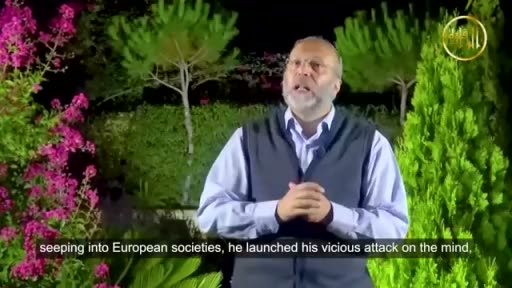
Here is Martin Luther, the pioneer of the religious Reformation who founded what is now called the Protestant denomination. It is a widely followed denomination, especially in Britain, other European countries and the United States of America. After sensing the influence of the mind seeping into European societies, he exerted himself to restore the spirit of the Middle Ages. He launched a fierce attack upon the mind and called upon people to stone it and trample it underfoot. This was Martin Luther, founder of the Protestant denomination.
He says: ‘You cannot accept both the Gospel and reason; one of them must give way to the other.’ He continues: ‘All the articles of our Christian creed that Allah has revealed to us in His Word are, before reason, utterly impossible, unreasonable and false.’ ‘Reason,’ Martin Luther says, ‘reason is the greatest enemy of faith. It is the most depraved of Satan’s works, like a prostitute ravaged by scabies and leprosy. It and its wisdom must be trampled underfoot and destroyed. Throw dung in its face.’ These are the words of Martin Luther, founder of the Protestant denomination, in his description of reason and its opposition to faith.
Feudalism and the Divine Mandate
In Europe’s feudal system, to which Europeans willingly submitted under the influence of the idea of the divine mandate granted to the king, Durant also put it this way: ‘In temporal matters, the king was subordinate to Allah and ruled by divine right. This meant that Allah had authorised him to rule and had therefore entrusted him with ruling.’
Religious Reform and the Decline of Church Authority
In modern history—which does not refer to the contemporary era but, as Westerners define it, begins in the fifteenth century—a conflict arose between the Catholic Church, which dominated society and imprinted its character upon it, and reformists and revolutionaries who resisted that domination. The vanguard of opposition initially emerged within the Western Church itself through Protestant reformist movements—as we have mentioned—who demanded the removal of papal authority over modern European kingdoms and emirates.
Although this movement was marked by extreme rigidity that surpassed even the fanaticism and disregard for reason and knowledge found in the Church of Rome, it broke the ring that had made the Catholic Church the supreme authority over all the kings and princes of Europe. In particular, the movement demanded that papal and ecclesiastical influence be removed from those kingdoms and principalities. One of the points advanced and strongly defended by Zwingli, a leader of the Protestant Reformation, was—as Durant relates and in Durant’s words—‘that the spiritual authority called the Church has no basis in the Holy Scriptures or the teachings of Christ, whereas temporal authority is supported by Christ’s teachings and practice.’
Philosophers and the Call to Isolate Religion from Life
This was accompanied by the emergence of philosophers who rebelled against clerical propositions and the Church’s dominance. Some took the form of atheists who denied religion, while others were secularists who demanded that religion be isolated from life, society and the state and confined within the church and the home. They called for man to be set free so that he could create through his genius and talents and produce works that expressed himself and his aspirations. Such works, they said, are the cause of revival in any society.
Machiavelli and Rebellion Against Church Thought
Here is Machiavelli, the renowned Italian thinker, author of The Prince, who died in 1527. ‘He believed that Christianity, at its best, taught false virtues. In his view, it taught submission, humiliation, denial of the body and turning the other cheek to be struck, and then confined man’s hope for joy and happiness to what comes after death. Machiavelli’s idea of virtue was entirely opposed to Christian virtues. He drew inspiration from man’s nobility and the glory of life on earth, and believed that this nobility was expressed not through self-abasement but through proud self-respect.’
Whose words are these? Machiavelli’s. This was Machiavelli’s view, which began with rebellion against the Church. He continues: ‘Since he, like others among his contemporaries, believed that an alliance between religion and worldly life was inevitable, he placed his hope in his republican model triumphing in sixteenth-century Italy after Christianity had been abandoned as a religion outgrown by the age. In its place, a religion and religious institutions founded upon the spirit of ancient pagan Rome would be planted: a temporal religion whose principal purpose would be to strengthen patriotic sentiments and virtues.’ This was Machiavelli’s view and orientation. He was among the first to rebel against Church thought and against the Church’s viewpoint, which dominated Europe in the Middle Ages.
Reason and Natural Belief in the Seventeenth Century
Then came the seventeenth century, witnessing European philosophers and writers adopt the belief that truth about human nature and the universe could be uncovered through reason alone—separate from religion. Concurrently, critical analysis of sacred texts and comparative religious study undermined the prestige of official religious creeds. In matters of faith, the scientific spirit of the age manifested in the rejection of miracles and divine revelation.
One feature of the thought of the Enlightenment writers—the name by which they were known in that period, when they were also called philosophers—was that, although they were not usually atheists who denied the Creator’s existence, they held, on purely human grounds, that it was unreasonable for a person to impose his religious creed upon another individual or nation. Accounts of travel then drew attention to the common factor in all religions: belief in Allah as the source of all existence. From this arose the idea of the noble pagan and the idea of natural belief in Allah. This held that, once Allah had created the world, He left it to run its own course, or to operate like a clock, as Alexander Pope said in his Essay on Man in 1733.
Enlightenment Philosophers of the Eighteenth Century
In the eighteenth century, successive Enlightenment philosophers affirmed the creed of separating religion from life, society, and the state. Among them was the renowned Montesquieu, who passed away in 1755; despite not being an atheist, he harshly criticised both the Church and the clergy.
There was also the renowned Voltaire, who died in 1778. In his historical works, he criticised the evangelical and Christian view of the development of society and outlined a history of humanity. His philosophy of history was based upon the idea of society’s progressive development independently of Allah’s will. He struggled against clericalism and what he called religious flights of fancy. Christianity and the Catholic Church were the principal targets of his ridicule, for he regarded them as the main enemy of progress.
Jean-Jacques Rousseau and the Rejection of Revelation
Here is Jean-Jacques Rousseau, the most famous of what are called the Enlightenment philosophers. His book The Social Contract was regarded as a mainstay of the great French Revolution and became the gospel of the French people after the Revolution. He called for belief in Allah while denying revelation, and thus for the separation of religion from life. He held that those who laid down laws, and rulers and kings after them, attributed laws and legislation to Allah only to give them a binding character and put fear of violating them into the hearts of the people.
He says in his famous book The Social Contract: ‘Since the legislator can use neither force nor argument, he must resort to an authority of another kind, which can lead without violence and persuade without overwhelming argument. This is what compelled,’ Jean-Jacques Rousseau says, ‘the founders of nations in every age to seek the intervention of Heaven and to attribute the glory of their own wisdom to the gods, so that the peoples would obey.’
Jean-Jacques Rousseau continues: ‘This sublime mind, which rises above the understanding of ordinary people, is the mind by which the legislator places laws in the mouths of the immortals, so that he may use divine authority to lead those whom human wisdom cannot move.’ Rousseau then qualifies this: ‘Not every person has the right to make the gods speak, nor to be believed when he tells people that he is their interpreter.’ This is, of course, an insinuation that the prophets who said that they spoke through revelation from Allah Almighty were lying.
The French Revolution and the Entrenchment of Secularism
Finally, the great French Revolution came in 1789 and permanently removed the Church from society, the state and politics. Will Durant says: ‘Most previous revolutions had been revolutions either against the state or against the Church, and it was rare for them to erupt against both at the same time. The French Revolution, however, attacked the monarchy and the Church together and undertook a double task and risk: overthrowing the religious and temporal pillars of the existing social order.’
Thus, contemporary Western thinkers and historians view these conditions as living proof of the validity of the creed that separates religion from life. They observe how the steady elevation of Europe’s civilisation corresponds with the diminishing influence of the Church over society—and consequently, the retreat of religion and religiousness from public affairs. Then they found in the French Revolution—the event that marked the beginning of their modern history—the greatest evidence for their theory: the expulsion of the Church from societal reality, the abolition of divine mandate theory, and the unleashing of public freedoms within society. Thus did Europe’s revival movement complete its course, yielding results and bearing fruits with which Westerners still take pride today.
Does the Western experience apply to the Islamic Ummah?
Dear brothers, it was this historical and civilisational context that gave rise to the rational creed which the West adopted from the beginning of modern history and made the basis of its thoughts and the intellectual leadership of its society: the creed of separating religion from life.
Dear brothers among the viewers and listeners, do you see any connection between the Islamic Ummah—or indeed any other non-Western nation—and this historical and civilisational context in which the secular creed, the creed of separating religion from life, was born? How, then, can people claim that it is the most suitable intellectual basis upon which societies and states should be founded?
Indeed, the greatest calamity in recent times is that some of those classified as Islamists in our lands have come forward to speak to us about a neutral secularism that can coexist with Islam. Yet even the least cultured person understands that the least extreme form of secularism is based upon separating religion from politics, and this in itself is clear disbelief from Islam’s viewpoint. Allah is sufficient for us, and He is the best Disposer of affairs.
Questions and Discussions
Welcome again as we return to address a few questions raised during this session.
Will the Creed of Separating Religion from Life Decline?
Brother Nadhir bin Salih asks: Do you expect this creed—the creed of separating religion from life—to decline in the world in the future? How would that happen?
My dear brother, I do not expect it to decline in the future. Rather, I see it declining in the present and, indeed, in the years before today. The creed of separating religion from life is not capable of surviving for long. Why? First and foremost, because it conflicts with human nature. How does it conflict with human nature?
Someone may say: ‘The creed of separating religion from life does not deny religion, and so long as it does not deny religion, it does not clash with human nature.’ Yes, it clashes less with human nature than the creed that says, ‘There is no god, and life is matter’—the Marxist communist creed—but that does not mean that it accords with human nature.
Rather, it contradicts human nature. Human nature does not merely require acknowledgement of the existence of the Creator, glorified and exalted be He; it is also a feeling of urgent need for the Creator and Arranger. What value does this need have if we tell it that Allah, glorified and exalted be He, exists but that it is cut off from Him? The innate religious nature arises from the natural feelings of inability and need in man. Man’s inability and need make him require Allah’s guidance, glorified and exalted be He, and His management of his affairs in this life. The instinct of religiousness in man is therefore a feeling of need for the Creator and Arranger. When the secularists said that the Creator had nothing to do with organising man’s life, society, relationships or state, they denied the attribute of arrangement in the Creator, glorified and exalted be He. This contradicted human nature and the instinct of religiousness in man.
Consequently, the Western person who embraced the creed of separating religion from life became an orphan in this life. He found no one to turn to in order to satisfy his natural inability and need, and no one to guide him in this life. This instinct must be satisfied. The Christian therefore turned away from satisfying it through worship of the Creator and instead satisfied it by sanctifying matter. He came to regard matter as the basis of everything. Even if he did not necessarily deny the Creator’s existence, he lived a material life and lived to satisfy his sensual desires. He believed that science—what he imagined to be science—was the path to discovering life, how to live it and its purpose, and that science would answer all his questions in life.
We therefore find that the Christian in the Middle Ages—and some religious Christians even today—went to the priest in the church to confess to him. He turned away from confessing to the priest in the church as a means of drawing closer to Allah and seeking His favour, passing through the priest in that religion to reach Allah Almighty. He turned away from the priest and the Church and went instead to a psychiatrist. He began visiting psychiatric clinics, sitting before the psychiatrist and confessing to him for hours and hours. It was as if, instead of confessing to the priest, he now confessed to the psychiatrist. Most of the psychiatrist’s task is accomplished after the patient talks before him about his whole life, as though confessing to him just as he once confessed to the priest.
The instinct of religiousness consequently shifted from acts of worship according to what the Church preferred to worship of what was thought to be science, law and so on. Naturally, this satisfies neither the instinct of religiousness nor the human nature upon which Allah, glorified and exalted be He, created and fashioned man.
﴿ لَا تَبْدِيلَ لِخَلْقِ ٱللَّهِ ﴾
‘There is no change in Allah’s creation.’ [30:30]
Consequently, when human life was separated from its Creator, glorified and exalted be He, the only value recognised in Western society became material value. Spiritual value ceased to exist; it withered and largely dissolved, becoming an individual phenomenon. This also led to the collapse of humanitarian value and moral value, while material value naturally came to dominate Western society. All of this created—produced—crises. This spiritual void is a need that man must satisfy. If he does not satisfy it, it produces anxiety and disturbance within him, and we see its effects in the West.
The crises arising from individualism in Western society—after the collapse of family values, spiritual, humanitarian, and moral values—have made the family a rare occurrence. Consequently, psychological problems have intensified. The West, which claims to possess cures for these issues and has opened psychiatric clinics on every street, sees its psychological problems worsen as more such clinics emerge. The clearest evidence is that the highest suicide rates in the world are found in Western nations adhering to the creed of separating religion from life—even among those most prosperous and materially advanced, such as Scandinavian countries and some European states. Why? Because there exists a genuine psychological crisis within Western humanity.
In addition, the Western world—the intellectuals and aware people in the Western world—has begun to recognise the brutality of the capitalist system that emanated from the creed of separating religion from life. This system produced problems and crises within Western society, where wealth is concentrated in the hands of a small group comprising no more than one, two or three per cent of society, while the rest live on their crumbs. It also produced crises in the world, where wars and crises are ignited in order to steal money, wealth, labour and markets and to serve a handful of financial sharks in the West.
This is the civilisation built upon the creed of separating religion from life: contemporary Western capitalist civilisation. But can we say that this civilisation is now on the verge of collapse without finding anyone to give it the final push towards destruction and the abyss? When Western societies have no civilisational alternative before them, it is not easy for them to abandon what they have.
I say with complete confidence that the giant feared by the leading authorities and great minds of Western civilisation, by the financial sharks and political devils of the West, is none other than Islamic civilisation. It is preparing to rise again and stand on its feet once more, so that it may overthrow contemporary Western civilisation after the latter, in previous decades, overthrew the communist civilisational project. They therefore exert extremely intensive efforts, working night and day in their schemes to prevent this child from being born: Islamic civilisation, which is preparing to inherit the world anew.
If Islamic civilisation rises, represented and embodied in an Islamic State in the Islamic world, and unites and gathers the Islamic world, it will undoubtedly write the conclusion. It will bring about the ending and turn the page of Western civilisation, sending it into irreversible disappearance, as happened to all human civilisations. Islam is the exception, for it is a civilisation that accords with human nature and came to be a way of life for man as man in every time and place.
Is Sufism Fertile Ground for Secularism?
Brother al-‘Abid asks: Is Sufism a fertile environment for applying the idea of separating religion from life?
To a large extent, Sufism is one of the most important environments favoured by the West within the Islamic world. If we examine recent plans to support Sufi movements in the Islamic world, we will see that the West recognises how well Sufi movements and their thought align with Western civilisation.
Why? Because Sufism, by its nature, calls for abandoning this worldly life, its matter and its pleasures. If we return to history, we find that the famous Sufis were those who withdrew from life and consequently withdrew from politics, holding rulers accountable and participating in political life. They held that religiousness meant withdrawing from people and societies, from the adornment, crowds and clamour of this worldly life, and from its political disputes, so that the relationship between them and Allah, glorified and exalted be He, might become pure. They held that worship lay in purity of the soul, far from all people, all of life and all the relationships of society, politics and the state.
They focus exclusively on spiritual dimensions. Naturally, this emphasis arises from a philosophy that has infiltrated Muslim minds and been falsely attributed to Islam—one that bears no connection to it whatsoever. That philosophy was discussed earlier.
This philosophy claims that the universe, man and life—this existence—are composed of two elements: matter and spirit. It claims that spirit is the elevated element, while matter is decline, defilement and regression. They therefore seek to rid themselves of the material aspect and attain the spiritual aspect. Indeed, they hold that the body must be subdued and the material aspect of life destroyed so that the spirit may be freed from the captivity of the body and matter and ascend to its Creator, glorified and exalted be He, as they claim.
Yes, among the cultures that have spread among Muslims, this creed is the most compatible with the idea of separating religion from life, society and the state, with which the West invaded us and which it is still trying to impose upon us by force.
Do the Arab Taghuts Apply the Separation of Religion from Life?
Brother Ismail Ismail asks: Do the Arab taghuts not apply the separation of religion from life?
And you see, my brother Ismail, that they apply nothing but this very creed—the separation of religion from life.
They isolated religion and isolated the Shari’ah. They said that religion had nothing to do with politics and politics had nothing to do with religion. They waged war against Islamic movements, and they waged a cultural, media and educational war against the idea of the Khilafah, against political Islam and against working for the resumption of the Islamic way of life.
They claimed that Islam would be victorious if Muslims were given room to practise their rites and worships and to marry and divorce according to the Islamic Shari’ah, and that this was enough for Islam to be regarded as protected and victorious.
As for economic affairs, politics, punishments and similar matters, they say these are not the concern of religion but the concern of legislators—of legislative councils, legislative bodies, man-made constitutions and so on. Today’s rulers are guards and watchmen over the implementation of the man-made systems that the West imported into our lands after occupying them about a hundred years ago.
Conclusion
My brothers, these were the questions received during this episode. I thank you for following and listening. I ask Allah, glorified and exalted be He, to accept from me and from you this meeting, this sitting and this following; to increase us in knowledge and action; and to make our knowledge and action sincere for His noble Face. I invoke prayers and peace upon the Messenger of Allah, his family, his Companions and those loyal to him. Peace and Allah’s mercy and blessings be upon you.