Introduction
In the name of Allah, the Most Merciful. Peace and blessings be upon you all, distinguished brothers. Welcome to another session of Halaqa Online. In this episode, we continue our discussion on topics from Imam Taqi al-Din al-Nabhani’s book Nizam al-Islam, focusing under its heading ‘The System of Islam’ on the topic: the comprehensiveness or breadth of the Islamic Shari’ah.
It is among our established principles that the Islamic Shari’ah provides legal rulings for every human action, as Allah says:
﴿ ٱلْيَوْمَ أَكْمَلْتُ لَكُمْ دِينَكُمْ وَأَتْمَمْتُ عَلَيْكُمْ نِعْمَتِى وَرَضِيتُ لَكُمُ ٱلْإِسْلَـٰمَ دِينًا ﴾
‘Today I have perfected your religion for you, completed My favour upon you, and approved Islam as your religion’ [5:3],
and He also states:
﴿ وَنَزَّلْنَا عَلَيْكَ ٱلْكِتَـٰبَ تِبْيَـٰنًا لِّكُلِّ شَىْءٍ ﴾
‘And We have sent down to you the Book as clarification of all things’ [16:89].
There is consensus among all Muslim scholars—those of usul (foundational principles), fuqaha’ (jurists), and others—that the Islamic Shari’ah, derived from the evidences in the Book and Sunnah and what they indicate to us, contains legal rulings for every action performed by humans. We have previously elaborated on this matter.
Moreover—and consequently—among our self-evident certainties is that no issue arises in any time or place until the Day of Resurrection without a legal ruling from Allah’s Shari’ah. No human action lacks a ruling in Allah’s law, whether it concerns permissibility or prohibition, obligation or recommendation, dislike or general permission, and so forth. Thus, it is established that every action of a servant must conform to Allah’s Shari’ah; the default regarding actions is adherence to the legal ruling. No human action may occur except in accordance with the specific ruling legislated by Allah.
Among our certainties, too, is that these legal rulings are not merely matters commanded by Allah for observance; rather, the believer will be held accountable on the Day of Resurrection for adhering to them and rewarded accordingly—or at least deserving punishment if abandoned.
Above all, we hold a firm conviction that these Shari’ah legal rulings were revealed to bring about humanity’s true elevation. They provide a way of life that resolves human problems and organises conduct in a way that leads to soundness. This way of life befits human beings, elevates them and leads humanity to happiness—if humanity adheres to these Shari’ah legal rulings.
For the Islamic Shari’ah is not merely obligations that the believer undertakes in pursuit of Allah’s pleasure. It came for the benefit of His servants, so we adhere to its legal rulings with confidence that they represent true interest both in this world and the Hereafter.
Yes, there may come upon people a time like the one in which we live. Because systems of disbelief—man-made systems—dominate Muslim lands, observing the Shari’ah legal rulings can be difficult for believers in some circumstances. The Prophet, may Allah bless him and grant him peace, informed us that a time would come upon this Ummah when «القابض فيه على دينه كالقابض على الجمر» — ‘the one holding fast to his religion will be like one holding a burning ember’ [see Jami‘ al-Tirmidhi, 2260].
This is not because Shari’ah legal rulings are inherently burdensome upon people—Allah says:
﴿ وَمَا جَعَلَ عَلَيْكُمْ فِى ٱلدِّينِ مِنْ حَرَجٍ ﴾
‘and He has placed no hardship upon you in the religion’ [22:78]
—but rather because existing systems have created circumstances that make adherence to the legal rulings difficult for people, sometimes even very difficult. These situations compel or force them into paths far removed from Allah’s Shari’ah. Here, the believer’s reward corresponds to his hardship: the greater the difficulty he faces in adhering to the Shari’ah legal rulings, the greater will be his reward before Allah.
But if life were truly Islamic—if we lived an Islamic life within a society governed by the Islamic Shari’ah as revealed by Allah—then adherence to its legal rulings would ease matters for people and become simpler. If they abandoned them, Allah would make them feel their need for His legislation even more acutely, just as it is said that if people were to abandon any aspect of the Shari’ah, Allah would draw them back to it by making them realise how problems arise from neglecting its guidance.
How Can Limited Texts Address New Events?
What I wish to focus on today is the following: some people ask how limited Islamic texts from the Book and Sunnah can suffice to provide Shari’ah legal rulings for all human actions, given the passage of time and place where new issues have emerged that did not previously exist. Can texts centuries old issue rulings and legislation for matters that were entirely absent at their inception? How can these texts encompass such meanings when they were non-existent in those times?
Flexibility Does Not Mean Changing the Shari’ah
Some people come forward, among them those who are eager to uphold the Shari’ah of Allah, the Exalted, and confident in His legislation. They seek its implementation at all times and places. Yet some argue: No! The Islamic Shari’ah is not rigid or fixed; it evolves and possesses flexibility that allows it to adapt with changing times and diverse locations. Those who ensure this evolution and flexibility are contemporary scholars of the Shari’ah, upon whom rests the responsibility of interpreting Islam’s texts in a way that renders the Shari’ah compatible with modern realities. Of course, there is significant error in these claims. The issue is not to make the Shari’ah adaptable to different times and places. Our task is not to adjust or modify it so that it can coexist under contemporary man-made legislation—legislation inherently tied to Western civilisation’s systems.
The Shari’ah Shapes Reality; It Does Not Adapt to It
The matter is entirely different: the Shari’ah came to shape reality, not to be shaped by it. It came to mould, not to be moulded by time and place. It came to shape society according to its own form, not to take its form from societies. Otherwise, what meaning would there be in prophets and messengers coming to change human reality if the Shari’ah itself were expected to change? Any talk of the Shari’ah being flexible in the sense of being capable of development is therefore incorrect. The precise statement is that the Shari’ah is comprehensive: it contains enough legal rulings to address problems in every time and place and to shape people’s way of life in every time and place. This comprehensiveness comes from the breadth of the texts and the Shari’ah evidence from which its rulings are derived. The sources are the Book, the Sunnah and the evidence to which they point—specifically consensus (ijma‘) and analogical deduction (qiyas). These four evidences—the Book, the Sunnah, consensus and qiyas—are broad in their indications. They produce a comprehensive Shari’ah capable of providing rulings for every human action, however new, addressing people’s problems and shaping their way of life in every time and place. Why?
The inadequacy of man-made legislation
The Islamic Shari’ah cannot be compared to other human-made legislations. Those are man-made laws created by limited minds influenced by time, place, and environment—contradictory intellects that often issue inconsistent rulings. They provide solutions not for humanity in general but only for temporary problems affecting the societies where these laws originated. I have addressed this topic in earlier sessions and return to it now.
For example—and among the most prominent historical examples experienced by humanity in this contemporary age—it is well known that the capitalist system emerged as a reaction to feudalism, coming to liberate people from the feudal regime that had prevailed for centuries during what was called the Middle Ages. Then came the democratic system to eliminate the theocratic system—that is, the tyranny of kings and churches ruling under divine mandate with church support—and likewise the concept of public freedoms arose to remove the restrictions imposed by the Church on Western peoples over many centuries. After capitalism produced its own problems, socialist theories emerged in response—including Marxist socialism as a reaction against it. These man-made legislations and laws do not address humanity from their essential nature but rather came to resolve temporary issues affecting specific societies—not humanity or the human community at large—as there was no feudal system like that of Europe in other communities. Consequently, there was no basis for capitalist ideas to emerge elsewhere without passing through the historical experience of European peoples: submission to feudalism and religious tyranny under theories of divine mandate, and so forth. Similarly, socialism did not arise spontaneously in societies unaffected by capitalism or untouched by Europe’s historical path; instead, it was imported from outside. Thus lies the flaw inherent in man-made legislation.
The Creator’s Shari’ah for humanity
As for the Islamic Shari’ah of Allah, Exalted is He—it is an entirely different matter. It is the Shari’ah of Allah Almighty for all people, revealed to regulate human conduct as humans—not as a particular nation, ethnicity, race or culture—and not because they experienced specific historical circumstances. Rather, it came to address humanity’s fundamental problem: what it means to be human, whether that person is Arab, non-Arab, Persian, Romanian, Egyptian, Indian, Chinese, or any other.
Why? Because the Islamic Shari’ah was revealed to regulate human behaviour, which arises from the human disposition found in every time and place. The human disposition consists of instincts and organic needs that demand satisfaction, produce behaviour aimed at satisfying them and create relationships between people through which they exchange benefits. This human disposition has been the same since Adam, peace be upon him, and will remain so until the Day of Resurrection, in every age and place regardless of colour, language or environment. All people have the same organic needs: they need food, drink, warmth and so on. They also possess the same instincts: the instinct of religiosity, the survival instinct and the procreation instinct. When the satisfaction of this disposition is regulated correctly, it leads to sound behaviour and a sound way of life that elevates human beings and gives them tranquillity.
He who created this innate disposition also created human instincts and organic needs; He who fashioned the complex, mysterious human soul—whose intricate structures even microscopes cannot fully reveal—is Allah, Exalted is He. He knows what He has created
﴿ وَنَعْلَمُ مَا تُوَسْوِسُ بِهِۦ نَفْسُهُۥ ۖ وَنَحْنُ أَقْرَبُ إِلَيْهِ مِنْ حَبْلِ ٱلْوَرِيدِ ﴾
‘and We know what his own self whispers to him, and We are closer to him than his jugular vein’ [50:16],
and He alone knows what is best for humanity’s well-being
﴿ أَلَا يَعْلَمُ مَنْ خَلَقَ وَهُوَ ٱللَّطِيفُ ٱلْخَبِيرُ ﴾
‘Does He who created not know, while He is the Most Subtle, the All-Aware?’ [67:14].
Thus, these treatments—when they come from the Creator Himself—do not stem from a transient reality experienced by people but are divinely ordained.
The Islamic Shari’ah Is Not a Product of the Arab Environment
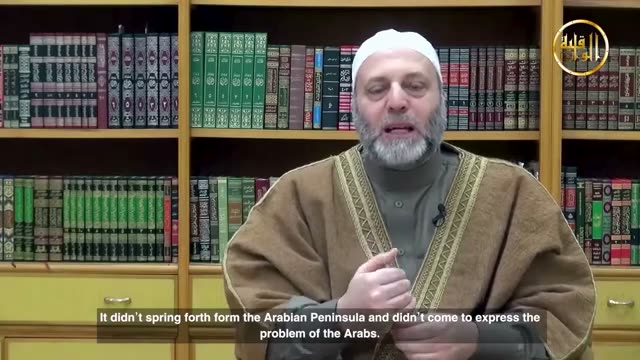
When the Islamic Shari’ah was revealed to humanity around fifteen centuries ago, it descended upon the polytheistic Arabs of pre-Islamic Arabia. Some claim that this legislation originated from the Arab environment or sought only to address their specific problems. However, it did not emerge from Arabian soil nor was its purpose confined solely to resolving the issues of the Arabs in jahiliyyah. Rather, it treated those challenges as part of broader human concerns and transcended them to address humanity’s universal struggles wherever they may arise. The Islamic Shari’ah—specifically that which Allah, Exalted is He, revealed upon His Messenger Muhammad (may Allah bless him and grant him peace)—was sent as a mercy for all the worlds:
﴿ وَمَآ أَرْسَلْنَـٰكَ إِلَّا رَحْمَةً لِّلْعَـٰلَمِينَ ﴾
‘We sent you only as a mercy to all worlds’ [21:107],
﴿ قُلْ يَـٰٓأَيُّهَا ٱلنَّاسُ إِنِّى رَسُولُ ٱللَّهِ إِلَيْكُمْ جَمِيعًا ﴾
‘Say: O mankind, I am indeed the Messenger of Allah to you all’ [7:158].
The Shari’ah Addresses All People
Allah’s address, Exalted is He, comes directly to humanity:
﴿ يَـٰٓأَيُّهَا ٱلنَّاسُ ٱعْبُدُوا۟ رَبَّكُمُ ٱلَّذِى خَلَقَكُمْ ﴾
‘O mankind, worship your Lord who created you’ [2:21],
﴿ يَـٰٓأَيُّهَا ٱلنَّاسُ إِنَّا خَلَقْنَـٰكُم مِّن ذَكَرٍ وَأُنثَىٰ وَجَعَلْنَـٰكُمْ شُعُوبًا وَقَبَآئِلَ لِتَعَارَفُوٓا۟ ۚ إِنَّ أَكْرَمَكُمْ عِندَ ٱللَّهِ أَتْقَىٰكُمْ ﴾
‘O mankind, We created you from a male and a female and made you peoples and tribes so that you may come to know one another. Indeed, the most honoured of you before Allah is the one with the most taqwa’ [49:13].
The Islamic Shari’ah addressed all of humanity, including the Arabs themselves. It resolved their problems and transformed them into a new creation. Beyond that, it also addressed the concerns of people outside Arabia—those under Byzantine Roman rule, those under Persian dominion—and regardless of their historical circumstances, languages, ethnicities, customs, traditions, or innate dispositions, it addressed all these peoples’ challenges. Historians, both Muslim and non-Muslim, attest to what the Islamic Shari’ah achieved in al-Andalus, North Africa, Syria, Iraq, Central Asia—and beyond its place of revelation: the Arabian Peninsula.
Valid for Every People, Time and Place
Thus, the reason for the Islamic Shari’ah’s applicability to every time and place, to all types and categories of humanity, is that it came as a law addressing human problems in their universal essence. It did not arrive influenced by anything like the laws of mankind—far above is Allah, who legislated this Shari’ah without any such influence. The Islamic Shari’ah was not shaped by pre-Islamic Arab customs, nor by the lives of the people of al-Hijaz, Makkah, or the Quraysh. It did not emerge affected by any conditions or circumstances that prevailed when it was revealed—contrary to the claims of those who deny revelation as its source and instead insist on proving that it was influenced by contemporary or preceding legal systems. We shall address this topic in detail in future sessions, if Allah wills. The truth is that this Shari’ah belongs to humanity—not to Arabs alone nor to non-Arabs, not to a specific place nor to any particular era of history. It is the law of Allah for mankind, and mankind remains as they are until the Day of Resurrection.
New Events and Shari’ah Texts
We now address the question raised earlier and at the beginning of the session: how can limited texts provide new legal rulings as time passes, places differ and issues arise that did not exist in the past? Can the Islamic Shari’ah, for example, provide a ruling on cloning, newly developed contracts such as joint-stock companies, banking systems that did not previously exist in this form, or in vitro fertilisation? How can a Shari’ah that did not encounter these issues when it was revealed provide rulings for matters that were then part of the unseen? We return, then, to remind you that this Shari’ah came from the Knower of the unseen, Glorified and Exalted be He, and nothing until the Day of Resurrection escapes His knowledge. But how can the Shari’ah texts provide rulings for matters that did not exist in the past?
I say, with Allah’s guidance: The texts of the Islamic Shari’ah are fundamentally different from man-made legislation in that they are not rigid statutes where each provision is drafted to address a single specific human action—article one for this act, article two for another. Legislators under such systems identify issues as they emerge and issue rulings accordingly; when new matters arise, they convene legislatures anew to enact fresh laws. The texts of the Islamic Shari’ah—the verses of the Qur’an and the Sunnah—are not rigid or narrowly confined in meaning like man-made legislation. By their very nature, these texts are broad in scope, their meanings encompassing multiple issues because they originate from Allah, exalted be He, and are formulated to yield legal rulings for emerging matters through their applicability. Naturally, this requires detailed explanation.
Methods of Deriving Shari’ah Legal Rulings
In the time remaining, I will give examples of the different ways in which Shari’ah legal rulings are derived from the texts. Some rulings are taken from what the text explicitly states (manṭūq al-nass). Others are derived from the implied meaning of the text (mafhūm al-nass). Some are drawn from the rationally understood import of the text (ma‘qūl al-nass), while others take the form of general meanings, general principles or universal principles. I will explain them one by one.
What the text states explicitly
Legal rulings derived from what the text explicitly states are those directly prescribed by it; the explicit wording of the text indicates them. When Allah, exalted be He, says:
﴿ حُرِّمَتْ عَلَيْكُمُ ٱلْمَيْتَةُ وَٱلدَّمُ وَلَحْمُ ٱلْخِنزِيرِ وَمَآ أُهِلَّ لِغَيْرِ ٱللَّهِ بِهِۦ ﴾
‘Forbidden to you are carrion, blood, the flesh of swine, and that over which a name other than Allah’s has been invoked’ [5:3],
the legal ruling is taken from this explicit meaning without extending beyond it. When He says:
﴿ حُرِّمَتْ عَلَيْكُمُ ٱلْمَيْتَةُ ﴾
‘Carrion has been forbidden to you’ [5:3],
this applies to all carrion—the animal that dies without proper slaughter, as they say—and blood, which flows from slaughtered animals, is forbidden for Muslims. Neither drinking nor utilising it is permitted. As for the pig, the verse explicitly prohibits it as both food and an animal; the prohibition is derived solely from the word “pig” itself, without extending to anything else. This is because the prohibition lacks a legally relevant cause (‘illah) and carries no further implied meaning.
Here, regarding what the text states explicitly in
﴿ حُرِّمَتْ عَلَيْكُمُ ٱلْمَيْتَةُ وَٱلدَّمُ وَلَحْمُ ٱلْخِنزِيرِ وَمَآ أُهِلَّ لِغَيْرِ ٱللَّهِ بِهِۦ ﴾
‘Forbidden to you are carrion, blood, the flesh of swine, and that over which a name other than Allah’s has been invoked’ [5:3],
these are legal rulings derived directly from the explicit wording. It is also reported in a hadith of the Messenger of Allah may Allah bless him and grant him peace that he prohibited domestic donkeys [Sahih al-Bukhari, 5520]. This means the consumption of donkey meat was forbidden—specifically the flesh of domesticated donkeys, not wild asses. Thus, this prohibition is established by explicit textual evidence.
The Implied Meaning of the Text
However, many other legal rulings were established through other forms of textual indication. One of these is what we call the implied meaning of the text (mafhūm al-nass). Legal rulings derived in this way give the texts a broad range of application. I will give an example.
The Prophet, may Allah bless him and grant him peace, said: «لا يحل لثلاثة بفلاة من الأرض، إلا أمّروا عليهم أحدهم» — ‘It is not lawful for three people in an open land unless they appoint one of them as their leader’ [Musnad Ahmad, 6647]. He also said: «إذا كنتم ثلاثة فأمّروا أحدكم» — ‘If you are three, appoint one of you as leader’ [see Sunan Abi Dawud, 2608]. Thus, if three people are travelling, they must appoint one of them over them. This text contains both an explicit and an implied meaning. Its explicit meaning is that the three must appoint one of them.
What we refer to as the implied meaning of a text includes concordant implication (mafhūm al-muwāfaqah) and contrary implication (mafhūm al-mukhālafah). The concordant implication here is that if there are more than three people—no matter how many—they must appoint one among them as leader. Mentioning ‘three’ establishes the minimum threshold: if you are three or more, you must appoint one of you. Thus, by concordant implication, any group larger than three must likewise appoint one of its members as leader. Conversely, the contrary implication is that if fewer than three are present—that is, only two—they are not obliged to appoint either one as leader. This illustrates how the implied meaning of a text operates. Many Shari’ah legal rulings have been derived in this way.
I give an example: Allah’s statement:
﴿ فَإِنْ أَرْضَعْنَ لَكُمْ فَـَٔاتُوهُنَّ أُجُورَهُنَّ ﴾
‘Then, if they nurse your children for you, give them their payment’ [65:6].
Here, the explicit text grants payment to a woman who breastfeeds. However, this implies that whoever provides a service for another is entitled to payment. It establishes the worker’s wage, and rulings concerning hiring and leasing were derived from this verse. The matter is not limited to the payment of wet nurses. This is an example of concordant implication (mafhūm al-muwāfaqah). I will move on to another example—or rather, we have now discussed the implied meaning of the text. This subject naturally includes further details, such as the implication of a number, the implication of an attribute and so on.
The Rationally Understood Import of the Text and Qiyas
There is another type of legal ruling—or rather, another category of texts from which rulings are derived—which is known as the rationally understood import of the text (ma‘qul al-nass). In other words, this refers to qiyas—a well-known form of analogical deduction among the proofs of Shari’ah. What then is meant by qiyas? It serves as an extensive gateway for deriving Shari’ah legal rulings. Its purpose is that Allah, Exalted be He, has legislated certain categories of Shari’ah rulings with their legally relevant causes (‘illah). There are other rulings without such a cause and thus cannot serve as bases for analogy. Some rulings were established by Allah, Exalted be He, explicitly indicating their ‘illah—constructing them upon that very cause. The legal ruling revolves with its ‘illah in both existence and absence: if the ‘illah is present, the ruling exists; if it is absent, the ruling ceases to exist.
Selling Fish in the Sea and the Cause of Gharar
An example is his saying, may Allah bless him and grant him peace: «لا تبيع السمك في البحر، فإنه غرر» — ‘Do not sell fish in the sea, for that is gharar’ [see Musnad Ahmad, 3676]. Do not sell fish in the sea, for that is gharar. A person may not say: ‘I will sell you whatever I bring out from this. I shall dive into the sea, bring out fish, and sell you whatever I bring out for such-and-such a price.’ This is called gharar, meaning that the item being sold is unknown. The Prophet, may Allah bless him and grant him peace, prohibited selling fish in the sea because it is gharar. This ruling was therefore based upon its ‘illah, and when the ‘illah is absent, the ruling is absent.
Let us assume two people are at sea. One of them catches a fish in a cage that both seller and buyer can see. He then says: ‘I sell you this fish currently in the cage at sea for such-and-such an amount.’ Was there any gharar (uncertainty) in this sale? No; thus, the prohibition against selling fish while still in the sea has been removed in this case. This is because no gharar exists. Here, the legal ruling follows its ‘illah—its legally relevant cause—in both presence and absence. However, the benefit of that ‘illah does not end here: it extends to other matters. It is not limited solely to selling fish in the sea but encompasses all types of transactions involving this same ‘illah, which is gharar.
Unknown Sales and Similar Transactions
Suppose a person says to another, ‘I will sell you this box and whatever is inside it, without your seeing its contents, for such-and-such an amount.’ This occurs in people’s lives. One example is a kind of lucky-dip sale, locally called bay‘ al-saḥbah. A child pays an amount and then opens part of the container to discover what he has bought. Before paying, he knows neither what the item is nor its value. He is buying something unknown. A sale of an unknown item involves gharar and is therefore impermissible: do not sell fish in the sea, for that is gharar. Here, Islam provides a Shari’ah legal ruling that applies to new issues in any time and place because they contain the ‘illah specified by the Shari’ah evidence—namely, gharar.
Do not sell fish in the sea, for it is gharar. The existence of Shari’ah legal rulings built upon their ‘illah—a cause that may arise at any time—means that if such a legally relevant cause exists, then its corresponding ruling applies accordingly. This results in an abundance of Shari’ah evidence applicable to new issues.
Preparing Strength as the Means Change and the ‘Illah Remains
Let me add another example. Allah, Exalted be He, says:
﴿ وَأَعِدُّوا۟ لَهُم مَّا ٱسْتَطَعْتُم مِّن قُوَّةٍ وَمِن رِّبَاطِ ٱلْخَيْلِ تُرْهِبُونَ بِهِۦ عَدُوَّ ٱللَّهِ وَعَدُوَّكُمْ ﴾
‘Prepare against them whatever strength you can muster, including warhorses, by which you may strike fear into the enemy of Allah and your enemy’ [8:60].
The verse commands the preparation of strength and mentions warhorses as part of that strength. But the verse also states the ‘illah:
﴿ تُرْهِبُونَ بِهِۦ عَدُوَّ ٱللَّهِ وَعَدُوَّكُمْ وَءَاخَرِينَ مِن دُونِهِمْ لَا تَعْلَمُونَهُمُ ٱللَّهُ يَعْلَمُهُمْ ﴾
‘by which you may strike fear into the enemy of Allah and your enemy, and others besides them whom you do not know but Allah knows’ [8:60].
The command to prepare horses is linked to the ‘illah of intimidating the enemy. If a time comes when horses no longer intimidate the enemy, that ruling no longer applies to them. Today, we are not obliged to prepare horses in order to intimidate the enemy. We must instead prepare the weapons that do so, because what is required is to realise the ‘illah and thereby the ruling attached to it. The ‘illah here is intimidating the enemy. If rifles, artillery, aircraft, missiles and other modern weapons are what intimidate the enemy today, then preparing these weapons is obligatory because they fulfil Allah’s command to intimidate the enemy.
The ‘illah is found in these forms; thus, the ruling exists. Naturally, this falls under Allah’s statement,
﴿ وَأَعِدُّوا۟ لَهُم مَّا ٱسْتَطَعْتُم مِّن قُوَّةٍ ﴾
‘Prepare against them whatever strength you can muster’ [8:60].
With the presence of legal causes (‘illa) for Shari’ah rulings, those rulings emerge anew—meaning they remain available until the Day of Resurrection to apply to new issues. I give a third example on this topic because qiyas is among the most important methods by which Shari’ah rulings are derived so that they may apply to emerging cases; these are established legal rulings that address new matters. The Islamic Shari’ah does not change, but rather it remains fixed and comprehensive, containing rulings applicable to issues in every time and place.
Receiving the caravans and the cause of ignorance regarding price
I give another example as mentioned: it is reported from the Prophet may Allah bless him and grant him peace that he forbade intercepting caravans. What did this prohibition entail? People would establish markets in Madinah, where merchants and trade caravans arrived from outside the city. Some individuals would leave the city to meet these caravans carrying goods for sale in those markets, intending to exploit the ignorance of incoming traders regarding market prices. They would purchase the goods at a lower price than their market value; here, the Prophet may Allah bless him and grant him peace forbade intercepting caravans. The prohibition against this practice is justified by the ignorance of merchants arriving with these caravans or trade convoys concerning their respective market prices.
The ruling exists only with this legally relevant cause. If that cause ceases to exist, then the ruling also ceases. The ruling follows the existence or absence of its cause. This ‘illah can be present in some places and absent in others at any given time—today, for instance, within our current era: it may exist in certain locations while being absent elsewhere. Take ignorance of price as an example—the very ‘illah itself. Even with modern communications, especially electronic networks like the internet, one cannot generally claim that a merchant is ignorant of prices today, since they can track them through digital communication, telephony and other means.
If someone met the caravans hundreds of kilometres outside the city, the seller could still easily know the market price wherever the caravans were headed. The ‘illah would be absent, so the ruling would not apply. Yet the ruling remains in force whenever its ‘illah exists. If a buyer exploits the seller’s ignorance of the market price and buys the goods for far less than their market value, the seller may seek redress before a court under the Shari’ah, and the sale may be annulled on that basis. When the ‘illah is present, the Shari’ah legal ruling applies. If we tried to list all the reasoned Shari’ah legal rulings whose ‘illah may exist in any time and place, the discussion would become very long.
General Principles and the Principle of Harm
I now come to another way of deriving Shari’ah legal rulings: general Shari’ah principles that apply to new issues in every time and place. One such universal principle is derived from the Prophet’s words: «لا ضرر ولا ضرار» — ‘There must be neither harm nor reciprocating harm’ [Sunan Ibn Majah, 2340]. This hadith has been transmitted in several versions. Some narrations add: «وللرجل أن يضع خشبة في حائط جاره» — ‘and a man may place a piece of wood in his neighbour’s wall’ [see Sahih al-Bukhari, 2463]. From ‘neither harm nor reciprocating harm’ comes the Shari’ah principle that an action becomes prohibited when that particular instance causes harm.
While the default ruling remains unchanged—anything permissible is so—if an individual instance of that permissibility leads to harm, then that specific case becomes forbidden, though the general principle of permissibility persists.
The Factory That Harms Its Neighbours
An example: a person may establish on his own land or property a factory producing lawful items for sale. The default regarding human actions is adherence to the Shari’ah ruling, so it is permissible within what Allah Most High has legislated for him to operate in his estate. He may build a confectionery workshop or kitchen there. He may also establish factories for household utensils, plastic goods, aluminium doors and windows—and so on. This is his right, and all of this is lawful. The default ruling for things is permissibility: benefiting from what Allah Most High has created for humanity is permissible and lawful. A person may thus invest in such matters within his property lawfully. However, if he establishes a factory in a residential area that harms people through noise, odour or filth, then he has caused them harm—and the general principle of harm applies: neither harm nor reciprocating harm is permitted.
He is therefore prevented from establishing the factory in a place where it harms people. He may not abuse his right and say, ‘I did this on my own property, and no one has the right to prevent me from using my property.’ That is entirely impermissible. What he has done, although done on his own property and originally lawful, has harmed other people. Thus, a particular action that was originally lawful becomes prohibited because it causes harm, while the underlying Shari’ah legal ruling remains permissibility. If the factory is moved to another place where it does not harm people, it is lawful and retains its original ruling of permissibility.
The Right of Passage and Conveying Water
A man cannot reach his land except by crossing his neighbour’s property. The default is that a person may prevent anyone from entering or crossing his land. If I own land, I may prevent anyone from crossing it. That is the default. But if my neighbour can reach his land only by crossing mine, this original right harms him. I may not abuse my right and cause that harm. It was narrated that, during the time of the Messenger of Allah (may Allah bless him and grant him peace), a man prevented his neighbour from passing water through his land to irrigate the neighbour’s field. The neighbour complained to the Prophet (may Allah bless him and grant him peace), who asked, ‘Why do you prevent him?’ He replied, ‘By Allah, I will not allow it.’ The Messenger of Allah (may Allah bless him and grant him peace) said to him, ‘You are causing harm. Go.’ He told the other man, ‘Go and pass the water through his land, and irrigate your land through it.’ The neighbour was compelled to allow the water to pass through his property.
The Tree That Harms the People of the House
Another case involved a man whose tree grew from his land into his neighbour’s property. Whenever he wished to harvest from it, he entered the neighbour’s home and caused harm and distress; there were women and other family members in the home. The neighbour said to him, ‘Sell me this tree,’ but he refused. He then said, ‘Entrust it to me; I can harvest it for you—or sell me its fruit.’ He refused these options and insisted on entering his neighbour’s property himself to harvest from his tree. The harmed homeowner complained to the Prophet (may Allah bless him and grant him peace).
When asked, ‘Why did you do that?’ he answered, ‘I will not allow it. I will neither sell it nor lease it to him nor agree to anything of that kind.’ The Prophet (may Allah bless him and grant him peace) then said to the harmed neighbour, ‘Go and cut down his tree, for he is causing harm’ [see Sunan Abi Dawud, 3636]. The default is that the tree belongs to its owner and he has the right to dispose of it. But when exercising that right harms his neighbour, he is prevented from causing that harm. This is a universal Shari’ah principle that applies to particular cases across many different issues and changes the ruling of a particular instance under the principle of harm. This principle applies to new issues in every time and place. Wherever harm exists, the Shari’ah ruling is to remove it: in Islam, there must be neither harm nor reciprocating harm.
Reasons for the Comprehensiveness of the Islamic Shari’ah
Indeed, noble brothers: when the texts of Islam have come with general meanings and universal principles—and with reasoned Shari’ah legal rulings that apply whenever their legally relevant cause is present—this gives the Islamic Shari’ah the capacity to issue new legal rulings until the Day of Resurrection in every age and place.
The Default Ruling for Things Is Permissibility
These principles—for example, the default ruling for things is permissibility—are a continuous rule until the Day of Judgment: the default ruling for things is permissibility. That is to say, the default regarding all benefits that Allah, exalted be He, has created for humanity is their permissibility. Thus, no new evidence is required to establish that a car—a material object—is permissible; nor does one need fresh proof concerning an aeroplane’s permissibility or that of a computer device or a camera: the default regarding them is permissibility. However, their use must be governed by Shari’ah legal rulings, since the default regarding human actions is adherence to the Shari’ah ruling. These general principles and universal rules—along with what is understood by implication from texts (meaning, both textual implications and rationally comprehended meanings)—are precisely what enable the Islamic Shari’ah to furnish appropriate legal rulings for emerging issues in every age and place.
We return to emphasise that this means the Islamic Shari’ah is comprehensive. Its breadth of legal rulings arises from the breadth of the texts of the Book and Sunnah, enabling it to provide Shari’ah legal rulings for every new issue in every time and place. The practical evidence is that no new issue has arisen without receiving a Shari’ah legal ruling derived from Allah’s Book, the Sunnah of His Messenger (may Allah bless him and grant him peace), or one of the two. This is the subject of the Shari’ah’s comprehensiveness.
Fixed Rulings Do Not Mean Stagnation
It must not be said that the Shari’ah is flexible in the sense that it is changeable or evolving. Indeed, we have discussed this in a previous session and on earlier occasions regarding those who seek to distort the Shari’ah under the pretext of development—that is, shifting the evidences from the Qur’an and Sunnah away from their true meanings toward fabricated ones. In doing so, they twist the texts of Allah’s Book and His Messenger may Allah bless him and grant him peace; these texts carry specific implications that must not be exceeded or altered, nor should new interpretations be invented under the guise of a contemporary reading of the Qur’an and Sunnah. There exists an authentic linguistic-legal interpretation for both: one carries Shari’ah meanings, while the other bears purely linguistic ones. It is impermissible to understand them except in accordance with their respective legal or linguistic implications. Nor may one seek new legal rulings that supposedly conform to time and place—what they truly intend by this conformity is alignment with modern civilisation and man-made legislation—which are then falsely attributed to Allah’s Book and the Messenger of Allah may Allah bless him and grant him peace. Thus, texts are distorted beyond recognition to bear legal rulings entirely foreign to them—rulings that cannot possibly be sustained under any interpretation.
Reality Must Change to Conform to the Shari’ah
From here also falls the claim often repeated in this age—that one does not deny a change of legal rulings with changes in time and place—but rather denies any alteration of rulings whatsoever. The Shari’ah rulings of Allah, exalted is He, are fixed; no one has authority to modify them. Yet the Islamic Shari’ah is comprehensive enough to address every new issue that arises in every age and place. Allah’s law remains unchanging while reality evolves. What must conform to the other party—the real world, societies, relationships—is not Allah’s Shari’ah itself, but rather these realities must be reshaped to align with it. In other words, human ways of living and social relations established through man-made legislation should be adjusted to fit within the framework of Allah’s law, not the reverse.
I say this and seek Allah’s forgiveness for myself and for you all. I invoke Allah’s blessings and peace upon the Messenger of Allah, his family, his Companions and those who follow him. Now I turn with you to the questions that may have been submitted during this session.
Audience Questions
Brother al-Abid asks: Does Islam’s suitability for every time and place mean that we may adopt and act upon anything that does not contradict Islam? Is this part of the Shari’ah’s comprehensiveness? The question may carry more than one meaning.
The difference between legislation and newly introduced things
If the question intends to adopt from contemporary legal systems whatever does not contravene Islam, then that is one matter. If it refers instead to adopting new inventions and discoveries—scientific achievements or material advancements—that is an entirely different issue. If what is meant by the first interpretation—to take from modern legislations only those provisions that do not conflict with Islam—then this approach is not Islamic thinking. No, it is impermissible to examine man-made legislation in search of what aligns with Islam and adopt it while rejecting whatever contradicts Islam. The Shari’ah is complete, derived entirely from its legal evidences. When determining the ruling on an action among human actions, a transaction among dealings, or even a novel contract, we do not say: let us consult man-made legislations to see if they conform with Islam so that we may accept them. If they contradict Islam, then we leave them aside. This is not how it works.
Legal Rulings Are Derived Only from the Shari’ah
Allah, Glorified and Exalted be He, says:
﴿ وَمَا ٱخْتَلَفْتُمْ فِيهِ مِن شَىْءٍ فَحُكْمُهُۥٓ إِلَى ٱللَّهِ ﴾
‘Whatever you differ about, its judgement belongs to Allah’ [42:10].
﴿ وَمَا ٱخْتَلَفْتُمْ فِيهِ مِن شَىْءٍ فَحُكْمُهُۥٓ إِلَى ٱللَّهِ ﴾
‘Whatever you differ about, its judgement belongs to Allah’ [42:10].
It is therefore impermissible to seek the ruling for any human action anywhere other than in the Islamic Shari’ah. The Islamic Shari’ah contains rulings for all actions, but those rulings may not yet have been deduced because the new issue did not exist in the past, and so earlier scholars did not deduce its ruling. We have already explained that ijtihad is obligatory in every age, so no age may be without a mujtahid. Mujtahids must therefore turn to the Shari’ah texts to seek Allah’s ruling on this issue.
Ijtihad in Emerging Issues
In the next session, if Allah wills, we shall discuss how Islam addresses problems—that is, how Muslims derive Shari’ah legal rulings applicable to emerging issues. Thus, for new human actions, novel contracts or relationships that did not exist in the past, one must seek their ruling directly from Allah’s Shari’ah through detailed evidences from the Book and Sunnah. If a legal ruling already exists—because it was previously deduced—it is implemented accordingly. However, if an issue is new, ijtihad becomes obligatory upon those capable of performing it. One does not say regarding cloning or in vitro fertilisation—or any other emerging matter—that we should examine legislation from other systems to determine whether they conform with Islam or contradict it, then adopt what aligns and reject what opposes. No: instead, one returns to these issues by examining the relevant Shari’ah evidences pertaining to them. From these, the applicable legal rulings are deduced and applied—whether ruling permissibility, prohibition, or otherwise.
New Contracts Are Not Things
The same applies to new contracts. It is incorrect to say that contracts are permissible by default, because contracts are human actions, and the default regarding human actions is adherence to the Shari’ah legal ruling. We must not rush to say that joint-stock companies are lawful because things are permissible by default. Nor should we say, regarding the ‘sale of contracts’, for example, that contracts are permissible by default. New transactions arise, including insurance contracts, joint-stock companies and other types of companies, and some people hastily apply the principle that things are permissible by default. But contracts are not things or physical materials that Allah created and made permissible by default. Their reality must first be understood; that reality is the subject matter to which the ruling applies (manāṭ al-ḥukm). One must then return to the Shari’ah texts, examine the evidence relating to that reality, derive the relevant rulings and apply them to it. This is how a new issue is addressed through Shari’ah legal rulings.
New inventions and their uses
If the question implies that every new invention among things is inherently permissible: yes, the default ruling for things is permissibility. Thus, each new invention does not require a separate proof in itself—the default state of things is permissibility. Consequently, the car is originally permissible, the aeroplane is permissible by default, the rocket is permissible, the camera is permissible, and the computer is permissible—all under the principle that the default ruling for things is permissibility. However, their usage may require a proof: whether it is lawful or unlawful. The camera itself is permissible, but if used to photograph prohibited matters, this becomes unlawful—in such cases, prohibition attaches to the action rather than the object. Similarly, the computer is permissible by default.
If you use a thing for permissible purposes, then it is lawful. However, if you employ it in prohibited matters—the legal evidence demonstrates its prohibition—then that becomes unlawful, just like a knife: it can be used to cut food or to kill an impermissible life. The object itself may be permissible, but the action performed with it must conform to the Shari’ah ruling. All innovations and inventions concerning materials are originally permissible because they are things, and the default regarding things is permissibility.
Perceived Benefit Is Not Shari’ah Evidence
Brother Abdullah asks: Some people agree with your statement about the comprehensiveness of the Shari’ah—and even its flexibility. They justify this by saying that Islam came to address people’s interests, so wherever there is an interest, there Allah has legislated. What do you say?
The claim that interest serves as proof for a Shari’ah ruling—because the legal ruling is derived from the interest perceived by reason—has no basis in the religion. The erroneous principle they cite—that wherever there is an interest, Allah’s law exists—is incorrect. The correct principle is: wherever Allah’s law exists, there lies the interest. People’s perceptions of interests vary; what I may regard as beneficial another may consider harmful. If people could determine their own interests without divine guidance, there would be no need for Allah Most High to reveal legislation and command adherence to it in life. Allah says:
﴿ ٱتَّبِعُوا۟ مَآ أُنزِلَ إِلَيْكُم مِّن رَّبِّكُمْ وَلَا تَتَّبِعُوا۟ مِن دُونِهِۦٓ أَوْلِيَآءَ ﴾
‘Follow what has been sent down to you from your Lord, and do not follow protectors besides Him’ [7:3]
He also says:
﴿ وَمَآ ءَاتَىٰكُمُ ٱلرَّسُولُ فَخُذُوهُ وَمَا نَهَىٰكُمْ عَنْهُ فَٱنتَهُوا۟ ﴾
‘Whatever the Messenger gives you, take it; and whatever he forbids you, abstain from it’ [59:7]
And He declares:
﴿ وَمَا كَانَ لِمُؤْمِنٍ وَلَا مُؤْمِنَةٍ إِذَا قَضَى ٱللَّهُ وَرَسُولُهُۥٓ أَمْرًا أَن يَكُونَ لَهُمُ ٱلْخِيَرَةُ مِنْ أَمْرِهِمْ ﴾
‘It is not for a believing man or woman, when Allah and His Messenger decide a matter, to have any choice in their affair’ [33:36]
We are certain that the Islamic Shari’ah was revealed to achieve the interests of humanity. If it is applied correctly, its objectives are realised—and all these objectives ultimately serve one final purpose: the benefit of people. We know our own interests through the Shari’ah, not by deriving the Shari’ah from those interests. You might mistakenly assume that something constitutes an interest and conclude: ‘Since it is beneficial, it must be permissible.’ This is incorrect. What is lawful is what the Shari’ah permits; what is unlawful is what it forbids; what is obligatory is what it commands; what is recommended is what it encourages; and what is disliked is what Islam has designated as such.
It is incorrect to claim that we seek out interests and wherever we find them, we permit them simply because the Islamic Shari’ah came to realise these interests. Yes, the Shari’ah did come to fulfil human interests—but it is the Shari’ah itself that teaches a person what their true interests are, not the individual who determines for himself what the Shari’ah permits.
This is why Imam Abu Hamid al-Ghazali (may Allah have mercy on him) said: ‘Whoever practises istislah has legislated.’ Whoever practises istislah has legislated. It is therefore incorrect to say that perceived benefit (maslahah) is Shari’ah evidence.
Maslahah Mursalah according to the Malikis
Someone may argue: Did not some jurists—particularly those attributed to the Maliki Imams (may Allah have mercy on them)—speak of maslahah mursalah? I say there is no connection between what the Maliki Imams or others stated regarding maslahah mursalah and today’s approach of relying upon interests by claiming that wherever an interest exists, there lies Allah’s Shari’ah. Perhaps one day we will dedicate a session to this topic of maslahah mursalah, which is among the subjects of qiyas in Maliki jurisprudence—and possibly among some non-Maliki scholars as well.
Among the subjects of qiyas accepted by the majority of scholars is the ‘illah, including the methods by which an ‘illah is identified (masālik al-‘illah). One such method is istislah, also called munāsabah (suitability). One of the discussions under munāsabah concerns unrestricted suitability (al-munāsabah al-mursalah). This is a subject within qiyas found in Maliki jurisprudence. Some people try to sound learned and theorise about it while often knowing nothing about it. They say, ‘The Malikis adopted maslahah mursalah,’ without even understanding what maslahah mursalah means.
One argues from this that anything beneficial to people is evidence of its permissibility. No—nothing is permitted, nothing is made obligatory, and nothing is forbidden except by proof from the Book or the Sunnah or what they explicitly indicate. As for reason, which derives benefits from human thoughts: it may deem one thing beneficial while another harmful, and so on; this is man-made legislation and has no place in the Islamic Shari’ah at all.
Definition of a Shari’ah Legal Ruling (Hukm Shar’i)
The Shari’ah is a collection of Shari’ah legal rulings. A Shari’ah legal ruling is the address of the Legislator—that is, the address of Allah. Anything that is not an address from Allah, Glorified and Exalted be He, is not a Shari’ah legal ruling. The Shari’ah legal ruling is the Legislator’s address relating to human actions. If one person regards something as beneficial and another regards it as harmful, and someone then builds a legal ruling upon such opinions, that is man-made legislation, not a Shari’ah legal ruling. It can never validly be described as part of the Islamic Shari’ah.
Piety and Islamic Culture
Brother Abdulfattah an-Najjar asks: How can we convince some people that they must adhere to Allah’s commands, especially when they repeat their sheikhs’ claim that necessity has its own rulings? Is the Shari’ah not complete? Why do they not follow sound methodology and take the safest course?
The matter, my dear brother, involves two aspects: one concerning a person’s piety, and another concerning their level of Islamic knowledge. If someone is lenient in his religion, he interprets for himself what contradicts the Shari’ah legal rulings, seeking out those who will issue fatwas permitting his violations. He asks the first scholar, then the second, then the third, then the fourth—until he reaches one who issues a ruling confirming that which he has done.
Who chooses a ruling according to his whim?
This applies to what Allah has stated:
﴿ وَمِنَ ٱلنَّاسِ مَن يَعْبُدُ ٱللَّهَ عَلَىٰ حَرْفٍ ۖ فَإِنْ أَصَابَهُۥ خَيْرٌ ٱطْمَأَنَّ بِهِۦ ۖ وَإِنْ أَصَابَتْهُ فِتْنَةٌ ٱنقَلَبَ عَلَىٰ وَجْهِهِۦ خَسِرَ ٱلدُّنْيَا وَٱلْـَٔاخِرَةَ ﴾
‘Among the people is one who worships Allah on the edge. If good befalls him, he is reassured by it; but if a trial befalls him, he turns on his face, losing this world and the Hereafter’ [22:11],
and also to His saying:
﴿ وَإِن يَكُن لَّهُمُ ٱلْحَقُّ يَأْتُوٓا۟ إِلَيْهِ مُذْعِنِينَ ﴾
‘But if the right is theirs, they come to him in willing submission’ [24:49].
When the truth aligns with what one desires, they come to it willingly.
However, if the Shari’ah legal ruling contradicts what a person approves of or desires, he turns instead to man-made law. If he finds that the Shari’ah ruling can achieve his objective, he follows it and says to his opponent, ‘Come; let us go to such-and-such a sheikh.’ But if he knows beforehand that the Shari’ah contradicts what he wants, while man-made law—the law of Taghut—accords with his desire, he turns to that law. May Allah protect us from such deviation. This is deviation and weakness in a person’s religion. Allah, Exalted be He, says:
﴿ أَلَمْ تَرَ إِلَى ٱلَّذِينَ يَزْعُمُونَ أَنَّهُمْ ءَامَنُوا۟ بِمَآ أُنزِلَ إِلَيْكَ وَمَآ أُنزِلَ مِن قَبْلِكَ يُرِيدُونَ أَن يَتَحَاكَمُوٓا۟ إِلَى ٱلطَّـٰغُوتِ وَقَدْ أُمِرُوٓا۟ أَن يَكْفُرُوا۟ بِهِۦ وَيُرِيدُ ٱلشَّيْطَـٰنُ أَن يُضِلَّهُمْ ضَلَـٰلًۢا بَعِيدًا ﴾
‘Have you not seen those who claim to believe in what was sent down to you and what was sent down before you? They wish to seek the judgement of Taghut, although they were commanded to reject it; and Satan wishes to lead them far astray’ [4:60].
Thus, the first aspect relates to people’s piety: being prepared to adhere to a Shari’ah legal ruling even if it is burdensome upon them, contrary to their material interests, or painful for them. For Allah’s command has greater right over adherence and obedience than anything else; whatever pain, deficiency, or loss befalls a person in adhering to the legal ruling, they attain from Allah something far greater. Whoever leaves behind any of his affairs—whoever leaves anything for Allah’s sake—Allah replaces it with something better [see Musnad Ahmad, 23074].
Rulings on Concessions and Claims of Necessity
The second aspect concerns Muslims’ Islamic culture today. Unfortunately, a number of sheikhs on satellite channels promote what they call ‘concessions’, although these concessions contradict Allah’s Shari’ah. They issue fatwas wholesale and individually to anyone who wants an interest-bearing loan on the claim that he is compelled by necessity. This is false, because no such necessity exists. Anyone able to repay a loan with interest can instead rent. This is therefore not a case of necessity. He wants what is materially better for him: renting does not give him ownership of a house, whereas buying through an interest-bearing loan does. He is not compelled; he is seeking what is better for his worldly life. He then finds someone who gives him a fatwa and says, ‘No, you are in need, so you may take an interest-bearing loan.’ He thereby falls into one of the gravest major sins.
These are fatwas from some muftis who offer ready-made rulings: a fatwa permitting a woman to remove and abandon her Shari’ah-prescribed clothing in obedience to her husband or to a school in Europe; a fatwa that a woman who embraces Islam may remain married to her non-Muslim husband; and other such fatwas for which Allah has sent down no authority. None of them comes from Shari’ah evidence. They rest only on claims—either by forcing established Shari’ah principles to carry meanings they cannot bear, or by introducing new principles for which Allah has sent down no authority. I am not now listing these newly invented principles or explaining how established Shari’ah principles are made to bear what they cannot.
Conclusion
The matter concerns a person’s piety and our duty to spread sound Islamic culture among people, teaching them how a Shari’ah legal ruling is derived. In this series, which forms part of the broader subject of how to follow the Shari’ah, we work diligently on this matter. I thank you for listening attentively. I ask Allah, Glorified and Exalted be He, to reward us and you for this session, protect us from error, teach us what benefits us, increase us in knowledge and make our knowledge and deeds sincere for His Noble Countenance. I invoke Allah’s blessings and peace upon the Messenger of Allah, his family, his Companions and those who follow him. May Allah’s peace and mercy be upon you.