Opening Passage from The System of Islam
The da’wah must be carried to the world as an intellectual leadership from which all systems emanate, and upon this leadership all thoughts are built, and from such thoughts emanate all the concepts that influence one’s viewpoint in life, without exception.
Introduction
Peace be upon you, and Allah’s mercy and blessings. In the name of Allah, the Most Gracious, the Most Merciful. Praise be to Allah, and blessings and peace be upon the Messenger of Allah, his family, his Companions and those who follow him. Welcome, dear viewers, to a new episode of your programme Halaqa Online. In this episode, we discuss a topic that is among the most pressing obligations for carriers of the da’wah who want to address society and interact with it, so as to make it adopt Islam as a system for life, society and state, and as a cause, in order for it to resume its Islamic way of life.
Lā ilāha illā Allāh as the Muslims’ Intellectual Basis
I can give this episode the title ‘Lā ilāha illā Allāh, Muhammad is the Messenger of Allah: the Muslims’ intellectual basis’. The testimony—or rather, the two testimonies that there is no god but Allah and that Muhammad is the Messenger of Allah—are the Muslims’ intellectual basis. Allah, Exalted is He, said:
﴿ يَـٰٓأَيُّهَا ٱلنَّاسُ قَدْ جَآءَكُم بُرْهَـٰنٌ مِّن رَّبِّكُمْ وَأَنزَلْنَآ إِلَيْكُمْ نُورًا مُّبِينًا ﴾
‘O mankind! A decisive proof has come to you from your Lord, and We have sent down to you a clear light’ [4:174]
﴿ فَأَمَّا ٱلَّذِينَ ءَامَنُوا۟ بِٱللَّهِ وَٱعْتَصَمُوا۟ بِهِۦ فَسَيُدْخِلُهُمْ فِى رَحْمَةٍ مِّنْهُ وَفَضْلٍ وَيَهْدِيهِمْ إِلَيْهِ صِرَٰطًا مُّسْتَقِيمًا ﴾
‘As for those who believe in Allah and hold fast to Him, He will admit them into mercy and bounty from Him and guide them to Himself along a straight path’ [4:175]
The Intellectual Basis and a Society That Has Achieved Elevation
Dear brothers, an elevated society is like an elevated person. It is a society that adopts a particular basis for its thought and, consequently, for its conduct and relationships. It proceeds according to this basis, which determines its viewpoint towards life and turns its thoughts into an integrated structure and a harmonious whole. Its thoughts therefore neither conflict nor contradict one another, nor does one consume another. This gives the society a distinct character, a particular colour, a fixed direction, a resolute stance and a clear opinion. A society that lacks this intellectual basis, however, carries a mixture of thoughts that is neither homogeneous nor integrated. It is a mixture of contradictions and discordant elements: every thought strikes at another, and every opinion consumes another.
Likewise, a person who lacks this intellectual basis has no confidence in an idea he holds, is not certain about an opinion he expresses and does not remain firm upon a position he takes. His thoughts are always at the mercy of the wind, liable to be scattered by every breeze that passes over them. This makes him an unstable, changeable and weak personality—a person of low standing. The same applies to a society not founded upon this intellectual basis: it is a society of low standing, not led by a particular viewpoint towards life. It is therefore easily led by all manner of conflicting intellectual currents, especially when those currents arrive from abroad, carried by international powers possessing dominance, influence and might.
The Comprehensiveness of the Islamic Creed
Allah, Mighty and Majestic is He, therefore willed the Muslims’ creed to be the basis of all the Muslim’s thought and conduct, as well as the basis of society’s culture and systems. Allah, Exalted is He, said:
﴿ يَـٰٓأَيُّهَا ٱلَّذِينَ ءَامَنُوا۟ ٱدْخُلُوا۟ فِى ٱلسِّلْمِ كَآفَّةً ﴾
‘O you who believe! Enter fully into Islam’ [2:208]
That is: enter Islam completely. The Islamic creed is not like other religious creeds, which address one part of human thought and cast their shadow over only a limited number of thoughts. Rather, a Muslim who embraces it and understands it properly can do nothing other than base all his thoughts, culture and opinions upon it and hold no opinion or understanding that contradicts it. This is what makes the Islamic creed an intellectual basis—that is, a basis for thoughts. In this light, we understand the first verse revealed to the Messenger of Allah, may Allah bless him and grant him peace:
﴿ ٱقْرَأْ بِٱسْمِ رَبِّكَ ٱلَّذِى خَلَقَ ﴾
‘Read in the name of your Lord, Who created’ [96:1]
The Muslim must therefore bring his creed—and the thoughts it contains and entails—to mind whenever he listens to an idea, reads a study, observes an event or hears a report. His mind will then accept no concept that conflicts with the creed he carries.
The Creed as the Answer to the Biggest Knot
The Islamic creed is the decisive answer to the fundamental questions that form the biggest knot for man. It gives the definitive answer concerning the origin of man, the universe and life and concerning their destiny. It explains to man the meaning of his existence and the purpose for which he lives. It is therefore worthy of being the basis of all human culture and the lamp that illuminates man’s path in this worldly life. Allah, Exalted is He, said:
﴿ أَوَمَن كَانَ مَيْتًا فَأَحْيَيْنَـٰهُ وَجَعَلْنَا لَهُۥ نُورًا يَمْشِى بِهِۦ فِى ٱلنَّاسِ كَمَن مَّثَلُهُۥ فِى ٱلظُّلُمَـٰتِ لَيْسَ بِخَارِجٍ مِّنْهَا ﴾
‘Is one who was dead, whom We brought to life and gave a light by which he walks among people, like one whose condition is in darkness from which he cannot emerge?’ [6:122]
Since the Islamic creed is the correct and true creed that Allah, Exalted is He, revealed to all His Prophets, it is capable of giving man a position towards every thought, opinion and event. Allah, Exalted is He, said:
﴿ وَنَزَّلْنَا عَلَيْكَ ٱلْكِتَـٰبَ تِبْيَـٰنًا لِّكُلِّ شَىْءٍ ﴾
‘We have sent down the Book to you as an explanation of all things’ [16:89]
The Good Word and the Firm Word
Listen to the Book of Allah, Exalted is He, as it shows this essential characteristic of the Islamic creed. He, Glorified is He, said:
﴿ أَلَمْ تَرَ كَيْفَ ضَرَبَ ٱللَّهُ مَثَلًا كَلِمَةً طَيِّبَةً كَشَجَرَةٍ طَيِّبَةٍ أَصْلُهَا ثَابِتٌ وَفَرْعُهَا فِى ٱلسَّمَآءِ ﴾
‘Have you not seen how Allah sets forth the parable of a good word as a good tree, whose root is firm and whose branch is in the sky?’ [14:24]
﴿ تُؤْتِىٓ أُكُلَهَا كُلَّ حِينٍۭ بِإِذْنِ رَبِّهَا وَيَضْرِبُ ٱللَّهُ ٱلْأَمْثَالَ لِلنَّاسِ لَعَلَّهُمْ يَتَذَكَّرُونَ ﴾
‘It gives its fruit at all times by permission of its Lord. Allah sets forth parables for people so that they may take heed.’ [14:25]
The good word mentioned in the noble verse, as most commentators have explained it, is the Islamic creed. Ibn Abbas said that the good word is lā ilāha illā Allāh, while Mujahid and Ibn Jurayj said that the good word is iman. Allah, Exalted is He, therefore likens Islam to a good, pure tree. Just as that tree’s root is firmly fixed in the earth—secure and strong—the creed of Islam is a definitive, certain and conclusive foundation fit to serve as the basis for all its branches of rulings, thoughts, opinions and viewpoint towards life. It is like the tree mentioned in the verse, which the Prophetic reports state is the date palm:
﴿ تُؤْتِىٓ أُكُلَهَا كُلَّ حِينٍۭ ﴾
‘It gives its fruit at all times’ [14:25]
It is never bare of leaves, and people eat its fruit throughout the year—as unripe dates, fresh ripe dates and dried dates. Islam is like that tree: it gives its fruit at all times by Allah’s permission. It never fails to provide the Muslim with the position he needs towards any thought, opinion or event. Then comes the saying of Allah, Exalted is He:
﴿ يُثَبِّتُ ٱللَّهُ ٱلَّذِينَ ءَامَنُوا۟ بِٱلْقَوْلِ ٱلثَّابِتِ فِى ٱلْحَيَوٰةِ ٱلدُّنْيَا وَفِى ٱلْـَٔاخِرَةِ ﴾
‘Allah makes those who believe firm with the firm word in this worldly life and in the Hereafter’ [14:27]
This verse confirms the same meaning. According to Ibn Abbas, the firm word is lā ilāha illā Allāh. The Islamic creed makes the Muslim steadfast and firm when facing all the demands of life. Reflect on the saying of Allah, Exalted is He:
﴿ وَمَن يُؤْمِنۢ بِٱللَّهِ يَهْدِ قَلْبَهُۥ وَٱللَّهُ بِكُلِّ شَىْءٍ عَلِيمٌ ﴾
‘Whoever believes in Allah, He guides his heart. Allah has knowledge of all things’ [64:11]
In this noble verse, Allah, Mighty and Majestic is He, tells us… That belief in Him—and consequently belief in the doctrines He has made obligatory—is what guides man’s heart. When the heart is mentioned in the Noble Qur’an, it often means the intellect. Allah, Exalted is He, said:
﴿ أَفَلَمْ يَسِيرُوا۟ فِى ٱلْأَرْضِ فَتَكُونَ لَهُمْ قُلُوبٌ يَعْقِلُونَ بِهَآ ﴾
‘Have they not travelled through the land so that they might have hearts with which to understand?’ [22:46]
Faith in Allah thus guides and directs the intellect in everything man encounters in life. Allah, Exalted is He, therefore concluded the verse by saying:
﴿ وَٱللَّهُ بِكُلِّ شَىْءٍ عَلِيمٌ ﴾
‘Allah has knowledge of all things’ [64:11]
That is, Allah knows everything and is therefore able to teach man what he needs in life, as in His saying, Exalted is He:
﴿ وَٱتَّقُوا۟ ٱللَّهَ ۖ وَيُعَلِّمُكُمُ ٱللَّهُ ﴾
‘Have taqwa of Allah, and Allah teaches you’ [2:282]
The Effect of the Intellectual Basis on the Early Muslims
This is the most important characteristic that distinguished the Muslims who carried Islam at the beginning of Islamic history. During jahiliyyah, those Companions had held creeds of disbelief, worshipped idols, committed indecencies, buried daughters alive, lived lives of decline and backwardness, and displayed the moral qualities of tribal, partisan jahiliyyah. As soon as the Islamic creed became the basis of their thinking, they became different people, as though those bodies now contained souls other than the ones they had contained before. Each man among them became a distinct personality who rejected all the creeds of jahiliyyah, disdained its debased customs, and scorned its decayed and putrid concepts and traditions. That new intellectual basis—the Islamic creed—illuminated the path of right guidance for them, showed them things as they truly were and people according to their worth, and filled their minds with a great culture. It was like a towering structure and a magnificent edifice erected upon a firm foundation, until each of them could rightly be described as having the Qur’an as his conduct.
With this intellectual basis and the thoughts, rulings and systems built upon it, they were able to bring about that comprehensive transformation in the Arabian Peninsula, changing it from degraded polytheism to the pure, unadulterated Islam to which the Messenger, may Allah bless him and grant him peace, called the Muslims, saying: «تركتكم على المحجة البيضاء، ليلها كنهارها، لا يزيغ عنها إلا هالك» — ‘I have left you upon the clear path, whose night is like its day; no one strays from it except one doomed to perish.’ [See: Sunan Ibn Majah 43] With it, they also set out beyond the Arabian Peninsula, opening the world and confronting nations that carried long-established cultures and flourishing civilisations in their minds and consciences. Those peoples did nothing but lay down their weapons and abandon their intellectual bases, turning towards the Islamic creed, before which all civilisations and cultures collapsed and whose power no thought or religion could withstand.
The Muslims’ Position towards Cultures and Civilisations
This was because, when those early Muslims encountered other cultures and civilisations, they went directly for their intellectual bases and demolished them from their foundations. They distinguished between knowledge that conflicted with their own intellectual basis, which they rejected, refused and even removed from the minds of its adherents, and knowledge that accorded with it, which they adopted, benefited from and helped to enrich and develop. Thus, while they adopted medicine, physics, chemistry, engineering, arithmetic, astronomy, administrative sciences, military, warfare and maritime arts, and other sciences and material forms, and made them sources of their strength, they did not consider adopting creeds, religions, systems, legislation, ideologies and the like. There were some people who were influenced by Greek philosophy and falsely became known as Muslim philosophers, or who were influenced by Indian philosophy or Persian thought. However, they were a small minority whom Islamic society isolated, and they did not represent the intellectual current of the Islamic Ummah at that time.
The Removal of the Intellectual Basis and the Beginning of Decline
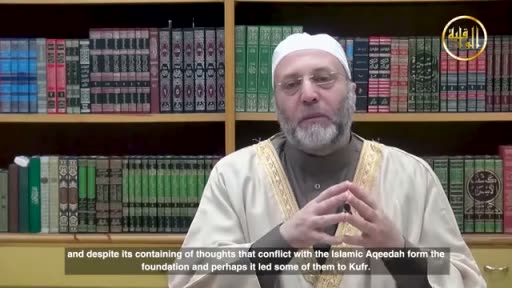
Unfortunately, however, when the Muslims entered their eras of decline, they began to overlook the feature that distinguished their creed: its being an intellectual basis. They began to accept thoughts, opinions and schools of thought that contradicted and were incompatible with it—that is, with the Islamic creed. We therefore saw many Muslims speaking about philosophy and pursuing it, even though it fundamentally conflicts with the correct method of thinking that Islam brought and through which it demonstrated its creed. This was also despite philosophy containing thoughts that fundamentally conflict with the Islamic creed, some of which might even lead to disbelief. We saw Muslims praising the literature of jahiliyyah and then European literature, heedless—or deliberately ignoring—that it conflicts with the Islamic viewpoint towards life. Psychology, sociology and education, whose corruption is apparent, came to be adopted and studied with an easy conscience and were sometimes even taught in Islamic institutes, despite the corrupt ideas they contain that conflict with Islam, in addition to the corruption of their methodology.
History and the Theory of Evolution
Students of history also began to drift along with Western scholars and philosophers in their view of history and their interpretation of its movement. They applied to their Islamic history the theories that the West supplied them with, such as saying that Islamic civilisation is an extension of earlier civilisations—those of jahiliyyah, India, Greece, Rome, Persia and so on. One might even find religious Muslim researchers and historians being carried along by a theory invented by some Westerners known as anthropologists. This theory claims that man was not originally a thinker and therefore had nothing to distinguish him from beasts, and that he might have been an ape or something resembling an ape. It accords with Darwin’s biological theory of evolution, which some Muslim students of biology found acceptable despite its fundamental conflict with the Islamic creed.
Politics, Economics and Legislation
As for those who study what is called political science, there is much that could be said. They failed to distinguish between knowledge that conflicts with their intellectual basis and knowledge that does not. In other words, they failed to distinguish, on the one hand, political thought and political systems, which Islam forbids taking from outside the Shari’ah, and, on the other, administrative systems and laws, which may be adopted, as Umar ibn al-Khattab, may Allah be pleased with him, adopted the diwan system. They began to adopt political thoughts and systems from East and West and even went so far as to attach them to Islam. They would say that Islam is democratic or socialist, speak of Islamic socialism, or say that its system is free or liberal, along with similar concepts imported from West or East. The same applies to students of economics.
They failed to distinguish between economic systems—which Islam forbids taking from outside the Shari’ah because they are legislation—and economics, which studies the means of developing the wealth of the community and solving economic crises and related problems, and which may be adopted provided that it does not conflict with the Shari’ah rules. They began comparing the socialist and capitalist systems to decide which was more suitable: socialism or capitalism. They were heedless of the fact that they possessed the greatest and most suitable economic system in the world; indeed, it is the only sound one. With regard to legislation and detailed laws, many Muslims came to find it acceptable to seek judgement from courts that settled their disputes by means of man-made legislation and laws which did not emanate from the Islamic creed and, naturally, were not deduced from the Book and the Sunnah. They also came to accept that rulers should look after their affairs by means of that legislation and those laws.
The Way Back to Revival
These are only a very few examples of the intellectual confusion from which the Islamic Ummah suffers because the Islamic creed has been removed from its position as an intellectual basis in life. Given such a condition, it is not surprising to see the Muslims in this state of decline and deterioration, having lost their identity, personality and civilisational distinctions. How can they claim to have achieved revival while all these defects remain? Dear brothers, there is no way—no way—for the Muslims today to return to their former honour, strength and revival except by adopting the Islamic creed as an intellectual basis upon which they can rebuild their intellectual and civilisational edifice. Praise be to Allah, Lord of all the worlds.
Viewers’ Questions
I will now remain with you to address any questions that may have come in during this episode.
Is the Islamic Creed a Political Creed?
The questioner, Brother Abdullah, says that the Islamic creed is described as a political creed. Does this statement not taint the creed? In fact, this matter depends on what politics means as a word and as a concept, both in the language and as it appears in the Shari’ah. Unfortunately, in our time, secular politics and the politics of tyrants have distorted the meaning and concept of politics. The term politics has therefore acquired a bad and repellent connotation among people: they understand it as something that conflicts with purity, cleanliness and taqwa. That is because the politicians who dominate the world today recognise neither halal nor haram. They give no weight to the spiritual, human or moral aspect, but only to material value, domination and coercion. They do not refrain from using any means whatsoever to achieve goals that realise material value alone.
The Meaning of Politics and Taking Care of Affairs
What is the true meaning of the word politics? Politics, as the Arabs originally used the word—I mean, it was said of the person tending horses that he tends the horses: sāsa, yasūsu. But in Arabic usage, in the customary Arabic meaning of the word politics before Islam, politics meant taking care of people’s affairs. It appears with this meaning in the hadith of the Messenger of Allah, may Allah bless him and grant him peace: «كانت بنو إسرائيل تسوسهم الأنبياء، كلما هلك نبي خلفه نبي» — ‘The Children of Israel were governed by the Prophets. Whenever one Prophet died, another succeeded him.’ [Sahih al-Bukhari 3455], to the end of the hadith. Thus, the Children of Israel were governed by the Prophets. The word tasūsuhum derives from sāsa, yasūsu, siyāsah. If we examine this hadith’s meaning, we find that politics here means taking care of affairs: the Prophets used to take care of the Children of Israel’s affairs. «كلما هلك نبي خلفه نبي، وإنه لا نبي بعدي، وسيكون خلفاء فيكثرون» — ‘Whenever one Prophet died, another succeeded him. There will be no Prophet after me, but there will be Caliphs, and they will be many.’ [Sahih al-Bukhari 3455] Thus, when the Prophet, may Allah bless him and grant him peace, says that after the era of the Prophets has passed there will be Caliphs who assume the task of governing people, this means that they assume responsibility for taking care of people’s affairs.
Consequently, the politics conducted in Islam by the person in authority—the Imam, the Caliph—is the taking care of affairs. This is the meaning of politics in the Arabic language and in Islam. For this reason, jurists in the past wrote books entitled Politics—that is, books on the subject of the fiqh of politics, political fiqh. They wrote on this subject of politics. It is therefore not a new term for the Muslims. Even in contemporary usage, politics in its general meaning—regardless of the practices of the rulers of our time—means taking care of affairs. When society is in urgent need of an authority that controls its affairs, organises its life, prevents people from attacking one another, and imposes the system that is supposed to have emanated from society’s own culture, this is called political action. The ruler who rules conducts people’s politics: he takes care of their affairs. Consequently, every thought that exists in order to take care of people’s affairs, produces a particular way of life, forms a particular character for society and gives life a particular shape is called a political thought.
The Islamic Creed Is Spiritual and Political
Consequently, when we look at priestly religions that, according to their viewpoint, limit themselves to regulating man’s relationship with the Creator, these are described as priestly, spiritual religions that have no connection with politics. By contrast, when we look at creeds from which systems have emanated to regulate relationships in society and give society a particular way of life, these are described as political creeds. Into which of these two classifications does the Islamic creed fall? Is it a spiritual creed or a political creed? The truth is that, in our time, the Islamic creed alone is simultaneously both a spiritual and a political creed. It is a spiritual creed because it is founded upon belief in Allah, Glorified and Exalted is He, the Creator of the heavens and the earth, and establishes the connection between the servant and his Creator through iman and worship. It is political because systems for life have emanated from it. It gives society a way of life and regulates its relationships according to the Shari’ah that emanated from this Islamic creed. The Islamic creed is therefore rightly described as a political creed. From it emanated the legal rulings that the jurists of the past called Shari’ah politics. When the Islamic texts from the Book and the Sunnah provide a ruling system, an economic system, a social system and a system of foreign relations; provide rules for the Islamic State’s foreign relations; and provide rules for the judiciary, evidence and so on—when the Islamic Shari’ah brings rules that regulate all relationships between people in society, completely and without exception—this means that Islam brought a political system. Since this political system emanates from belief in Allah, His angels, His Books, His Messengers and the Last Day—that is, since belief in the Islamic creed and the testimony that there is no god but Allah and that Muhammad is the Messenger of Allah necessitate following and adhering to this system, establishing a society upon it and establishing an Islamic life in accordance with it—this means that the Islamic creed is a political creed.
The Islamic creed is therefore simultaneously a spiritual and a political creed. This is what distinguishes it from other creeds, which are either spiritual, such as the priestly religious creeds and so on, or political, such as the capitalist creed—the creed of separating religion from life—or the Marxist communist creed and so on. There are thus spiritual creeds and political creeds. The Islamic creed, however, does not split man’s personality. It does not divide his personality into a relationship with his Creator, Glorified and Exalted is He, governed by its own system, and a life detached from this religious commitment and this iman. This is what it means to say that the Islamic creed is a political creed. Yes, it is truly a political creed. This has obliged the Muslims to devote their lives to embodying this meaning: Islam must possess sovereignty on earth—that is, what Allah has revealed must rule in the lives of the Muslims—and Islam must be carried to the world as a civilisational message.
Is the Word of Tawhid Enough to Enter Paradise?
Brother al-Abid says: It is reported in the hadith: «من قال لا إله إلا الله دخل الجنة» — ‘Whoever says lā ilāha illā Allāh will enter Paradise.’ [See: Sahih Ibn Hibban 169] Can someone for whom lā ilāha illā Allāh is not an intellectual basis in life attain Paradise? What the dear brother asking the question means is this: suppose someone adopts the Islamic creed but treats his iman as a spiritual faith that produces only worships and moral qualities, and perhaps certain relationships such as social relations in accordance with Islam, while not adopting Islam as a system for life, society and state. Will such a person enter Paradise? Let us be completely clear. A person who knowingly embraces the creed of separating religion from life, thereby removing from Islam the legislation that regulates people’s relationships in society, and says that Islam has no ruling system, no economic system and no legislation by which the judiciary rules; and that man must instead rely on man-made legislation in ruling and economics, in the courts, in commercial and economic relations and in foreign policy; and that Islam consists only of spiritual and moral legislation and, at most, contains a system for personal status—that is, for the family—then we say that this is disbelief in a part of Allah’s religion. Whoever disbelieves in a part of Allah’s religion has disbelieved in the religion of Allah, Exalted is He. He said:
﴿ أَفَتُؤْمِنُونَ بِبَعْضِ ٱلْكِتَـٰبِ وَتَكْفُرُونَ بِبَعْضٍ ۚ فَمَا جَزَآءُ مَن يَفْعَلُ ذَٰلِكَ مِنكُمْ إِلَّا خِزْىٌ فِى ٱلْحَيَوٰةِ ٱلدُّنْيَا ۖ وَيَوْمَ ٱلْقِيَـٰمَةِ يُرَدُّونَ إِلَىٰٓ أَشَدِّ ٱلْعَذَابِ ﴾
‘Do you then believe in part of the Book and disbelieve in part? What is the recompense for those among you who do that except disgrace in this worldly life? On the Day of Resurrection they will be returned to the severest punishment’ [2:85]
Yes, whoever declares that Islam is merely a spiritual creed connected only to worships, moral qualities, and some family guidance and personal-status rules has disbelieved in a large body of definitive Shari’ah rules about which there is no room for doubt or leniency. Such a person has left the fold of Islam. As for the many ignorant Muslims among the general public who have not learned, understood or… and who, because of their ignorance and without realising it, acted according to what reality dictated to them: the condition of each one must be examined individually. It is not correct to issue a blanket judgement of disbelief against them.
Is There an Intellectual Basis More Suitable Than Islam?
Sister Amal says: Peace be upon you, and Allah’s mercy and blessings. And peace be upon you, and Allah’s mercy and blessings. She asks: Have the Muslims today found new intellectual bases that are more effective and beneficial for their lives than Islam? At one time, groups of Muslims imagined that the Western intellectual basis was more suitable, so they adopted the creed of separating religion from life. As we have said, whoever embraces this creed has left Islam. Before them, groups of people embraced the Marxist creed—the creed that there is no god and that life is matter—and thereby disbelieved. They thought and imagined that these intellectual bases were what would bring man revival and elevation. This was nothing but the result of being influenced by these imported cultures. Both those influenced by the creed of separating religion from life and those influenced by the creed that there is no god and that life is matter imagined that such a creed constituted an intellectual basis upon which they could build their culture.
Many of them consequently acted through political parties to promote these thoughts, imagining that if the Muslims removed Islam from the political sphere and carried this intellectual basis—or one of these two imported intellectual bases—they would achieve revival just as others had. The Islamic Ummah suffered through this experiment for decades, went through its travails and squandered enormous energies for the sake of the Western capitalist viewpoint. Others squandered them for the sake of the socialist viewpoint during the popularity of Marxist communist socialism. But did they find an intellectual basis other than Islam that is suitable for life? We state with certainty and decisiveness—and this is part of iman, for if we said otherwise, we would have disbelieved—that neither the Muslims nor non-Muslims will find any creed other than the Islamic creed that constitutes an intellectual basis suitable for their lives. It is the intellectual basis that gives the correct and true comprehensive intellectual conception of the universe, man and life; of what preceded them and what follows them; and of their relationship with what preceded them and what follows them. It gives man a method for living. Because it is from Allah, Glorified and Exalted is He, it is the absolute truth, while everything else is absolute falsehood.
How Is the Word of Tawhid Established as an Intellectual Basis?
Brother Abu al-Rashid asks: You say that the word of tawhid must be the Muslim’s intellectual basis. How can this be firmly established among the Muslims today, as the Prophet, may Allah bless him and grant him peace, and the Companions did when they carried the da’wah, whether during the Makkan stage before the establishment of the Islamic State or during the Madinan stage and thereafter—that is, under the Islamic State? They carried Islam by means of intellectual conviction. If people embrace the Islamic creed on the basis of evidence and proofs—that is, if they exercise their thinking and embrace Islam with awareness and comprehension—they will take it as their intellectual basis. The efforts we are making now, such as this programme and many other efforts, aim to make the Muslims understand clearly that Islam is not merely spirituality and not merely values, as some of those who are called Islamists today claim. They say that Islam brought values and left the Muslims to realise these values through whatever systems they consider and approve, and that there is no problem in adopting systems from here and there. It is shameful to call someone who carries this thought an Islamist, because in this respect it has no connection with Islamic thought, near or far. This thought permits the Muslims to continue drawing from Western culture and its concepts, legislation and systems under the heading that Islam did not bring detailed systems for life, but instead brought values and left the Muslims to realise those values. This claim is false, false, false, false. The Islamic Shari’ah consists of detailed Shari’ah legal rulings for every human action without exception. It therefore cannot be said that Islam gave us values and left us to decide how to realise them. As we discussed in previous episodes, some expressed this by saying that Islam brought the objectives—comprehensive objectives, objectives of the Shari’ah—and left it to the Muslims to realise these objectives over the passage of time through newly created legislation, without holding to a fiqh that existed at some earlier time or in some earlier age. They consequently began fabricating new rulings against the religion of Allah, Glorified and Exalted is He, under the title of contemporary readings, for which Allah, Exalted is He, has sent down no authority.
Yes. Our duty now is to address people intellectually and expose the imported thoughts and the deviant thoughts that falsely, unjustly and slanderously wear the garb of Islam. If Allah wills, we will discuss in detail in a later episode how to carry the da’wah. The series we are now presenting is entitled How to Carry the Islamic Da’wah, and, if Allah wills, the following episodes will address this aspect in detail.
Public Freedoms in Western Thought
Brother Jamal Bournat asks: What is the true extent of the danger that the creed of freedoms poses to the continuation of humanity? Dear brother, I thank you for this very important question. Many Muslims gave their opinion on freedoms in a superficial and hasty manner, without taking the trouble to understand the term freedoms that came from the West. They took the linguistic meaning of the word freedoms and looked into the Islamic heritage. There they found, for example, that Umar ibn al-Khattab, may Allah, Exalted is He, be pleased with him, said: ‘Since when have you enslaved people, when their mothers gave birth to them free?’ This statement, of course, was made in the context of an incident of remarkable significance and of judging justly between people. Here, however, the word freedom has a linguistic meaning: the difference between a person being free and being owned by someone else—freedom as opposed to slavery. This is not the meaning of public freedoms in the political and technical sense used today. Today, public freedoms are the banner of a political thought upon which Western life is based.
The concept of these public freedoms must not be understood by looking in language dictionaries or by examining occurrences of the words free, freedom, free people and so on in the Book, the Sunnah, the heritage, or what has been transmitted from the Companions, may Allah, Exalted is He, be pleased with them. The term public freedoms must be understood according to what it means today so that we can know Islam’s ruling on it. In the West today, public freedoms mean that man, after emerging from the Middle Ages, freed himself from the domination of the Church and the domination of kings who controlled people on the pretext of the so-called theory of divine delegation—that is, that the king was delegated by Allah and could therefore control people’s conduct and impose whatever he wished upon them. The Western peoples freed themselves from the kings of divine delegation and from the Church’s control, and eventually reached the separation of religion from life. The separation of religion from life necessarily entailed the idea of public freedoms, because it removed every authority over man’s thinking, his way of life and, consequently, his conduct.
How, then, is man to choose his way of life and conduct? The matter is left to him. This is the origin of the idea of public freedoms, which leaves it to man—and leaves it to society—to choose how to live. What society chooses is then made into law through legislative assemblies that represent it. The task of authority in Western life is therefore reduced to a single heading: protecting the freedoms. What is meant by that? They divided these freedoms into personal freedom, freedom of opinion, freedom of belief and freedom of ownership.
Freedom of Belief
As for freedom of belief, they say that a person is free to believe in whichever religion he wishes and to move from one religion to another as he pleases, and that no religion has any role in ruling or politics. If this idea is applied in our countries as intended, it follows that people may not be prevented from apostatising from Islam. Anyone would be allowed to conduct an open campaign calling upon people to apostatise from Islam and to call publicly, through broadcasting and broad, open activity, for people to disbelieve in Islam, the Qur’an, the Messenger of Allah, may Allah bless him and grant him peace, and even Allah, Mighty and Exalted is He. One implication of freedom of belief is that people must be left to do so. They therefore say: No, you have no right to uphold a ruling that the jurists upheld for hundreds of years, namely the penalty for apostasy. You have no right to kill an apostate. Yet we have explicit hadiths requiring the killing of an apostate, and this is one of the prescribed punishments upon which all Muslim jurists agreed: one who apostatises is killed. He, may Allah bless him and grant him peace, said: «من بدل دينه فاقتلوه» — ‘Whoever changes his religion, kill him.’ [Sahih al-Bukhari 3017] Muslim scholars agree that an apostate is asked to repent and, if he does not repent, is killed. How can this be reconciled with freedom of belief?
Personal Freedom
Personal freedom, meanwhile, states that a person may choose whatever way of life he wishes. He may eat whatever he wishes, and you have no right to prevent him from eating any food he wants. You have no right to go to a Muslim and tell him that you forbid him from eating pork—even though he is a Muslim—because he is free to do whatever he wishes: to drink alcohol, use cannabis, commit fornication and, beyond that, engage in homosexual acts. This is the meaning of personal freedom that the West praises and does not allow anyone to approach. People may do whatever they wish in their lives and choose to live however they wish. Look at the ruin and calamities built upon this idea: the idea of personal freedoms—personal freedom in the West.
Freedom of Ownership
Freedom of ownership is the freedom embodied in the capitalist system. It leaves man free to earn and increase wealth in any way he wishes, provided that it is not a blatant and open assault upon people: in other words, do not steal, do not plunder openly and do not seize wealth by force. There is no problem, however, with acquiring wealth through gambling, usury and the various means to which people mutually consent through capitalist companies, through the sale of debts and so on—through every form of exchanging wealth that the human mind can invent. This is what produced the capitalist system. In reality, one or two percent of society came to own more than ninety percent of society’s wealth. A small minority owns enormous wealth, while the majority divide the crumbs among themselves. This is freedom of ownership: to do whatever you wish with your wealth and dispose of it however you wish, with no halal or haram. The idea of halal and haram does not exist at all for these people.
Freedom of Opinion
Likewise, freedom of opinion means that you may say whatever you wish and no one will come near you. We know that, under the heading of freedom of opinion, people in the West—in liberal, secular society—have been allowed to violate others and their sacred things. The Prophet, may Allah bless him and grant him peace, is insulted; mocking cartoons are drawn; and films are made that violate the honour of the Prophet, may Allah bless him and grant him peace, his household, his family and the Companions, and so forth. Anyone who tries to object is the one who is tried, suppressed and punished. Freedom of opinion means saying whatever you wish without anyone preventing you from speaking. Yet Allah, Glorified and Exalted is He, has made it one of the most important Shari’ah legal rulings that a person must say only what pleases Him, Mighty and Exalted is He. He, may Allah bless him and grant him peace, said, conveying the combined meaning of two narrations: «وإن المرء ليتفوه بالكلمة من غضب الله، لا يلقي لها بالاً، فتهوي به في جهنم سبعين خريفاً» — ‘A person may utter a word that incurs Allah’s wrath, paying it no heed, and fall through Hell because of it for seventy autumns.’ [See: Sahih al-Bukhari 6478; Jami‘ al-Tirmidhi 2314] He asked: ‘Are we held accountable for what we say, O Messenger of Allah?’ He replied: «ويحك! وهل يكب الناس على مناخرهم في جهنم إلا حصائد ألسنتهم؟» — ‘Woe to you! What else throws people upon their faces into Hell except the harvests of their tongues?’ [Jami‘ al-Tirmidhi 2616] Allah, Exalted is He, said:
﴿ إِنَّ ٱلسَّمْعَ وَٱلْبَصَرَ وَٱلْفُؤَادَ كُلُّ أُو۟لَـٰٓئِكَ كَانَ عَنْهُ مَسْـُٔولًا ﴾
‘Indeed, the hearing, the sight and the heart—each of them will be questioned’ [17:36]
The State and the Protection of Freedoms
These are the public freedoms that some people now promote, saying that the Muslims accept a state that preserves and protects the freedoms and that it is not the state’s responsibility to impose a way of life. This has nothing whatsoever to do with Islam. Some now promote the claim that the state we seek—the state which, according to them, Islam accepts—is not a state that imposes a particular way of life, forbids the prohibitions that Islam has forbidden and makes obligatory the obligations that Islam has imposed. Rather, they claim, it is a state that leaves people to do whatever they wish, gives them the opportunity to do whatever they wish so long as none of them attacks another, and treats religions and creeds equally. It is therefore a state based on the Western concept: a state concerned only with protecting the freedoms and providing people with security and prosperity. These are alien concepts that some of those who now set themselves up to speak in the name of Islam are promoting as though they came from Islam.
A Word That Kings Hate
Brother Mazen Amin Muhammad asks: What, in your opinion, made the Bedouin say to the Messenger, may Allah bless him and grant him peace, when he asked him, ‘What do you call to, O Muhammad?’ and the Messenger, may Allah bless him and grant him peace, answered, ‘I call to lā ilāha illā Allāh’: ‘The Arabs and non-Arabs will fight you over it. It is a word that kings hate’? I thank you for this question, which seems to summarise the episode we have presented. When the early Arabs heard the testimony that there is no god but Allah and that Muhammad is the Messenger of Allah, they understood that it was an intellectual basis that would demolish the way of life followed by the people of jahiliyyah. They understood that the people of jahiliyyah would recognise its danger to them, that it had come to change their way of life, that they would consequently be pushed into the back ranks if it spread, and that it would put an end to their rule and prestige. He recognised this and therefore said: ‘It is a word that kings hate.’
Today, dear brothers, we say that the Islamic creed must be carried as the Muslims’ intellectual basis and as an ideology from which a system for life emanates. This is speech that kings hate. Every organisation and every branch of an organisation that states this view or opinion is therefore banned throughout the world, even if it is not accused of a single material act. A few days ago in Indonesia, during arguments in the case concerning the banning of Hizb ut-Tahrir in Indonesia, the judge questioned a political official: Why is Hizb ut-Tahrir banned? Is it accused of material acts? He replied: It is not accused of material acts, but it is accused of a thought; that thought is more dangerous than material acts. What is that thought? It is the thought that calls for the establishment of an Islamic State that unites the Islamic world and implements the Islamic Shari’ah, thereby putting an end to the system of freedoms. It is therefore an extremist thought more dangerous than material acts. It is a creed that kings hate. This is the meaning you asked about, dear brother, and I thank you for this question.
The People of Shuʿayb and the Separation of Religion from Life
Brother Hilal al-Shami asks: Did the people of Shuʿayb not separate religion from politics? This is really a contribution, and I thank him for it. He sent us verses from the Book of Allah, Exalted is He, showing what those people were like—that is, how today’s creed of separating religion from life resembles what the people of Shuʿayb adopted before. Allah, Exalted is He, said:
﴿ ۞ وَإِلَىٰ مَدْيَنَ أَخَاهُمْ شُعَيْبًا ۚ قَالَ يَـٰقَوْمِ ٱعْبُدُوا۟ ٱللَّهَ مَا لَكُم مِّنْ إِلَـٰهٍ غَيْرُهُۥ ۖ وَلَا تَنقُصُوا۟ ٱلْمِكْيَالَ وَٱلْمِيزَانَ ۚ إِنِّىٓ أَرَىٰكُم بِخَيْرٍ وَإِنِّىٓ أَخَافُ عَلَيْكُمْ عَذَابَ يَوْمٍ مُّحِيطٍ ﴾
‘And to Madyan We sent their brother Shuʿayb. He said, “O my people! Worship Allah; you have no god other than Him. Do not give short measure or weight. I see you in prosperity, but I fear for you the punishment of an all-encompassing Day.”’ [11:84]
﴿ وَيَـٰقَوْمِ أَوْفُوا۟ ٱلْمِكْيَالَ وَٱلْمِيزَانَ بِٱلْقِسْطِ ۖ وَلَا تَبْخَسُوا۟ ٱلنَّاسَ أَشْيَآءَهُمْ وَلَا تَعْثَوْا۟ فِى ٱلْأَرْضِ مُفْسِدِينَ بَقِيَّتُ ٱللَّهِ خَيْرٌ لَّكُمْ إِن كُنتُم مُّؤْمِنِينَ ۚ وَمَآ أَنَا۠ عَلَيْكُم بِحَفِيظٍ ﴾
‘O my people! Give full measure and weight with justice. Do not deprive people of their things, and do not act wickedly on earth, spreading corruption. What Allah leaves for you is better for you, if you are believers. I am not a keeper over you’ [11:85–86]
What was their response? Here Shuʿayb calls them to the way of life that Allah, Glorified and Exalted is He, approves and that would elevate them and their standing. What did they say? They said what those who separate religion from life say today. Listen to what they said:
﴿ قَالُوا۟ يَـٰشُعَيْبُ أَصَلَوٰتُكَ تَأْمُرُكَ أَن نَّتْرُكَ مَا يَعْبُدُ ءَابَآؤُنَآ أَوْ أَن نَّفْعَلَ فِىٓ أَمْوَٰلِنَا مَا نَشَـٰٓؤُا۟ ﴾
‘They said, “O Shuʿayb! Does your prayer command you that we abandon what our forefathers worshipped or that we refrain from doing with our wealth whatever we please?”’ [11:87]
These are our possessions; we will do with them as we please. This is freedom of ownership, one of the public freedoms. Freedom of ownership means: we will do with our wealth as we please. What have you to do with our wealth?
﴿ قَالُوا۟ يَـٰشُعَيْبُ أَصَلَوٰتُكَ تَأْمُرُكَ أَن نَّتْرُكَ مَا يَعْبُدُ ءَابَآؤُنَآ أَوْ أَن نَّفْعَلَ فِىٓ أَمْوَٰلِنَا مَا نَشَـٰٓؤُا۟ إِنَّكَ لَأَنتَ ٱلْحَلِيمُ ٱلرَّشِيدُ ﴾
‘They said, “O Shuʿayb! Does your prayer command you that we abandon what our forefathers worshipped or that we refrain from doing with our wealth whatever we please? You are surely the forbearing, the right-minded!”’ [11:87]
We know you to be forbearing and right-minded, so what makes you say this now—telling us not to do some things with our wealth and to do others? This is our wealth; we will do with it as we please. This is the idea of the public freedoms: freedom of ownership.
Human Rights in Islam
Thank you, Brother Hilal. Sister Suhair Hamid asks: What human rights does Islam guarantee in ruling and administration? This is a very broad question. The idea of human rights is fundamentally a legislative idea that lists what man is and is not entitled to: what right does he possess that no one may prevent him from exercising? His rights are such and such. When Islam brought legislation, it brought an integrated system of human rights. It did not content itself, as today’s man-made legislators do, with talking about human rights. When Islam legislated a Shari’ah that assigns Shari’ah rules to people’s actions—to all their actions—and left no action without a Shari’ah rule, it thereby clarified man’s rights and duties, what is forbidden to him, what is recommended for him to do and what is disliked for him to do.
Do you know of any system in the world that sets out the rulings for people’s actions in such detail, dividing them into five categories? Laws do not do this. Laws say: the citizen’s rights are such and such; his duties—which generally amount to paying taxes—are such and such; and certain things are prohibited within a limited sphere. Islam, however, told people: these are your obligations, and it clarified the duties incumbent upon them. At the same time, these obligations are rights that belong to them, so no one has the right to prevent them from fulfilling them. Let me give you an example. Among the obligations in Islam is enjoining what is right and forbidding what is wrong. Muslims must enjoin what is right and forbid what is wrong. He, may Allah bless him and grant him peace, said: «من رأى منكم منكراً فليغيره بيده، فإن لم يستطع فبلسانه، فإن لم يستطع فبقلبه، وذلك أضعف الإيمان» — ‘Whoever among you sees something wrong must change it with his hand; if he is unable, then with his tongue; and if he is unable, then with his heart, and that is the weakest of iman.’ [Sahih Muslim 49a] Allah, Exalted is He, said:
﴿ كُنتُمْ خَيْرَ أُمَّةٍ أُخْرِجَتْ لِلنَّاسِ تَأْمُرُونَ بِٱلْمَعْرُوفِ وَتَنْهَوْنَ عَنِ ٱلْمُنكَرِ ﴾
‘You are the best Ummah brought forth for mankind: you enjoin what is right and forbid what is wrong’ [3:110]
This is an obligation, and at the same time this obligation is a right that belongs to the people. No ruler possessing authority may prevent people from enjoining what is right and forbidding what is wrong, as happens under today’s repressive regimes in the Islamic world.
If someone stands up and criticises, saying, ‘This is halal and this is haram; the ruler may not do that; this ruler has been negligent; this official has acted wrongly,’ he is immediately pursued on charges of insult, bad manners, insolence, offending the royal person, the princely person, the sultan’s person, and so on. Thus, people are deprived of something that is an obligation and, at the same time, a right belonging to them. There are therefore obligations, and there are rights. For example, the state has obligations towards the subjects, and the subjects of the Islamic State have rights over it. The subjects in the Islamic State means Muslims and non-Muslims, for the Islamic State does not look after the affairs of Muslims alone. It looks after the affairs of all people who hold its citizenship and live within it, Muslims and non-Muslims alike. The subjects of the Islamic State have the right to receive security free of charge, without paying for it directly; to receive medical treatment and healthcare free of charge, poor and rich alike; and to be provided with a complete education, poor and rich alike, without payment—although a wealthy person may pay someone to teach his child if he wishes, and so on. The Islamic State’s duty of care also requires it to secure people’s sustenance and their basic needs of food, clothing and shelter—to secure housing, clothing and food for every single person.
If a person is unable to secure these needs for himself, the state guarantees them for him and is obliged to provide them. This is Islam’s ruling. We can explore these details later. By clarifying the duties of the caretaker, the duties of the Islamic State, what is permissible for people, what is obligatory for them and what is forbidden to them, Islam has legislated a complete system which, as a whole, constitutes people’s rights in Islam. Anyone who wishes to study this further can be directed to detailed books. We cannot go into great detail in this field here, or the whole night would not be enough for us.
Building the Intellectual Basis amid Western Thoughts
The respected brother or sister Muna Belhaj asks: How can an intellectual basis be built in people amid the crowding of Western thoughts and their deep-rooted presence in people’s minds? Of course, I answered this question a short while ago, so we will not repeat the answer. Perhaps it was the first question we answered: we must carry Islam intellectually. If there is anything to add now, it is that Islam is being confronted by other thoughts. Naturally, people cannot be devoid of a thought that they carry. We are dealing with people who are not devoid of thoughts; rather, for decades, Western culture and civilisation have invaded them with their thoughts. People are now heavily influenced by the Western intellectual basis and the products it has produced. The Islamic method of carrying Islam as a da’wah to people is to bring down the thoughts they possess and eliminate them.
That is, their corruption and invalidity are exposed. Islamic thoughts are then presented with their evidence—with definitive evidence that convinces man. Matters of creed are presented with their rational or transmitted evidence, while matters of legislation are presented together with their Shari’ah evidences, which confirm that they have been deduced from the Book of Allah and the Sunnah of the Messenger of Allah—that is, that they emanate from the Islamic creed. Allah, Exalted is He, said:
﴿ لَآ إِكْرَاهَ فِى ٱلدِّينِ ۖ قَد تَّبَيَّنَ ٱلرُّشْدُ مِنَ ٱلْغَىِّ ۚ فَمَن يَكْفُرْ بِٱلطَّـٰغُوتِ وَيُؤْمِنۢ بِٱللَّهِ فَقَدِ ٱسْتَمْسَكَ بِٱلْعُرْوَةِ ٱلْوُثْقَىٰ لَا ٱنفِصَامَ لَهَا ﴾
‘There is no compulsion in religion. Right guidance has become distinct from error. Whoever rejects taghut and believes in Allah has grasped the firmest handhold, which can never break’ [2:256]
It begins, then, with rejecting taghut—that is, with bringing down the false thoughts, the thoughts of taghut. After those thoughts have fallen and their invalidity has been exposed, the thoughts of Islam are presented upon their ruins. Truth and falsehood cannot coexist in man’s mind. Falsehood must be brought down and the truth presented. Allah, Exalted is He, said:
﴿ كَذَٰلِكَ يَضْرِبُ ٱللَّهُ ٱلْحَقَّ وَٱلْبَـٰطِلَ ۚ فَأَمَّا ٱلزَّبَدُ فَيَذْهَبُ جُفَآءً ۖ وَأَمَّا مَا يَنفَعُ ٱلنَّاسَ فَيَمْكُثُ فِى ٱلْأَرْضِ ﴾
‘Thus does Allah set forth truth and falsehood. As for the foam, it passes away as scum, while that which benefits people remains on the earth’ [13:17]
This is an intellectual struggle. The Prophet, may Allah bless him and grant him peace, and his noble Companions engaged in this intellectual struggle from the beginning of his prophethood. They engaged in a creedal and intellectual struggle with Qurayshi society whose aim was to bring down the creeds, customs, thoughts and systems by which people lived, so that Islam’s civilisational, intellectual and legislative structure could take their place. This does not belong merely to one particular stage. Until the Day of Resurrection, it is the continuing work of the Islamic Ummah to campaign intellectually against all other thoughts and creeds, bring them down intellectually and offer Islam as the alternative. Allah, Exalted is He, said:
﴿ بَلْ نَقْذِفُ بِٱلْحَقِّ عَلَى ٱلْبَـٰطِلِ فَيَدْمَغُهُۥ فَإِذَا هُوَ زَاهِقٌ ۚ وَلَكُمُ ٱلْوَيْلُ مِمَّا تَصِفُونَ ﴾
‘Rather, We hurl the truth against falsehood, and it crushes it; thereupon it vanishes. Woe to you for what you describe’ [21:18]
The Civilisational Struggle
From this, Islam states with complete clarity that the real struggle in the world is not a struggle between nationalities, geography or borders, nor is it a struggle over wealth. It is a civilisational struggle: an arena in which thoughts meet. The arena does not necessarily always have to be military. Military confrontation in Islam took place only to the extent required and was not itself the objective. Its purpose was to break down the borders that stood in the way of the thought’s spread. The real struggle waged by Islam, however, was a struggle of thoughts and civilisations—a struggle between Islamic civilisation and the other civilisations. From its earliest eras, Islam was victorious in the struggle of civilisations. It eliminated Roman civilisation, eliminated Persian civilisation, defeated Indian civilisation in the battle and defeated Greek philosophy. No civilisational opponent could stand before it. It felled all of them and remained standing in the arena for hundreds of years. Then Western civilisation arrived at a time when the Muslims had become heedless of understanding their Islam, civilisation and culture. The Muslims—not Islam—were defeated before Western civilisation because they did not carry Islam properly and confront Western civilisation with it.
Conclusion
We will stop here, dear brothers, with these questions. We ask Allah, Glorified and Exalted is He, to grant us and you the reward for this episode, for what we offer, what we have offered and what we will offer by His permission; and to make our knowledge and deeds sincere for His Noble Face. I ask blessings and peace upon Allah’s Messenger, his family, his Companions and those loyal to him. In Allah’s name, the Most Gracious, the Most Merciful.
﴿ وَٱلْعَصْرِ إِنَّ ٱلْإِنسَـٰنَ لَفِى خُسْرٍ إِلَّا ٱلَّذِينَ ءَامَنُوا۟ وَعَمِلُوا۟ ٱلصَّـٰلِحَـٰتِ وَتَوَاصَوْا۟ بِٱلْحَقِّ وَتَوَاصَوْا۟ بِٱلصَّبْرِ ﴾
‘By time! Man is surely in loss, except those who believe, do good deeds, urge one another to the truth and urge one another to patience’ [103:1–3]
Peace be upon you, and Allah’s mercy and blessings.