Opening Passage from The System of Islam
Delivering the da’wah requires a concern for the complete implementation of the rules of Islam without the slightest concession. The da’wah carrier does not accept any truce or concession, negligence or postponement. Instead, he maintains the matter as a whole and definitively settles it immediately. He does not accept any intercession which would obstruct the truth. The Messenger of Allah (saw) did not accept the request of Thaqif’s delegation to be allowed to retain their idol, ‘Allat’, for three years before it was demolished, neither did he exempt them from Salah (prayer), as pre-conditions for embracing Islam. He refused also to leave the ‘Allat’ idol for two years or for one month as they had demanded. He refused this request firmly, and decisively, without any hesitation or leniency. This is simply because man has to either believe or not. After all, the result is either Paradise or Hell. However, the Messenger of Allah (saw) did accept their request not to have them demolish their idol by their hands. Instead, he asked Abu Sufyan and al-Mughirah ibn Shu’bah to demolish it.
He definitely did not accept anything less than the complete ‘Aqeedah and what it requires of implementation. As for the means and forms of carrying this implementation, the Messenger of Allah (saw) accepted them because they are not connected with the nature of the Islamic ‘Aqeedah. Therefore, care must be taken in delivering the Islamic da’wah to preserve the completeness of the Idea and the completeness of its implementation without any compromise in the Idea and Method. There is no harm in using any means it demands.
Introduction: Is the Shari’ah to Be Implemented Fully or Gradually?
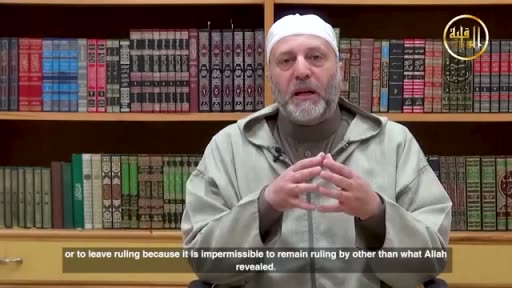
Peace be upon you, and the mercy and blessings of Allah. All praise is due to Allah, and prayers and peace be upon the Messenger of Allah, his family, his Companions and those who follow him. Welcome, my dear brothers, to a new episode of your programme, Halaqa Online. We are still discussing how to carry the da’wah—the da’wah to Islam. Today we address a matter of great importance, particularly because it is disputed among those who declare that they carry the da’wah to people. This especially concerns those who say that Islam must reach power but disagree over how Islam should be implemented in government and authority. Should Islam be implemented? Should the Shari’ah be implemented and established over all people at once? Or should it be implemented gradually, with rulings applied one after another, so that Shari’ah rulings become mixed with man-made rulings and this continues over time, as they say, until a day comes when everything implemented is from the Islamic Shari’ah?
This ongoing dispute under the banner of gradualism—is it permissible to implement Shari’ah rulings incrementally or not?
The Form of Gradualism Promoted by Some
The form of gradualism promoted by some is that those classified—in brackets—as Islamists who assume power should not implement a complete Islamic constitution or complete Islamic laws in the country. Instead, they begin by amending the constitution and laws little by little, usually according to what the House of Representatives will accept. Under the democratic conception of the state, this House is a legislative authority. The implementation of Islam thus becomes dependent upon the approval of the House of Representatives, which, they say, represents the people. Shari’ah rulings are then introduced little by little. This may take years and years; some even say that it may take generations before Islam is implemented in full. In addition, these people generally accept what they call developing Islam—that is, changing Islam’s form—which ultimately leads to emptying Islam of its content. They say that Islam did not originally bind us to a particular system of government, did not provide details for economic systems and did not provide details concerning foreign policy, and so on.
This discourse, when combined with the preceding argument, leads to an image where what they advocate—a state previously called Islamic but now termed the Civil State with an Islamic reference—is one that does not implement Shari’ah in its entirety. Such Shari’ah, with all its details, was suited only for its time and reflected a specific era from hundreds of years ago. They argue that today we must develop this Shari’ah and abandon many of the details supposedly perceived—or even invented, as some claim—by jurists over centuries. This leads to a state applying man-made laws and systems imported from abroad, yet retaining superficial Islamic elements or, as they say, preserving Islamic values while working towards achieving them without adhering strictly to the detailed rulings that were articulated by earlier jurists hundreds of years ago.
I am not now addressing all these issues; some have already been discussed in relation to the discourse on Shari’ah development and its flexibility, which we addressed previously.
Entering Man-Made Systems Under the Banner of Gradualism
What I am focusing on today is gradualism—what they call the gradual implementation of Shari’ah rulings. Certain movements and organisations classified as Islamic were given room, and at times were led to believe that room would be made for them, to penetrate the existing authorities in today’s Muslim world or enter them sufficiently to obtain a place or seat. This happened in several states. They then began justifying their entry into systems that rule by other than what Allah has revealed and their assumption of ministerial offices in which, for example, they implement man-made constitutions—that is, rule by other than what Allah has revealed. These organisations and movements had already decided to enter power. They then sought to justify entering an authority that rules by other than what Allah has revealed through the implementation of man-made laws and legislation, which the Qur’an calls Taghut.
They began searching for justifications and excuses. Some even called them proofs from the Qur’an or perhaps the Sunnah. Through them, they sought to make their own conduct seem acceptable, justify their entry into these systems and explain it to people under the banner of gradualism. They say, ‘We cannot impose Islam all at once, and we cannot obtain authority all at once, so there is no harm in implementing Islam gradually.’ What evidence did they cite? They cited strained, manufactured arguments. Among the most prominent was their claim that Allah’s Prophet Yusuf, peace be upon him, was, in their words, a minister in the Egyptian state at that time. They said that he was the minister of economy. They relied on this as evidence. They also turned to the account of the Negus (al-Najashi), for whom the Prophet—may Allah bless him and grant him peace—performed the funeral prayer in absentia when he died. They said, ‘The Negus was a Muslim, but he did not rule by what Allah had revealed.’ They therefore claimed that the Prophet’s conduct amounted to approval for the Negus, in his particular situation, to rule by other than what Allah had revealed.
They also cited further arguments, such as the fact that Shari’ah rulings were revealed gradually to the Prophet (may Allah bless him and grant him peace) and thus implemented in stages; some rulings were legislated progressively. I am not concerned here with refuting these claims at length. Instead, I will summarise because my focus is on examining this matter from a Shari’ah perspective—that is, what is Islam’s stance on it? However, brief remarks are necessary to dismantle the doubts they raised in an attempt to justify their participation in systems governed by man-made legislation under the guise of gradual implementation.
The Claim Concerning Yusuf, Peace Be upon Him
First, and briefly, the claim that Allah’s Prophet Yusuf, peace be upon him, entered a government that ruled by other than what Allah had revealed is nothing but an affront and a fabrication against Allah’s Prophet Yusuf, peace be upon him. Yusuf was the one who told the people—as the Noble Qur’an records:
﴿ إِنِ ٱلْحُكْمُ إِلَّا لِلَّهِ ﴾
‘Judgement belongs to Allah alone’ [12:40].
How could a prophet proclaim to people that judgement belongs to Allah, Exalted is He, that He alone is the Legislator and that He guides people, and then proceed to implement a Shari’ah other than the Shari’ah of Allah, Exalted is He? All that appears in the Book of Allah, Exalted is He, is that Yusuf said to Egypt’s al-‘Aziz:
﴿ ٱجْعَلْنِى عَلَىٰ خَزَآئِنِ ٱلْأَرْضِ ﴾
‘Appoint me over the storehouses of the land’ [12:55];
﴿ ٱجْعَلْنِى عَلَىٰ خَزَآئِنِ ٱلْأَرْضِ ﴾
‘Appoint me over the storehouses of the land’ [12:55].
Where is the indication in this verse that Yusuf, peace be upon him, ruled by other than what Allah had revealed? Is there any proof that Yusuf, peace be upon him, distributed wealth and managed it according to a law that contradicted Allah’s Shari’ah? Is there anything to indicate that this king compelled Yusuf, peace be upon him, to follow a particular law? Is there any proof concerning the king’s state—whether he embraced belief or not, and whether he followed Yusuf or not? Does the Qur’an contain anything indicating the nature of the system by which Egypt’s al-‘Aziz ruled at that time, so that anyone may claim that Yusuf, peace be upon him, assumed government under that law and implemented it? The only matter in the story of Yusuf, peace be upon him, that refers to a legislative aspect is Allah’s statement:
﴿ مَا كَانَ لِيَأْخُذَ أَخَاهُ فِى دِينِ ٱلْمَلِكِ ﴾
‘It was not for him to take his brother under the king’s law’ [12:76].
This specific verse indicates that Yusuf, peace be upon him, took his brother not under the king’s law, but under the Shari’ah of Ya‘qub—his father, Allah’s Prophet Ya‘qub, peace be upon him. Yusuf had asked his brothers, before they knew that he was their brother, ‘What is the penalty for the person in whose baggage it is found?’
﴿ فَمَا جَزَٰٓؤُهُۥٓ إِن كُنتُمْ كَـٰذِبِينَ ﴾
‘Then what is the penalty for it, if you are liars?’ [12:74].
What is the penalty for the person in whose baggage it is found? That is, when the measure—the king’s drinking cup—was placed in their baggage as a stratagem enabling Yusuf to keep his brother with him, he asked, ‘What is the penalty for the person in whose baggage it is found?’ They replied:
﴿ جَزَٰٓؤُهُۥ مَن وُجِدَ فِى رَحْلِهِۦ فَهُوَ جَزَٰٓؤُهُۥ ﴾
‘Its penalty is the person in whose baggage it is found; he himself shall be its penalty’ [12:75].
In other words, under the Shari’ah of Ya‘qub, peace be upon him, the penalty for theft was enslavement. That is how it is reported. This is therefore the only reference in the story of Yusuf, peace be upon him, to a legislative matter. In the account given by the Qur’an—in Surah Yusuf—Yusuf, peace be upon him, acted according to the Shari’ah of Ya‘qub, peace be upon him. There is not a single proof that our master Yusuf, peace be upon him, implemented a Shari’ah other than Allah’s Shari’ah. Far be it from a Prophet of Allah to implement anything other than Allah’s Shari’ah. Would Allah, Exalted is He, send a prophet who told people to worship Allah, obey Allah and implement Allah’s commands, only for that prophet to rule by other than what Allah had revealed?
Is this not an extreme presumption from those who claim Yusuf (may Allah bless him and grant him peace) ruled by anything other than what Allah has revealed, while he was a minister enforcing the king’s legal system? Whoever says—even hypothetically, though we reject it outright—that Yusuf (may Allah bless him and grant him peace) might have been permitted to apply the king’s Shari’ah in any circumstance is entirely mistaken. What concern do we have with Yusuf’s Shari’ah when Allah has sent down a complete system for us?
﴿ ٱلْيَوْمَ أَكْمَلْتُ لَكُمْ دِينَكُمْ وَأَتْمَمْتُ عَلَيْكُمْ نِعْمَتِى وَرَضِيتُ لَكُمُ ٱلْإِسْلَـٰمَ دِينًا ﴾
‘Today I have perfected your Deen for you, completed My favour upon you and approved Islam as your Deen’ [5:3]
Islam came as a perfect religion, bringing a comprehensive legal framework. The Exalted says:
﴿ لِكُلٍّ جَعَلْنَا مِنكُمْ شِرْعَةً وَمِنْهَاجًا ﴾
‘For each of you We have appointed a law and a method’ [5:48].
Every prophet had his own Shari’ah and method; thus the Shari’ah of the Prophet (may Allah bless him and grant him peace) includes His words:
﴿ وَمَن لَّمْ يَحْكُم بِمَآ أَنزَلَ ٱللَّهُ فَأُو۟لَـٰٓئِكَ هُمُ ٱلْكَـٰفِرُونَ ﴾
‘Whoever does not judge by what Allah has revealed—those are the disbelievers’ [5:44],
﴿ فَأُو۟لَـٰٓئِكَ هُمُ ٱلظَّـٰلِمُونَ ﴾
‘then those are the wrongdoers’ [5:45],
﴿ فَأُو۟لَـٰٓئِكَ هُمُ ٱلْفَـٰسِقُونَ ﴾
‘then those are the transgressors’ [5:47].
These explicit verses, and others that prohibit ruling by other than what Allah has revealed, are perfectly clear and definitive in authenticity and indication. The revealed law of those before us is not our law. Some jurists and mujtahids have said, as is well known among scholars of usul al-fiqh, that the revealed law of those before us is law for us unless it has been abrogated in our Shari’ah. If it has been abrogated in our Shari’ah, it cannot be adopted. Even those who permit adopting rulings from the revealed laws of earlier prophets that are reported in the Book of Allah or the Sunnah of His Messenger impose a condition: no text in our Shari’ah may abrogate them. Our Shari’ah has judged and decisively established that it is impermissible to rule by other than what Allah has revealed.
Thus, this doubt is entirely dismissed: the idea that Yusuf (may Allah bless him and grant him peace) ruled by anything other than what Allah has revealed—or that we may emulate him in such a general way without safeguards or conditions—merely to justify our own assumption of authority and power so we might rule according to the constitutions of these tyrants. In truth, we first decided upon this course of action and then sought justifications for it.
The Claim Concerning the Negus
They say that the Negus embraced Islam and that, when he died, the Prophet, may Allah bless him and grant him peace, performed the funeral prayer in absentia for him. It is never reported that the Prophet, may Allah bless him and grant him peace, ordered the Negus to rule by Islam or to leave office because he was not permitted to remain in power while ruling by other than what Allah has revealed. They say that this therefore amounted, as they put it, to the Prophet’s approval of the Negus ruling by other than what Allah has revealed. This claim is also false and has no evidence whatsoever. Why? Because the authentic reports that have reached us concerning the Islam of the Negus, for whom the Prophet, may Allah bless him and grant him peace, performed the funeral prayer, show that the Prophet, may Allah bless him and grant him peace, did not learn that he had embraced Islam until the time of his death. Revelation came to inform him that the Negus had died as a Muslim, and he said to his Companions: «مات اليوم رجل صالح، فقوموا فصلّوا على أخيكم أصحمة» — ‘Today a righteous man has died, so rise and pray over your brother Ashamah’ [Sahih al-Bukhari 3877]. The evidence shows that he had not known. Neither the Prophet, may Allah bless him and grant him peace, nor his noble Companions had previously known that the Negus had embraced Islam. It therefore cannot be said that the Prophet, may Allah bless him and grant him peace, approved of the Negus ruling by other than what Allah has revealed. How could he have approved of that when he did not originally know that the Negus had embraced Islam?
A clarification is necessary here so that many people do not confuse the matter. Najashi was a title for every ruler of Abyssinia at that time; it was not the name of a particular ruler. Just as Egypt’s rulers were called pharaohs, one pharaoh succeeding another, Abyssinia’s rulers were called Najashi. Authentic reports establish that the Najashi to whom the Muslims emigrated during the Makkan period, who received them well, allowed them to remain upon their Deen and protected them from harm, was not the same Najashi for whom the Prophet—may Allah bless him and grant him peace—performed the funeral prayer. He was also not the Najashi to whom the Prophet—may Allah bless him and grant him peace—sent a letter inviting him to Islam and saying, ‘Embrace Islam and you will be safe; Allah will grant you your reward twice.’ Had the first Najashi embraced Islam, the Prophet—may Allah bless him and grant him peace—would not have sent this invitation to another Najashi.
If he had been the same Najashi—let me repeat: if the Najashi whom the Companions reached had embraced Islam—the Prophet—may Allah bless him and grant him peace—would not have sent him a message saying, ‘Embrace Islam and you will be safe.’ The first Najashi was different from the second. We have no report saying that the first Najashi embraced Islam. He protected and defended the Muslims and allowed them to remain, and another Najashi came after him. The Prophet—may Allah bless him and grant him peace—sent the latter an invitation to Islam. Nor do we have any report saying that the Najashi who received the Prophet’s letter inviting him to Islam embraced it. When the Companions who had emigrated to Abyssinia came to Madinah in the seventh year, led by the Prophet’s cousin Ja‘far ibn Abi Talib, the Prophet—may Allah bless him and grant him peace—rejoiced at their arrival. They neither reported nor spoke of the conversion of either Najashi—the first or the second who came after him.
Then there is a report in Sahih Muslim stating that the Najashi over whom the Prophet may Allah bless him and grant him peace performed the funeral prayer was different from the Najashi to whom he sent an invitation to Islam. All these reports indicate that neither the Prophet nor the Companions had any prior information suggesting that this Najashi, for whom the Prophet may Allah bless him and grant him peace performed the funeral prayer, had embraced Islam. Therefore, it cannot be claimed that the Prophet approved of his ruling by anything other than what Allah has revealed. This evidence also falls away from this perspective: there is no proof that the Prophet knew the Najashi had embraced Islam to the extent that he would approve of his ruling by anything other than what Allah has revealed. Moreover, such reasoning is misplaced even if we were to assume—hypothetically—that the Najashi had embraced Islam.
The Negus was not in an Islamic land whose inhabitants were Muslims, so his case cannot be cited as evidence. By way of a hypothetical example, if the ruler of a non-Islamic country today embraced Islam, someone might say, ‘Look, he embraced Islam but did not rule by Islam.’ That reality is entirely different. Today, we are discussing Islamic lands whose people are Muslims, where the Islamic State was brought down and Shari’ah rule was eliminated. The disbelievers occupied these lands and imposed rulings other than Islam’s rulings. The Muslims became obliged to restore Islam’s rulings. We are therefore discussing Islamic lands that had been Dar al-Islam and whose inhabitants remained Muslim; they became obliged to rule by Islam. Islamic lands whose inhabitants are Muslims cannot be compared with a country whose inhabitants are all disbelievers.
Someone might cite that king of Abyssinia too, on the assumption that the Prophet—may Allah bless him and grant him peace—approved the Negus’s conduct. Yet this has not been established at all. Let us therefore leave these two claims and turn to the subject of implementing Islam.
The Obligation to Implement Islam in Full
Is it permissible in the Shari’ah to implement Islam partially? Or must it be implemented fully? All our definitive evidence—both in terms of its authenticity and indication—clearly demonstrates that ruling by other than what Allah has revealed is not permitted
﴿ وَمَن لَّمْ يَحْكُم بِمَآ أَنزَلَ ٱللَّهُ فَأُو۟لَـٰٓئِكَ هُمُ ٱلْكَـٰفِرُونَ ﴾
‘Whoever does not judge by what Allah has revealed—those are the disbelievers’ [5:44]
﴿ وَمَن لَّمْ يَحْكُم بِمَآ أَنزَلَ ٱللَّهُ فَأُو۟لَـٰٓئِكَ هُمُ ٱلْفَـٰسِقُونَ ﴾
‘Whoever does not judge by what Allah has revealed—those are the transgressors’ [5:47]
﴿ وَمَن لَّمْ يَحْكُم بِمَآ أَنزَلَ ٱللَّهُ فَأُو۟لَـٰٓئِكَ هُمُ ٱلظَّـٰلِمُونَ ﴾
‘Whoever does not judge by what Allah has revealed—those are the wrongdoers’ [5:45].
The Almighty says:
﴿ أَلَمْ تَرَ إِلَى ٱلَّذِينَ يَزْعُمُونَ أَنَّهُمْ ءَامَنُوا۟ بِمَآ أُنزِلَ إِلَيْكَ وَمَآ أُنزِلَ مِن قَبْلِكَ يُرِيدُونَ أَن يَتَحَاكَمُوٓا۟ إِلَى ٱلطَّـٰغُوتِ وَقَدْ أُمِرُوٓا۟ أَن يَكْفُرُوا۟ بِهِۦ وَيُرِيدُ ٱلشَّيْطَـٰنُ أَن يُضِلَّهُمْ ضَلَـٰلًۢا بَعِيدًا ﴾
‘Have you not seen those who claim to believe in what was revealed to you and what was revealed before you? They wish to seek judgement from Taghut, although they were commanded to reject it, and Satan wishes to lead them far astray’ [4:60].
What does this verse address?
The verse concerns those who wish to seek judgement from Taghut even though they were commanded to reject it. Instead of seeking judgement from Allah’s Shari’ah, they seek judgement from Taghut. The verse therefore condemns ruling by Taghut in absolute terms and describes ruling by other than what Allah has revealed as far-reaching misguidance from Satan:
﴿ وَيُرِيدُ ٱلشَّيْطَـٰنُ أَن يُضِلَّهُمْ ضَلَـٰلًۢا بَعِيدًا ﴾
‘and Satan wishes to lead them far astray’ [4:60].
In the same context, several verses later, Allah, Exalted is He, says:
﴿ فَلَا وَرَبِّكَ لَا يُؤْمِنُونَ حَتَّىٰ يُحَكِّمُوكَ فِيمَا شَجَرَ بَيْنَهُمْ ثُمَّ لَا يَجِدُوا۟ فِىٓ أَنفُسِهِمْ حَرَجًا مِّمَّا قَضَيْتَ وَيُسَلِّمُوا۟ تَسْلِيمًا ﴾
‘But no, by your Lord, they will not believe until they make you judge in their disputes, then find no discomfort within themselves about what you have decided and submit completely’ [4:65].
The verses speak of the obligation to rule by what Allah has revealed. The Arabic expression ‘what’ conveys generality: what Allah has revealed. Nothing may be excluded without evidence or a Shari’ah indication. Allah, Exalted is He, commanded us to rule by what He revealed:
﴿ وَأَنِ ٱحْكُم بَيْنَهُم بِمَآ أَنزَلَ ٱللَّهُ ﴾
‘And judge between them by what Allah has revealed’ [5:49];
﴿ وَأَنِ ٱحْكُم بَيْنَهُم بِمَآ أَنزَلَ ٱللَّهُ ﴾
‘And judge between them by what Allah has revealed’ [5:49];
﴿ وَٱحْذَرْهُمْ أَن يَفْتِنُوكَ عَنۢ بَعْضِ مَآ أَنزَلَ ٱللَّهُ إِلَيْكَ ﴾
‘And beware lest they tempt you away from some of what Allah has revealed to you’ [5:49].
﴿ وَٱحْذَرْهُمْ أَن يَفْتِنُوكَ عَنۢ بَعْضِ مَآ أَنزَلَ ٱللَّهُ إِلَيْكَ ﴾
‘And beware lest they tempt you away from some of what Allah has revealed to you’ [5:49].
Have you noticed this expression? Allah, Exalted is He, did not say here, ‘Beware lest they tempt you away from what Allah has revealed to you.’ Rather, He said:
﴿ وَٱحْذَرْهُمْ أَن يَفْتِنُوكَ عَنۢ بَعْضِ مَآ أَنزَلَ ٱللَّهُ إِلَيْكَ ﴾
‘And beware lest they tempt you away from some of what Allah has revealed to you’ [5:49].
This means that Allah, Exalted is He, warns the Prophet—may Allah bless him and grant him peace—against conceding any part of what Allah has revealed. Allah’s address to His Prophet is an address to his Ummah. The statement is therefore entirely clear: ruling by what Allah has revealed must be complete. Allah, Exalted is He, warns us against giving up any part of what He revealed to us and against being tempted away from any part of what Allah, Exalted is He, revealed to the Prophet—may Allah bless him and grant him peace. This is perfectly clear, my dear brothers. Allah, Exalted is He, says:
﴿ يَـٰٓأَيُّهَا ٱلَّذِينَ ءَامَنُوا۟ ٱدْخُلُوا۟ فِى ٱلسِّلْمِ كَآفَّةً ﴾
‘O you who believe, enter fully into Islam’ [2:208].
Scholars of exegesis explain that here, salam means Islam. When it says, ‘Enter into the salam entirely,’ it means enter into Islam entirely—you must accept Islam completely, apply its rulings fully, and adhere to it in totality. Consequently, we are obliged to implement Islam as a whole. If authority lies with a Muslim who fears Allah Almighty, acknowledges that the religion of Allah is true, recognises His Shari’ah as obligatory for implementation—since it alone is the law meant for people’s benefit and anything less than this is falsehood—then he must apply Islam completely. It is not permissible for him to say to people: ‘I will implement Islam gradually.’ Rather, he must implement it fully because we have been commanded to apply Islam in its entirety.
The Difference Between Gradual Revelation and Gradual Implementation
Someone asks: Did the Prophet (may Allah bless him and grant him peace) not implement Islam gradually? How so? They respond that from the moment the Prophet arrived in Madinah—where he became ruler of the Islamic state—the Shari’ah rulings were revealed progressively. By ‘gradualism,’ they mean one ruling was followed by another, or as it is said: verses descended piecemeal—the Qur’an came down over stages. Thus, legislative verses in Madinah arrived over ten years. Of course, there had been some legislative verses before the Prophet’s migration to Madinah—that is, during the Makkan period. They argue that since Qur’anic verses—including legislation—were revealed gradually over ten years of the Prophet’s life in Madinah when he was ruler and head of state, this proves Islam was implemented gradually. We must note here: this reasoning is entirely misplaced because the discussion concerns the revelation of legislation, not its implementation.
You have argued that the gradual revelation of legislation permits implementing Islam gradually—but this argument is invalid. The descent of legislation is an act of Allah Almighty; the piecemeal sending down of divine law by revelation is among His actions alone, not those of servants or even the Prophet (may Allah bless him and grant him peace). It is therefore impermissible to compare human actions with the acts of Allah under any circumstances. The matter concerns the Prophet (may Allah bless him and grant him peace), who serves as our model in implementation: did he delay enforcing a Shari’ah ruling after its revelation?
As soon as a ruling was revealed to the Messenger of Allah (may Allah bless him and grant him peace), he implemented it immediately and obligated believers in it without hesitation. It is therefore absolutely incorrect to claim that we may delay or postpone implementing any Shari’ah ruling for even a day, year, or years—we must attend to executing Allah’s command with utmost speed. There is no choice left for us; indeed, there can be none:
﴿ وَمَا كَانَ لِمُؤْمِنٍ وَلَا مُؤْمِنَةٍ إِذَا قَضَى ٱللَّهُ وَرَسُولُهُۥٓ أَمْرًا أَن يَكُونَ لَهُمُ ٱلْخِيَرَةُ مِنْ أَمْرِهِمْ ﴾
‘It is not for a believing man or woman, when Allah and His Messenger have decided a matter, to have any choice in their affair’ [33:36]
The obligation arises the moment we know Allah’s decree, hear it, and understand it by saying, ‘We hear and obey.’ Hearing and obedience mean direct commitment and execution. For Allah says:
﴿ يَـٰٓأَيُّهَا ٱلَّذِينَ ءَامَنُوا۟ لِمَ تَقُولُونَ مَا لَا تَفْعَلُونَ ﴾
‘O you who believe, why do you say what you do not do?’ [61:2]
I said, ‘It is prohibited.’ I must therefore adhere to this prohibition, and we must implement Allah’s ruling that prohibits it. Likewise, we must implement Allah’s ruling concerning what is obligatory. What proves this point and settles the dispute is that, after the Shari’ah rulings were revealed, Islam continued to spread and the Islamic State continued to expand. Makkah joined Dar al-Islam after most Shari’ah rulings had been revealed. Taif then joined Dar al-Islam, followed by the entire Arabian Peninsula.
No Respite for Those Entering Islam
Did the Prophet—may Allah bless him and grant him peace—give any respite to those who embraced Islam after they or their lands entered Dar al-Islam? Is there a single report establishing that he gave these people time before requiring them to adhere to the Shari’ah rulings? Did the Prophet—may Allah bless him and grant him peace—give tribes, individuals or groups time before they had to give up intoxicants after their prohibition was revealed? They say that intoxicants were prohibited in stages and cite this as evidence. This is false; intoxicants were not prohibited in stages. At one point, the Qur’an legislated that a Muslim must not approach prayer while intoxicated:
﴿ يَـٰٓأَيُّهَا ٱلَّذِينَ ءَامَنُوا۟ لَا تَقْرَبُوا۟ ٱلصَّلَوٰةَ وَأَنتُمْ سُكَـٰرَىٰ ﴾
‘O you who believe, do not approach prayer while you are intoxicated’ [4:43].
This verse serves as evidence of alcohol’s permissibility—not its prohibition—neither partially nor wholly. When drunkenness prevented prayer, it indicated that Islam had not yet prohibited alcohol at that time; thus, Muslims delayed drinking until after the Isha prayer. As for the verse stating:
﴿ يَسْـَٔلُونَكَ عَنِ ٱلْخَمْرِ وَٱلْمَيْسِرِ ۖ قُلْ فِيهِمَآ إِثْمٌ كَبِيرٌ وَمَنَـٰفِعُ لِلنَّاسِ وَإِثْمُهُمَآ أَكْبَرُ مِن نَّفْعِهِمَا ﴾
‘They ask you about intoxicants and gambling. Say: In both is great sin and benefits for people, but their sin is greater than their benefit’ [2:219],
by consensus among all scholars, this did not prohibit alcohol—proven by the fact that the Companions continued to drink and were not forbidden from doing so by the Prophet may Allah bless him and grant him peace until His words were revealed:
﴿ يَـٰٓأَيُّهَا ٱلَّذِينَ ءَامَنُوٓا۟ إِنَّمَا ٱلْخَمْرُ وَٱلْمَيْسِرُ وَٱلْأَنصَابُ وَٱلْأَزْلَـٰمُ رِجْسٌ مِّنْ عَمَلِ ٱلشَّيْطَـٰنِ فَٱجْتَنِبُوهُ ﴾
‘O you who believe, intoxicants, gambling, stone altars and divining arrows are an abomination of Satan’s handiwork, so avoid it’ [5:90].
Here, alcohol was prohibited outright, and Muslims immediately ceased drinking after having previously consumed it. This prohibition came only upon revelation of that verse. Did the Prophet may Allah bless him and grant him peace ever grant any respite to those who newly embraced Islam regarding abstention from alcohol?
Absolutely not, under any circumstance. There is no single report—neither in our sources nor in authentic tradition—that the Prophet may Allah bless him and grant him peace or his Rightly Guided successors after him ever permitted those who embraced Islam to abandon alcohol gradually. Instead, the prescribed punishment was enforced upon anyone drinking wine: either forty lashes or eighty. There is not a single narration granting any respite—whether to someone newly embracing Islam or to peoples whose lands had recently entered Dar al-Islam and then adopted it—to delay abstaining from alcohol. This has never been reported in any form, nor by a single authentic tradition.
The Delegation of Thaqif and the Demolition of al-Lat
The Sirah of the Messenger of Allah—may Allah bless him and grant him peace—also gives us the following example. When the Prophet—may Allah bless him and grant him peace—and his noble Companions opened Taif after the opening of Makkah, Taif joined Dar al-Islam and its people embraced Islam. They said, however, that implementing Islam’s rulings all at once was difficult for them. They asked the Prophet—may Allah bless him and grant him peace—for permission to embrace Islam without praying, but he rejected this completely: there is no Islam without prayer; there is no Islam without prayer. They asked him not to demolish their idol al-Lat for three years. They then asked for a year and a little more, but he refused. He gave them no respite at all in this matter. Why?
Why did the Prophet—may Allah bless him and grant him peace—not say, ‘These people are new to Islam and have only recently embraced it, so I can give them a month, two months, one year or two years to demolish their idols’? He gave them no respite. He agreed only that their idol al-Lat would be demolished immediately. Yes, he accepted a change in form, means and style. In other words, he accepted that they would not demolish their idol with their own hands, and he assigned Abu Sufyan and al-Mughirah ibn Shu‘bah to demolish al-Lat, which they did. A person may choose the form and means, but there is absolutely no room for compromise over implementing Islam in full. Islam was implemented in full: every ruling revealed to the Prophet—may Allah bless him and grant him peace—was implemented immediately. After the revelation of the rulings was complete, who could claim—or who would dare say—that the Prophet—may Allah bless him and grant him peace—or any of his Rightly Guided Caliphs gave those who embraced Islam time before requiring them to adhere to Islam’s rulings and implement Islam?
The Wars of Apostasy and the Withholding of Zakah
This has never been reported. Consider instead the account of apostasy and the Wars of Apostasy, among the great events faced by the first Caliph, Abu Bakr al-Siddiq, may Allah be pleased with him. As soon as al-Siddiq assumed the Caliphate, groups among the Arabs—most Arab tribes—seized the opportunity and apostatised. Some left Islam completely, some joined the lying claimants to prophethood, and some rejected payment of zakah without saying that they had left Islam. Some said that they had not apostatised, meaning that they had not returned to worshipping idols and statues. Many of those who did apostatise joined the false prophets; idol worship had, so to speak, become an old fashion. Others said, ‘I remain a Muslim, but we used to pay zakah to the Messenger of Allah and will not pay it to anyone else.’ These people had only recently embraced Islam. Some had become Muslim a few years before the Prophet—may Allah bless him and grant him peace—died, and others only a few months before his death.
Someone may say that the ruler can wait and delay the implementation of zakah. Many of them said: ‘We remain committed to Islam and to prayer.’ Some of the Companions said: ‘They have not abandoned prayer, O Commander of the Believers.’ He, may Allah be pleased with him, replied: «لأقاتلن من فرّق بين الصلاة والزكاة، لأقاتلنهم على عقال كانوا يؤدونه لرسول الله صلى الله عليه وسلم» — ‘I shall fight anyone who separates prayer from zakah. I shall fight them over even a rope they used to give to the Messenger of Allah, may Allah bless him and grant him peace’ [meaning of Sahih al-Bukhari 7284]. It was a rope they used to give to the Messenger, and he would fight them for ceasing to give it. Why? Because he knew that it is never permissible to leave people to abandon the rulings of Islam. Nor was it permissible for him, the Commander of the Believers—it was not permissible for him as Commander of the Believers—to delay or to give people a delay in implementing the Shari’ah rulings. All of these are decisive proofs that the complete implementation of the Shari’ah rulings is non-negotiable and may under no circumstances be treated lightly.
The Claim That Immediate Shari’ah Implementation Would Burden People
Among the doubts raised today to justify gradual implementation of Shari’ah rulings—now widespread among writers, bloggers, and others—they argue: how can we apply Islam to Muslims after generations accustomed to living under man-made legislation, not Allah’s law? These are capitalist laws, democratic laws, and other secular systems. These are generations unaccustomed to living by the Shari’ah of Allah, so they cannot suddenly bear its implementation. This is among the strangest claims one hears; it is unclear how people can say such things. They imagine that people can endure man-made legislation imposed by secular lawmakers—oppressive and unjust laws—and yet claim they lack the capacity to submit to what Allah has revealed. What does this mean from those who speak thus?
Such statements mean that these people imagine that applying the Shari’ah to people would cause them hardship and impose a heavy burden upon them, whereas applying man-made rulings such as those imposed by today’s tyrants would be lighter and easier for them. What inverted reasoning is this? How can an Islamic mentality speak in this way? Among our definitive and self-evident truths is that whoever applies laws other than Islam’s laws will be led by them into distress, misery and wretchedness. Allah, Exalted is He, says in the verse that we constantly repeat and with which we address people:
﴿ وَمَنْ أَعْرَضَ عَن ذِكْرِى فَإِنَّ لَهُۥ مَعِيشَةً ضَنكًا ﴾
‘Whoever turns away from My remembrance will have a life of hardship’ [20:124].
Here, remembrance does not mean mentioning Allah, Exalted is He, with the tongue. Here, remembrance means the Shari’ah of Allah, Mighty and Majestic.
This means that whoever turns away from applying the Shari’ah of Allah, exalted is He, will end in misery, decline, confusion, and ruin. On the contrary, it is the application of Allah’s Shari’ah—exalted is He—which elevates people to prosperity, security, and the resolution of their problems, enabling them to live in a manner that aligns with their innate nature (fitrah). Thus, they become secure and at ease in all that they require. Since humans are part of Allah’s creation, endowed with this natural disposition, He has named this religion the Religion of Fitrah
﴿ فَأَقِمْ وَجْهَكَ لِلدِّينِ حَنِيفًا ۚ فِطْرَتَ ٱللَّهِ ٱلَّتِى فَطَرَ ٱلنَّاسَ عَلَيْهَا ﴾
‘So turn your face towards the Deen as a hanif—the fitrah of Allah upon which He created mankind’ [30:30].
As long as Islam remains the Religion of Fitrah, implementing its rulings harmonises with human nature—the correct approach to addressing their problems—leading them to tranquillity. May Allah grant us a good life. He asks: Can people truly bear the implementation of the Shari’ah? Have you not read what Allah says:
﴿ وَمَا جَعَلَ عَلَيْكُمْ فِى ٱلدِّينِ مِنْ حَرَجٍ ﴾
‘He has placed no hardship upon you in the Deen’ [22:78]
Someone says to you, ‘Can people today bear the implementation of the prescribed punishments? Can people today bear the prescribed punishment of amputating the thief’s hand?’ Apparently, they believe that people can bear having their wealth left as plunder for whoever wishes, because the prescribed punishments are not implemented and retribution is not carried out. Allah, Exalted is He, says:
﴿ وَلَكُمْ فِى ٱلْقِصَاصِ حَيَوٰةٌ يَـٰٓأُو۟لِى ٱلْأَلْبَـٰبِ ﴾
‘In retribution there is life for you, O people of understanding’ [2:179].
The Shari’ah is life for people.
﴿ يَـٰٓأَيُّهَا ٱلَّذِينَ ءَامَنُوا۟ ٱسْتَجِيبُوا۟ لِلَّهِ وَلِلرَّسُولِ إِذَا دَعَاكُمْ لِمَا يُحْيِيكُمْ ﴾
‘O you who believe, respond to Allah and the Messenger when he calls you to that which gives you life’ [8:24].
The Shari’ah is people’s true life. What is applied to people today is not Shari’ah. What do you see in it that people like?
Nothing except what the sinful and wicked love: those who love to live in darkness and misguidance and do not wish to see anyone compel them to observe the Shari’ah rulings. Indeed, some of them wish for the Shari’ah rulings to be applied to them and for themselves to be bound by them, because they are not strong enough to confront their own devil. As the Prophet, may Allah bless him and grant him peace, said: «عجب الله من قوم يدخلون الجنة في السلاسل» — ‘Allah marvels at people who enter Paradise in chains’ [Sahih al-Bukhari 3010]. Have you not heard many people say: ‘We wish that the Islamic State would be established so that it would bind us to the Shari’ah rulings and everyone would become bound by them’? Then people say to you—someone says to you: ‘Can people now bear the implementation of the Shari’ah?’ What do they bear? They bear the implementation of the rulings of disbelief now imposed upon them, which cause them calamities and afflictions through economic, moral, social and economic crises. People bear these unjust and oppressive man-made rulings and the injustice imposed by unjust and tyrannical rulers, yet supposedly they cannot bear the law of Allah, exalted is He, which came as a mercy to people:
﴿ وَمَآ أَرْسَلْنَـٰكَ إِلَّا رَحْمَةً لِّلْعَـٰلَمِينَ ﴾
‘We have sent you only as a mercy to all worlds’ [21:107].
What kind of inverted reasoning is this?
They claim that people require time—a gradual period—to bear the implementation of Islam; yet this, in reality, is a false accusation and slander against Islam, portraying its Shari’ah as an oppressive burden when it is, in truth, mercy for humanity. What has actually occurred?
The Effect of Implementing Islam in Conquered Lands
Go back—go back to history. What happened among the peoples whose lands were opened and to whom Islam was applied before they embraced it? The Islamic Shari’ah was applied to them: they were ruled by what Allah had revealed, and their affairs were cared for according to the Shari’ah rulings before they embraced Islam. What happened? Among those to whom Islam was applied, whoever opened his heart to Islam embraced it because he saw its truth, justice and so on. Adhering to it then became natural for him. Those who did not embrace Islam nevertheless had their affairs cared for by Islam and found that this Shari’ah gave them their rights and did them no injustice. Allah, Exalted is He, says:
﴿ إِذَا جَآءَ نَصْرُ ٱللَّهِ وَٱلْفَتْحُ وَرَأَيْتَ ٱلنَّاسَ يَدْخُلُونَ فِى دِينِ ٱللَّهِ أَفْوَاجًا فَسَبِّحْ بِحَمْدِ رَبِّكَ وَٱسْتَغْفِرْهُ ۚ إِنَّهُۥ كَانَ تَوَّابًۢا ﴾
‘When Allah’s help and the victory come, and you see people entering Allah’s Deen in crowds, then glorify your Lord with praise and seek His forgiveness; He is ever accepting of repentance’ [110:1–3].
The part of this surah relevant here is:
﴿ إِذَا جَآءَ نَصْرُ ٱللَّهِ وَٱلْفَتْحُ وَرَأَيْتَ ٱلنَّاسَ يَدْخُلُونَ فِى دِينِ ٱللَّهِ أَفْوَاجًا ﴾
‘When Allah’s help and the victory come, and you see people entering Allah’s Deen in crowds’ [110:1–2].
What followed victory and the opening, after which Islam was applied?
People entered Allah’s Deen in crowds. Why? Was it because they found the Islamic Shari’ah burdensome and harsh? Had they found Islam’s rulings harsh, they would not have embraced Islam. They would have remained Christians, drinking intoxicants, eating pork, inheriting according to their own law and marrying according to their own law. But Islam was applied to them and spread justice, so they embraced Islam. They found that this Shari’ah gave them their rights, solved their problems and accorded with their fitrah. Then someone comes and says that we must apply Islam gradually to people so that we do not burden them. Islam came as a mercy to people. First, we call for the resumption of the Islamic way of life and the implementation of Islam because Allah, Exalted is He, commanded it. Second, we are convinced—fully convinced—that implementing Islam is what leads people to a sound and effective way of life that elevates them, solves their problems, reassures their hearts and organises their actions according to what Allah, Exalted is He, has legislated and approved for them.
Allah, the Exalted, intends only good for people; He does not wish to burden them. The fact that Allah has placed no hardship upon you in religion is one aspect of this response—refuting the foolish claim made today that implementing Islam would be burdensome for people.
The Binding Nature of Law and Refusal to Placate Islam’s Enemies
There are people over whom
﴿ ٱسْتَحْوَذَ عَلَيْهِمُ ٱلشَّيْطَـٰنُ ﴾
‘Satan has gained mastery over them’ [58:19].
They are enemies of the Deen, enemies of Allah and enemies of Islam. The Shari’ah has not instructed us to accommodate or placate them:
﴿ وَدُّوا۟ لَوْ تُدْهِنُ فَيُدْهِنُونَ ﴾
‘They wish that you would compromise, so they would compromise’ [68:9].
No. Some people will submit to the Shari’ah of Allah, Exalted is He, only through authority. Uthman, may Allah be pleased with him, therefore said, ‘Allah restrains through authority what He does not restrain through the Qur’an.’ Has any of you ever known a law anywhere in the world that is applied to people only if they choose it? Go and live in a Western country: will its authority consult you before applying its law to you? Throughout the world, throughout history, under every law and among all people, laws are by their nature binding. Advanced nations apply laws that express their culture, but if a society contains someone who rejects those laws and does not belong to that culture, will the authority consult him before applying the law?
This does not exist anywhere in the world, and the same applies in Islam. A Shari’ah will be implemented that the believers accept, rejoice in, rise through and celebrate. Yet there will also be people whose hearts are the hearts of devils, over whom Satan has gained mastery and who do not accept the implementation of Allah’s Shari’ah. Will you consult them, give them time or say, ‘I shall consider your case; perhaps I will choose an optional system for you,’ as some foolish people say today? Nothing of the kind exists anywhere in the world. Some submit to law and Shari’ah because of their piety, while others submit only through the power of authority. This is natural throughout the world, and it applies all the more to the Shari’ah of Allah, Exalted is He. That is one aspect.
The Danger of Mixing the Shari’ah with Man-Made Legislation
As for the very important aspect here, what do those who say, ‘We will implement something of Islam and something of disbelief, something of the Islamic Shari’ah and something of man-made laws,’ actually do? They mix. What do they mix? The wholesome with the foul; they mix the wholesome with the foul. Do you know what these people do when they apply some of Allah’s Shari’ah and some human law? They disfigure the Shari’ah of Allah, Exalted is He, and permit it to be mixed as purity is mixed with impurity. The laws of disbelief are foul and impure, from Satan’s work. How can some people find it acceptable to mix the Shari’ah of Allah, Exalted is He, with the filth produced by man-made legislators? It is well known, my brothers, throughout the world—even among man-made legislators—that the laws applied in a state are integrated and coordinated, each supporting the others, so that they produce a way of life for a particular type of society built upon a particular viewpoint towards life. In other words, legislation adopted as a constitution and laws in a country or state is formulated according to the way of life that its people have accepted.
All these laws are designed to complement one another: each law completes another, each system reinforces others. They all emerge from a particular viewpoint towards life that this people have accepted, that society has embraced, and that Ummah has endorsed. This is true when speaking of an established community living according to its own will—not as in today’s reality across Islamic lands, where systems are imposed upon them from above without belonging to them. It is well known that laws are structured so they complement each other: one holds another by the throat, and they harmonise together coherently, providing a specific way of life.
Consequently, a Western legislator would never contemplate mixing the communist or feudal system with the capitalist system. The capitalist system he applies, the laws concerning public freedoms and the democratic system all form a legislative framework designed to realise the pattern of life that society has accepted. This legislation is therefore consistent and integrated, producing the pattern of life that society has accepted according to its viewpoint towards life.
The Integration of Rulings and Their Results
The rulings of Allah, exalted be He, are the Shari’ah that came to establish an Islamic way of life mandated by the Islamic creed. From this emerged a viewpoint towards life; thus, when Islam is fully applied and its rulings support one another, each legal ruling completes the others, yielding the good fruit Allah intended—what we call the objectives of the Shari’ah: a way of living that elevates humanity to true happiness. Imagine if you mixed Shari’ah rulings with man-made legislation from a capitalist system. What would result? A distorted perversion that disfigures Islam’s image, rendering any implemented Shari’ah rulings—mixed as they are with state laws—sterile and incapable of achieving the purpose for which Islam was revealed. Thus, to what does this lead?
This causes people’s trust in the Shari’ah of Allah, Exalted is He, to decline and collapse because it does not produce the intended result. Shari’ah rulings produce their intended results only when they are implemented as an integrated whole. For example, the prescribed punishment of amputating the thief’s hand was legislated alongside Shari’ah rulings that secure people’s full rights so that they are not driven to steal. The Shari’ah rulings thus work together. The prohibition and prescribed punishment of zina were legislated alongside Shari’ah rulings that regulate marriage and thereby prevent people from wanting to commit zina. Imagine telling people that zina is haram while allowing media outlets to spread vice and arouse people’s instincts through the programmes they broadcast and show. Is this not what happens with those who now claim that they want to implement Islam? They say, ‘I educate people in Islam, teach them the Qur’an and provide incentives for students of the Shari’ah and mosque imams,’ and tell people to adhere to Islam. At the same time, however, they allow the wicked to show vice and immorality on their satellite channels and other media, inciting people to commit vice and arousing their instincts. They then say, ‘We are implementing Islam’s rulings gradually.’ Who legislated this gradualism for you?
Who permitted you to do this? Who permitted you to mix Islamic rulings with the rulings of disbelief? This is a fabrication, an affront and an assault upon the Shari’ah of Allah, Exalted is He. The Shari’ah came to be implemented in full. Allah, Exalted is He, is Good and accepts only what is good: «إن الله طيب لا يقبل إلا طيباً» — ‘Allah is Good and accepts only what is good’ [Sahih Muslim 1015]. He does not accept His Shari’ah being mixed with the law of another. That is utterly impossible for Him, Exalted is He. This is in addition to the Shari’ah proofs already cited, which are definitive in authenticity and indication and establish that ruling by what Allah has revealed must be complete. Some say, ‘How can we rule by what Allah has revealed when the military stands over our heads and others stand against us?’ We reply: you placed yourselves in this situation. Perhaps we shall discuss this matter in greater detail another time.
The Authority Required to Implement Islam
Whoever assumes authority must either be the true ruler—possessing full power and sovereignty—and thus obliged to implement Allah’s Shari’ah completely. Or he may sit in a position of governance under conditions where authority, strength, and dominance belong to others; in this case, he is not truly a ruler. It is impermissible for such an individual to occupy the seat of governance unless actual power and force reside in his hands.
Banu Shayban and Supporting the Deen from All Sides
I conclude here with an account concerning the Messenger of Allah—may Allah bless him and grant him peace—from which we may learn. In the tenth year of his mission, the Prophet—may Allah bless him and grant him peace—sought nusrah from the tribes that came to Makkah during the Hajj season. He presented Islam to them and asked them to support Islam. He told them that Allah commanded them to believe in him, protect him and support him. Among those whom he invited to Islam and from whom he sought nusrah were Banu Shayban ibn Thalabah, who lived in the north-east of the Arabian Peninsula on the borders of Persia. They told him, ‘We can support you against the Arabs, but not against the Persians. We have treaties with those people and cannot break them. We do not consider ourselves strong enough to break our treaties with Persia. If you come to us and we support you, we can support you against the Arabs, but not against the Persians.’
The Prophet—may Allah bless him and grant him peace—said, ‘You have not answered badly, since you have spoken plainly and truthfully.’ But he also told them: ‘Allah’s Deen will be supported only by one who encompasses it from all sides.’ This matter can be supported only by one who encompasses it from all sides. This was a clear indication from the Prophet—may Allah bless him and grant him peace—that whoever seeks to assume authority must hold complete power. The disbelievers must have no way over him in that government, nor may the wicked and criminals have any way over him. Allah, Exalted is He, says:
﴿ وَلَن يَجْعَلَ ٱللَّهُ لِلْكَـٰفِرِينَ عَلَى ٱلْمُؤْمِنِينَ سَبِيلًا ﴾
‘Allah will never grant the disbelievers any way over the believers’ [4:141].
As the exegetes explain, this verse has legislative significance: Allah, Exalted is He, does not legislate for the believers that the disbelievers should have any way over them.
﴿ وَلَن يَجْعَلَ ٱللَّهُ لِلْكَـٰفِرِينَ عَلَى ٱلْمُؤْمِنِينَ سَبِيلًا ﴾
‘Allah will never grant the disbelievers any way over the believers’ [4:141].
Allah, the Exalted, forbids that there be any way for disbelievers over believers—noble brothers. This is what Allah has enabled me to convey in this session. I hope I have fulfilled my duty well and may Allah accept it from us all.
Viewers’ Questions
I now turn with you to the questions that may have come in during this episode of Halaqa Online.
Can Islam Be Implemented Fully in One Day?
Brother Nadhir bin Saleh says, ‘Peace be upon you, and the mercy and blessings of Allah.’ And upon you be peace, and the mercy and blessings of Allah. Is it practically possible to implement Islam in full on the very day the Khilafah is established? In other words, are there not detailed rulings—such as changing the currency and the education system—that require time to implement? Naturally, the point is not that everything must be implemented in an instant, a minute, an hour or one day. That is not the issue. Those who advocate gradual implementation of Shari’ah rulings mean that someone says, ‘We shall legislate some rulings in the state now and postpone others.’ We have seen such models. They say, ‘We have existing constitutions. We will amend them gradually: we will amend this article now and another article after some time.’ They are not discussing the operational time required to implement Islamic rulings after those rulings have been adopted.
No. He says, ‘We will adopt Islam’s rulings gradually over a period of years, perhaps decades and perhaps generations’—if they implement them at all. We know that these people have already emptied the Shari’ah of its content, so that the Shari’ah remains with them without content. Some have even stated openly, ‘We have retained Islam and abandoned the Shari’ah, because the Shari’ah is the law of jurists. Today we have an Islam that expresses itself through new, modern laws,’ and so on. In any case, those who theoretically advocate gradual implementation do not mean that implementation will proceed while preparations are made, institutions are established and employees are put in place. No, certainly not. Naturally, this takes time. Immediate and complete implementation of Islam means the following: when a Muslim reaches power through the Shari’ah method, he says, ‘This is the constitution of the Islamic State. The entire constitution consists of Shari’ah rulings deduced from the Book of Allah and the Sunnah of His Messenger—may Allah bless him and grant him peace. These are the Shari’ah rulings deduced by the jurists, and we intend to implement them.’
This is what we have adopted concerning disputed matters—matters of ijtihad in which an adoption is necessary. This is the adopted position. We have now adopted an Islamic constitution and Islamic Shari’ah, and we will immediately begin the procedures that will put them into effect. Appointing employees, changing existing arrangements, changing the currency situation and converting many administrative structures into others naturally take time according to human capacity. This is human nature. When you wish to pray, carrying out the prayer takes a sequence of actions: you roll up your sleeves, perform wudu, leave your place, reach the place of prayer and pray, and so on. Fulfilling your duty takes time. The point is that we begin immediately with the procedures that lead to Islam’s complete implementation. Naturally, this cannot be completed in one or two days, or one or two weeks. Some matters can be implemented immediately; others may require time to establish the administrative arrangements needed to implement them.
This is not gradualism. It is the immediate start of implementation, which may take some time to complete. That is entirely natural. The Prophet—may Allah bless him and grant him peace—ordered Abu Sufyan and al-Mughirah ibn Shu‘bah to demolish al-Lat in Taif. There was some travelling distance between them and al-Lat. Immediate implementation meant that they set out towards it. The journey itself takes time. Suppose there were a mile, a kilometre or so between them and it. Immediate implementation means beginning to carry out the command at once and continuing until it is completed, however much time the execution itself requires. In the name of Allah.
Did the Scholars of the Salaf Require Immediate Implementation?
Brother Rafiq al-Darb asks about some people who do not recognise their own defeat before the pressure of a reality that removed Islam from the Ummah’s life by destroying its state. They ask, ‘No scholar among the Salaf preceded you in your understanding that Islam must be implemented immediately. How do we answer this in detail?’
Instead, we turn the question back to him and say: provide us with a single statement from any of the Imams of the Muslims who permitted a ruler to refrain from implementing Islam, or to delay its implementation, or to allow people to abstain temporarily from what is prohibited. No one has ever said this. The idea of gradual implementation of Shari’ah rulings—search for it in the books of heritage—and you will find no trace at all. There is a consensus among scholars that Islam must be implemented immediately. Some matters may exceed the material capacity of the ruler to enforce, but such incapacity is natural and not optional. For example, there were those who defied the Islamic state and refused submission, making it impossible for the ruler to apply Shari’ah rulings against them—such as hudud punishments—until they submitted. This forced inability, along with similar cases, is a matter of necessity rather than grounds for argumentation.
When there are cases in which the Shari’ah permits exceptional rulings, this must be based on Shari’ah evidence. Some people argue incorrectly, for example, that Umar ibn al-Khattab suspended the implementation of the prescribed punishment for theft in the Year of Famine. They say: there he is—he did not implement Islam completely. Rather, he did implement Islam completely, because Islam itself commands that the prescribed punishment be suspended in a state of famine. This is not the suspension of the Shari’ah; it is the implementation of the Shari’ah, because the Shari’ah itself commanded that the prescribed punishment be withheld at a time of famine and in a case of doubt. The Prophet, may Allah bless him and grant him peace, said: «ادرؤوا الحدود عن المسلمين ما استطعتم» — ‘Ward off the prescribed punishments from the Muslims as much as you can’ [Jami al-Tirmidhi 1424; weak]. They also cite many proofs, forcing these proofs into service even though they have no sound basis. We are not now discussing this flood and this list of false or failed inferences that they make, most of which they falsely and slanderously attribute to the Commander of the Believers, Umar ibn al-Khattab, may Allah be pleased with him.
What Are the Roots of Partial Shari’ah Implementation?
Brother Salim al-Bahith says, ‘Peace be upon you, and the mercy and blessings of Allah.’ And upon you be peace, and the mercy and blessings of Allah. He asks: What are the roots of the idea of partial implementation of the Shari’ah? It has no Islamic intellectual roots whatsoever.
Its roots lie in submission to the pressure of a harsh reality that many people are unable to overcome. Instead of making reality the object of their thought and treatment, they make it the source of their thought, so it blinds their thinking. It is also an intellectual defeat before the Western cultural, civilisational and legislative invasion. They felt weak and unable to confront the legislation imposed by the West. Finding themselves unable to reject all of it, they began manufacturing arguments and searching for excuses to retain some of that legislation.
To avoid angering them, we now hear a new refrain by which they justify their submission to the laws of disbelief—these man-made laws. It is the statement we mentioned: ‘We do not live alone in this world. We do not live alone in this world, so we cannot disregard the international community or the United Nations Charter, and we cannot implement everything we want.’ One of them said, ‘The international community will never permit the implementation of the Shari’ah, so the Shari’ah cannot be implemented.’ These are the roots.
They are the roots of humiliation and submission before the will of the colonial disbeliever. Whoever wishes to submit to the colonial disbeliever will be unable to implement Islam, either partially or fully, because the West will not accept any implementation of Islam from you in the first place. The West will accept nothing less than your country, will, policies, resources and wealth remaining at its disposal. Whoever wishes to accommodate the international community will not merely abandon part of the Shari’ah; he will abandon the entire Shari’ah, his dignity, his state’s sovereignty, his wealth and his political decision-making, because the West will accept nothing less. If you can free yourself from the West’s authority, you can implement in full what you want. The matter is a battle—a struggle over who imposes his will and who breaks the other’s will. These people have had their will broken and have submitted to what the Westerner wants.
They were given a list of questions that served as a test: ‘Answer these questions. If all your answers satisfy us, we will approve you. If some answers do not accord with our orientation, you will remain outside power and political life.’ Some of them answered the entire test as the masters in the West wanted and thereby became acceptable for some role in political life. That role was to reinforce the thrones of the secularists and consolidate their system. This was the result: they compromised and surrendered everything. Nothing at all remained of the principles to which they had claimed adherence.
Conclusion
This is all, my noble brothers. We have reached the limit of these questions; let us suffice with this. I ask Allah, exalted is He, to teach me and you what benefits us, to increase our knowledge, and to make our knowledge and deeds sincere for His Noble Face. May He make us among those who say and do. And I pray that He assists us in applying this thought and legislation within the arena of life under a righteous state following the Prophetic method—He is indeed the Hearing, the Responsive. I send prayers upon the Prophet, his family, companions, and all who follow them. May peace, mercy and blessings of Allah be upon you.