Introduction: The Substance Carried by the Carriers of the Da’wah
May peace, Allah’s mercy and His blessings be upon you. In the name of Allah, the Most Gracious, the Most Merciful. Praise belongs to Allah, and may prayers and peace be upon the Messenger of Allah, his family, his Companions and those who follow him. Welcome, my dear brothers, to a new episode of your programme, Halaqa Online. We are still discussing how to carry the Islamic da’wah. In this episode, I address an important subject that I have entitled ‘The Culture of the Da’wah’. In other words: the culture carried by the carriers of the da’wah. What is meant by this title? Several currents have arisen in our time around the question: what material should carriers of the da’wah carry to the people? What should they address them with? Naturally, since they are all carriers of an Islamic da’wah, they agree that what they carry must be Islam; they do not speak about anything other than Islam. Their cause is Islam. That is the matter in general. The subject lies in the details.
What from Islam do the carriers of the da’wah carry to the people? Do they carry Islam in general terms, without details? Or do they carry the whole of Islam in detail—idea by idea and ruling by ruling—and make it the substance with which they call people? Or do carriers of the da’wah focus exclusively on the creed? Or do they confine themselves to matters beyond the creed that, in addition to the creed, concern individual conduct: the rulings of worships, morals and some transactions?
Approaches to Determining the Culture of the Da’wah
There are several currents. One group of carriers of the da’wah—one current among those carrying the da’wah in our time—holds that we are in a phase resembling the Makkan phase in which the Prophet (may Allah bless him and grant him peace) was sent, between the beginning of his Prophethood and the Hijrah. They say: this is the Makkan phase, and during that phase almost everything revealed from the Qur’an concerned creeds. The Prophet (may Allah bless him and grant him peace) did not address people with legislation; he addressed them with the creed. We should therefore follow the Prophet’s example and confine ourselves in this phase to matters of creed. Then, once the Islamic State has been established, Islam’s legislation will be applied, people will learn that legislation, and it will come into being automatically. This is one current that carries this view. Another current says that we carry Islam in detail: we carry Islam in its entirety to the people, beginning with the creed and then the major and minor rulings—worships, transactions, morals, punishments, and so on. We explain the whole of Islam, leave no ruling without carrying it as a da’wah to the people and teaching it to them, and make the whole of Islam our cause in carrying the da’wah.
A third group says that, in our time, there is no place for the political legislation that was applied during the time of the Prophet (may Allah bless him and grant him peace) and the Caliphs after him, under the Islamic State. There is therefore no place for discussing the rulings of political legislation. Today, they say, we should confine ourselves to the creed, purify it of the impurities that have become attached to it, call people to the creed and its purification, and address them regarding Shari’ah rulings connected with their individual conduct: worships, morals and some of the transactions to which individuals adhere in their lives, including the rulings on marriage and divorce, and so on. Political legislation is the last thing that concerns them—if it concerns them at all. It does not enter their calculations. Some even state explicitly that no such legislation exists today. If rulers are found who apply it, there are others who can issue fatwas for them; it is not our concern when addressing the general public.
Critique of Confining the Da’wah to Creed or Individual Rulings
These currents, as we see, have failed to achieve the intended objective in carrying the Islamic da’wah. Those who claim we should limit ourselves today to conveying creed alone—following the Prophet’s (may Allah bless him and grant him peace) example in Makkah—have erred. The Prophet addressed a pagan society of disbelievers, whereas we now address Muslims, even if their lives are not Islamic, their societies are not Islamic, and the systems governing them are not Islamic. Yet they remain Muslims, subject to Shari’ah rulings. Any neglect of these rulings must be addressed through da’wah—enjoining what is right and forbidding what is wrong in our engagement with them. It is incorrect reasoning to argue that the Prophet (may Allah bless him and grant him peace) spoke only about creed in Makkah, while legislation came later in Madinah after the Islamic State was established. When an Islamic State exists, people will naturally learn Shari’ah rulings as they are applied in practice. This analogy is flawed because there is a clear distinction between those addressed during the Prophet’s time and our own: he spoke to disbelievers; we speak to Muslims.
As for those who say that we should confine ourselves solely to the creed, worships and individual rulings relating to individuals because there is no scope for applying Islam today, such a person is not a carrier of the da’wah. A carrier of the da’wah today is someone who calls people to resume the Islamic way of life. Part of the work to resume the Islamic way of life is to call people to reapply Islam. To call people to apply Islam, you must explain to them what Islam must be applied and what legislation must be applied. In practice, whether knowingly or unknowingly, these people have fallen into line with the separation of religion from politics imposed by the infidel coloniser. They have confined themselves to the rulings unconnected with the political sphere and have turned away from the Shari’ah rulings—or from Islam’s political legislation.
The Difference Between a Carrier of the Da’wah and a Mufti
As for the group that says we carry the whole of Islam in detail—creed by creed, idea by idea and ruling by ruling—to the extent that we enter into the detailed rulings on inheritance, marriage and divorce, land, guardianship, and so on, this group too has missed what is correct. There is a difference between a carrier of the da’wah, who carries the da’wah to people in order to change the reality, and a mufti, who is expected to know the Shari’ah rulings generally and issue fatwas to those who need them. People approach a mufti for detailed rulings on inheritance, marriage and divorce, guardianship, maintenance, and so on, and even on the details of worships. There is a difference between carrying the da’wah to change a reality that contradicts Islam—which must focus on what will transform that reality into an Islamic one—and muftis issuing people with detailed fatwas as needed.
When you examine Islam, you find many ideas and many issues that have no place in the current reality. It is therefore wrong to say that everything found in Islam must now be addressed to the people, because there is no need for such detailed discourse. As I said by way of example, the Qur’an censured the polytheists for burying daughters alive. What would you think of someone who walked among the people today and made this his cause, saying: ‘O people, fear Allah and stop burying daughters alive, for Allah, Glorified and Exalted, has forbidden it’? Everyone knows that Allah, the Exalted, forbade burying daughters alive, that it was a custom of Jahiliyyah, and that Islam abolished it. The point is not to go through every idea and piece of legislation in Islam merely in order to address the people with it. These methodologies or currents have not examined the subject under discussion correctly. The issue is the following:
The Objective Determines the Substance of the Da’wah
In the previous halaqa, my dear brothers—those who watched it will recall—we discussed objectives in carrying the da’wah and explained that carrying the da’wah may not be detached from consideration of its objectives. Rather, those objectives determine what you discuss in the da’wah and what you carry to the people. We said that carrying the da’wah is one of the rulings of the Method, and that rulings of the Method may be implemented only in a manner that takes the realisation of their objectives into account. The rulings of the Method were legislated for the sake of something else, not for their own sake. They were legislated so that other Shari’ah rulings, which we classify among the rulings of the Idea, may be implemented through them. As we explained in the previous halaqa, the objective of carrying the da’wah is to resume the Islamic way of life.
The Reality of Muslims After Exiting the Islamic Way of Life
The most prominent reality, the most prominent fact and the greatest fact in the condition of the Islamic Ummah today is that it has left the sphere of Islamic life and now lives a non-Islamic life. Imported ideas entered Muslim society: concepts about life that differ from the concepts of Islam, accompanied by emotions that changed the emotions Islam approves of. Man-made systems unrelated to Islam—and indeed hostile to it—were also applied in Muslim lands. This reality transformed the Muslims’ condition. They had lived an Islamic life for hundreds of years. Then, more than a century ago, they began to leave the sphere of Islamic life, until they left it completely with the fall of the Islamic State at the beginning of the last century. The cause of the carriers of the Islamic da’wah today is therefore the resumption of the Islamic way of life—that is, restoring the Islamic way of life anew. Speaking of restoring the Islamic way of life anew means speaking of reshaping society through Islam. We wish to restore Muslim society and make the Islamic Ummah an Islamic society: a society that lives according to Islam and lives an Islamic life.
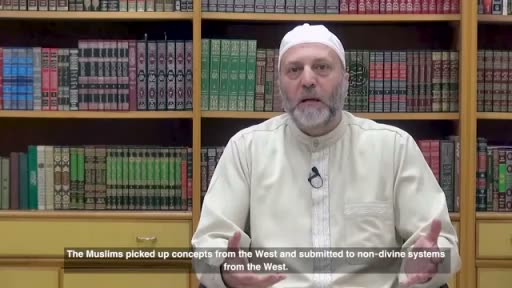
If we understand that carrying the da’wah serves this objective, then this objective determines the discourse that carriers of the Islamic da’wah must convey. What discourse must they convey? It is the culture containing the thoughts and rulings by which society is reshaped into an Islamic society. In detail, we say the following: the present society in which the Islamic Ummah lives and of which it consists is almost one society from east to west, in the sense that it lives in the same manner after leaving the sphere of Islamic life. It lives by ideas imported from the West and mixed with an inherited legacy of Islam’s rulings and ideas. Muslim life has thus become a mixture of conduct inherited from parents—which is Islamic conduct—and conduct arising from the adoption of Western concepts. We know that human conduct is connected to a person’s concepts. Muslims adopted concepts from the West and submitted to man-made systems from the West. Their life is a mixture of Islamic thoughts, Western thoughts and a few Islamic rulings, particularly in the social sphere.
Most of these man-made rulings and laws from the West—or a great many of them—have produced a mode of life that is neither Islamic nor Western. Muslims now live a life that is neither Islamic, Jahili nor Western capitalist. It is a mixture of all these things, which has produced for us a low and degraded society because it has no identity.
Analysis of the Components of Society
Consequently, the carriers of the da’wah must investigate thoroughly and determine what has constituted this society. In earlier halaqaat, we defined society as people whose relationships are organised by a set of thoughts, emotions and systems. The ensemble of thoughts, emotions and systems adopted by a society weaves its relationships and produces a society of a particular form, with a particular identity and way of life. As we have said, the society in which the Islamic Ummah lives today—the society of which the Ummah consists—is not an Islamic society. What has constituted it so that it became this way? The carriers of the da’wah carry Islam as an ideology, a system for life and a way of living. They carry it as a project for an Islamic State and an Islamic way of life that they wish to establish. They must investigate the thoughts, emotions and systems that have constituted this society, identify what is alien and conflicts with Islam—or more precisely, what is not from Islam but comes from outside it—and target it for refutation and demolition so that the Islamic alternative can replace it.
Alien Thoughts, Emotions, and Systems
The life we live today—the life of societies in the Islamic world—has been formed from the remnants of inherited Islamic ideas and from Western ideas. Ideas from the West invaded us: separating religion from life or religion from the state; the civil state and the secular state; the democratic and capitalist systems; public freedoms; patriotism, which partitioned Muslim lands; and, before that, nationalism, which continues to intensify their partition. These ideas arriving from the West were accompanied by emotions. After the infidel coloniser entrenched these ideas, Muslim emotions unfortunately—unfortunately—began to respond to them and became filled with them. Whereas Muslims once rose for the causes of the Islamic Ummah in its capacity as an Islamic Ummah, the emotions of many Muslims today are stirred by nationalist and patriotic meanings. You see a person shudder when standing before the flag, the national anthem and the fabricated heritage of nationalism and patriotism, and so on.
These thoughts and emotions, together with the systems applied in Muslim lands—the ruling system, economic system, detailed laws in the courts, foreign policy, education systems, media policy, and so on—have therefore made the society of which the Islamic Ummah consists today a non-Islamic society. Carriers of the da’wah must investigate these non-Islamic ideas and the emotions they produced, as well as the systems that were applied in Muslim lands and that Muslims accepted at one time. The concept was implanted in them that the Shari’ah contains no detailed system for life and that legislation from abroad could be accepted because ‘wisdom is the believer’s lost property; wherever he finds it, he has the greater right to it’, and so on. Concepts were planted that caused Muslims to accept these systems. In addition, many of these systems were imposed upon Muslim lands by force, without Muslims necessarily being convinced by them.
Demolishing Taghut and Establishing the Islamic Alternative
Therefore, these non-Islamic components that constitute this society must be targeted through a campaign of negation, exposure as falsehoods, and demolition. They are the Taghut—everything contrary to Islam, systems of disbelief rooted in the laws or ideologies of disbelief—for an Islamic edifice cannot stand without first dismantling the structures of disbelief and Taghut within these lands and among the Ummah.
Allah, the Exalted, says:
﴿ لَآ إِكْرَاهَ فِى ٱلدِّينِ ۖ قَد تَّبَيَّنَ ٱلرُّشْدُ مِنَ ٱلْغَىِّ ۚ فَمَن يَكْفُرْ بِٱلطَّـٰغُوتِ وَيُؤْمِنۢ بِٱللَّهِ فَقَدِ ٱسْتَمْسَكَ بِٱلْعُرْوَةِ ٱلْوُثْقَىٰ لَا ٱنفِصَامَ لَهَا ﴾
‘There is no compulsion in religion. Right guidance has become distinct from error. Whoever rejects false deities and believes in Allah has grasped the firmest handhold, which never breaks’ [2:256].
There is no true belief unless it is built upon rejecting Taghut, and belief in Taghut can never coexist with belief in Allah, Glorified and Exalted. By the Taghut that invaded Muslim lands, I mean everything other than Islam in terms of judgment about life, an outlook on life and legislation for life. Muslims must deliberately target all of these things as they exist today in order to refute them. They should not instead take a discourse carried by the Prophet (may Allah bless him and grant him peace), or by earlier prophets to nations among whom particular issues were widespread, and carry it to the people. As I said, it would be futile for carriers of the da’wah to spread among Muslims today saying: ‘Beware of burying daughters alive,’ when this does not exist. If it exists in some societies, so be it, but we know of no such occurrence.
It is not required that people today walk among Muslim lands carrying the cause our master Lut (peace be upon him) championed against his people—sexual deviation—and Allah protects us from it. Yes, such cases exist individually, but they are not societal phenomena in our countries or part of how society is structured among Muslims. What Muslims must work to dismantle today are the thoughts, emotions and systems that have permeated Islamic lands.
Confronting Contemporary Thoughts and Systems
It is regrettable to see some educated carriers of the da’wah who do not know how to confront these ideas today. You ask one of them: How do you confront existentialism? How do you confront the philosophy of separating religion from life? How do you confront democracy? How do you confront dialectical materialism, which influenced many Muslims at one time? You find him searching the heritage of the past for a label, saying: ‘We shall see whether these people are heretics, dualists or Murji’ah—or, I do not know.’ He searches for a label from the past to apply to them instead of undertaking serious work to refute these ideas after studying and scrutinising them: refuting their corruption, their falsehood, their opposition and contradiction to reality, and their contradiction to Islam.
This aspect is therefore the most critical part of the culture that carriers of the da’wah must embody: launching a campaign against ideas. They must refute non-Islamic thoughts that have taken root in our society, influencing people’s conduct and relationships. As a result, we find ourselves with a fundamentally non-Islamic society. Naturally, alongside this intellectual struggle, they must also challenge the laws and systems governing people’s affairs—the legislation that regulates their lives—to expose their corruption from every angle: namely, because these are man-made laws that contradict Islam. In Islam, there is no legislation except what Allah, exalted be He, has legislated Himself. A believer has no law other than divine revelation from Allah; everything else is invalid human legislation.
If people have been deceived, matters have been confused for them, and they have been made to imagine that many of the laws being applied do not contradict Islam, relate merely to an administrative sphere unrelated to Islamic legislation, or in some way accord with Islam, and so on, then clarification is necessary. The carriers of the da’wah must make clear that every man-made piece of legislation being applied is legislation of disbelief, legislation of misguidance and Taghut. It must be brought down so that Islam—Islam’s legislation—may replace it.
Why We Explain Islam’s Legislation
Here, someone asks: Why do we present the rulings of Islam to people when they cannot be applied until after the establishment of an Islamic State? Do we persuade them through intellectual argument alone? Or do we convince them of the necessity of applying Shari’ah by familiarising them with its details? The intention is not now to persuade people about the specifics of legal rulings from a rational standpoint—which is impermissible. Rather, people must submit completely to Allah’s Law. Allah says:
﴿ فَلَا وَرَبِّكَ لَا يُؤْمِنُونَ حَتَّىٰ يُحَكِّمُوكَ فِيمَا شَجَرَ بَيْنَهُمْ ثُمَّ لَا يَجِدُوا۟ فِىٓ أَنفُسِهِمْ حَرَجًا مِّمَّا قَضَيْتَ وَيُسَلِّمُوا۟ تَسْلِيمًا ﴾
‘But no, by your Lord, they do not believe until they make you judge in all disputes between them, then find within themselves no discomfort regarding your decision and submit completely’ [4:65]
And He says:
﴿ وَمَا كَانَ لِمُؤْمِنٍ وَلَا مُؤْمِنَةٍ إِذَا قَضَى ٱللَّهُ وَرَسُولُهُۥٓ أَمْرًا أَن يَكُونَ لَهُمُ ٱلْخِيَرَةُ مِنْ أَمْرِهِمْ ﴾
‘It is not for a believing man or woman, when Allah and His Messenger have decided a matter, to have any choice in their matter’ [33:36]
Yes, Muslims must submit completely to the Shari’ah rulings. The problem, however, is not merely that Muslims fail to submit. Many Muslims will tell you: ‘We submit to the Shari’ah rulings and do not dispute them, because Allah, Glorified and Exalted, has commanded them.’ This is particularly so after the thoughts of the creed have been consolidated in them, belief has become firmly established in their souls, and they have been taught that a Muslim may never seek legislation here or there from legislators; legislation must instead be taken from the Book of Allah, the Exalted, and the Sunnah of His Messenger (may Allah bless him and grant him peace).
Muslims will tell you: ‘We submit.’ Their problem, however, is that almost a century had passed since the fall of the Islamic State. In our lands, the period had even exceeded a century since Islamic rule disappeared—although in this particular year we had completed exactly a full century. In 1918, the Islamic State fell or withdrew from these lands; this was now 2018. The Islamic State had therefore been absent from our lands for a full century. In other countries, such as Algeria, around two centuries had passed. Even those who lived during the final period of the Islamic State lived at a time when Islam’s rulings were not applied correctly, precisely and clearly. The Ottoman State itself had been influenced to a great extent by Western legislation.
After so much time had passed, people came to know nothing about Islam’s legislation. Their confidence in it—or their complete conviction that Islam contains detailed legislation—collapsed. People then told them that Islam had not originally brought detailed legislation for the Islamic State: no detailed legislation for ruling, economics or foreign relations. Regrettably, these claims are repeated, discussed and spread among the people by turbaned religious figures, sheikhs and holders of doctorates in Islamic Shari’ah who author books and write articles. A certain doctor or sheikh says that Islam brought broad outlines and general meanings, and goals and objectives for the ruling system, but no detailed legislation. The influence has reached students and graduates of Shari’ah studies to the point that some make these claims and deny that Islam contains a ruling system and a detailed economic system. A fundamental part of carrying the da’wah has therefore become making clear to people that Islam contains a detailed system—not so that they become convinced to act by it, but so that they know it and work to apply Islam, rejecting all other systems of falsehood. No one should then say that the ruling systems applied in our lands should not be rejected in their entirety because they are supposedly not legislative matters at all, but merely means and styles that people may adopt, just as Umar ibn al-Khattab (may Allah be pleased with him) adopted the diwans. This is how matters are oversimplified.
The Culture Needed to Resume the Islamic Way of Life
Therefore, my dear brothers, our duty today is to expose the corruption of the prevailing thoughts, emotions and systems. At the same time, the carriers of the Islamic da’wah who work to resume the Islamic way of life must possess an ensemble of thoughts, emotions and systems by which society is to be reshaped into an Islamic society. The foundation of Islamic society is the Islamic creed. Muslims have not abandoned the Islamic creed, so we do not call them to Islam anew. However, a veil has come over some very important thoughts of the creed and deprived them of their effect upon Muslim life. We must therefore remove this veil from some of Islam’s ideas so that the reality of this creed bears fruit in Muslim life. If we emphasise that provision (rizq) is in the Hand of Allah, the Exalted, this will be reflected in Muslim conduct. If we emphasise that the lifespan (ajal) is in the Hand of Allah, this will be reflected in their conduct in working to establish Islam.
We must also emphasise that, once guidance has come from Allah, the Exalted, it is the human being who follows guidance by his own will and goes astray by his own will, for he can choose to believe or disbelieve and to obey or disobey. Since this is the case, these ideas must be emphasised. I do not intend to elaborate on them now; we focused on them in the first group of the Halaqa Online series, concerning The Way to Belief. Certain aspects of the creed must be emphasised so that Muslims once again make this creed the basis of their thinking and their lives, and work to make it the basis of their society and state. We therefore activate the creed in Muslim souls, clarify some matters they have found difficult, remove the veil that has covered it, and then turn to the fundamental ideas by which Muslims have been afflicted or which they have lost.
We revive Islam’s outlook on life and its perspective on ruling, economics and social life. What idea did Islam bring to carry to the world? What is the fundamental difference between Islam’s way of living and the West’s way of living? What is the difference between Islamic civilisation and Western civilisation? These are the ideas by which society is formed and shaped. We then turn to the emotions that must be revived among Muslims, reviving in them the emotions of loyalty to Allah, His Messenger and the believers after the disbelievers implanted in the Islamic Ummah emotions of loyalty to nationalism, ethnicity, fabricated patriotism, tribalism, and so on. Thus, we carry the ideas of Islam that Muslims have lost—the loss of which turned their lives from an Islamic life into a non-Islamic one and changed society from an Islamic identity to a non-Islamic identity.
We also turn to the systems by which this society must be constituted, saying to people: this is the legislation Islam brought to manage society’s affairs. If you are governed by a man-made ruling system that is at one time called a monarchy, at another a republic, and so on, Islam brought a different ruling system called the Khilafah system, whose details are such and such. We ask Allah, Glorified and Exalted, to enable us to devote later halaqaat to these issues, Allah willing. Muslims were once influenced by communist economics, which had many successes and reversals in our lands during the 1950s, 1960s and 1970s. Today, they are influenced by the ideas of Western capitalist legislation and fail to grasp the difference between that legislation and Islamic economic legislation.
It is incumbent upon us to clarify for Muslims what Islamic economic legislation entails—not so that they may judge it, but so that they submit to it and strive towards its implementation. For in essence, they have already accepted that legislation belongs solely to Allah the Exalted, whose source is His Book and the Sunnah of His Messenger (may Allah bless him and grant him peace). If Muslims have been misled in certain fields—such as foreign policy or education—and no longer comprehend what Islam has established in this regard, then it must be that carriers of the da’wah possess a culture in this field to convey to people.
Summary of the Culture Carried by the Carriers of the Da’wah
The culture of carriers of the da’wah must therefore begin with the Islamic creed, which must be carried anew in its purity and clarity, free of the stains and turbidity that came from East or West and afflicted it over the course of Islamic history. It must also be free of the contemporary attempt to isolate it from politics so that it is carried as a priestly, spiritual and non-political creed. Instead, we carry the Islamic creed anew as an intellectual, spiritual and political creed that influences Muslim life and builds it upon new foundations. We acquaint Muslims with Islam’s outlook on life, society and the state. We carry to them the meaning of loyalty to Allah, the Messenger and the believers instead of loyalty to tribe, clan, false patriotism, nationalism, and so on. We acquaint them with the legislation brought by Islam so that it becomes the alternative to what exists now. We will thereby have carried the culture upon which society is built.
This is the culture that must exist. If it exists in society—if Islam’s thoughts and emotions exist in society, people become convinced of and understand the reality of its legislation, work for it, and use it to form their society and relationships—we will thereby have resumed the Islamic way of life. This is the substance of the da’wah that Muslims must carry. It is not what we see today among many preachers who tell people: ‘Be content with individual and family righteousness. Establish the State of Islam within yourselves and your families, and it will arise in your land.’ They thereby turn away from Islam’s political legislation and the ideas that form the outlook of Islamic society and Islamic civilisation, telling people to confine themselves to individual religiosity. People consequently remain in their present state of separating religion from life, politics and the state. This is the culture of carriers of the da’wah.
The Makkan Da’wah Encompassed Both Creed and Society
The earlier prophets did not confine themselves in this way, and anyone who says the Prophet (may Allah bless him and grant him peace) confined himself to matters of belief has missed what is correct, because the Prophet did not confine himself to belief. When the Qur’an was revealed in Makkah and the Prophet (may Allah bless him and grant him peace) addressed the disbelievers with it, he did not confine himself to attacking idol worship. He went beyond that. Nor did he confine himself to attacking the creeds of disbelief; he went beyond them to address their mode of thinking when they relied upon venerating their forefathers. Their forefathers were the source of every idea, and every idea was derived from them. He launched a campaign against the customs and systems upon which their lives were based. As we said, he campaigned against burying daughters alive when it was a custom—a hideous custom of that time. He campaigned against giving short measure, which existed then, against the usury widespread among them, and against everything they had adopted as a way of living and as foundations for their mutual relationships. The objective was to demolish all the foundations of that society. What constituted that society? It was constituted by creeds, ideas connected to those creeds, customs and legislation. He campaigned against all of them in order to bring them down, because the objective was to undermine the foundations of that Jahili society so that the ideas of Islam could replace them.
The Descent of the Legislation and the Obligation to Establish the State
Consequently, when the Prophet attacked usury, he declared from the beginning that usury was forbidden—that in Makkah, Islam’s legislation declared usury forbidden. Its legislation declared killing daughters and burying daughters alive forbidden, and declared giving short measure forbidden. Islam therefore came with broad outlines and legislative headings, but not with detailed legislation, because the people had not yet accepted Islam. How could disbelievers who had neither adopted the Islamic creed nor accepted Islam be addressed with the details of legislation? That was not appropriate. Then, when the society of Madinah embraced Islam and adopted its ideas and outlook on life, the legislative rulings began to be revealed, naturally after the Prophet’s Hijrah and the establishment of the Islamic State. It must not be said here: ‘We should therefore wait until the Islamic State is established before addressing people with legislation.’ People today are Muslims, and a Muslim is required to apply the Shari’ah rulings—not merely its individual rulings, but all of them. You therefore tell people: ‘These are the Shari’ah rulings, and you must implement them.’ How can they be implemented without an Islamic State? You must therefore establish an Islamic State and implement the Shari’ah rulings, thereby moving to the Islamic way of life and living as Allah, Glorified and Exalted, has commanded you to live. Allah, the Exalted, said concerning this near the end of the da’wah:
﴿ ٱلْيَوْمَ أَكْمَلْتُ لَكُمْ دِينَكُمْ وَأَتْمَمْتُ عَلَيْكُمْ نِعْمَتِى وَرَضِيتُ لَكُمُ ٱلْإِسْلَـٰمَ دِينًا ﴾
‘Today I have perfected your religion for you, completed My favour upon you and approved Islam as your religion’ [5:3].
Conclusion of the Topic
This is the culture of the carriers of the da’wah: the culture by which society is reconstituted from Islamic thoughts, emotions and systems that it lacks. We must carry anew to society whatever it lacks of these things today. We are not now required to carry the system of inheritance to people, because they apply it in their lives in practice, although it is not applied in some countries, such as Tunisia, where the state brazenly set this system aside, including through new measures. This is not because Muslims do not know the rulings of inheritance; until very recently, they went to the courts to divide inheritances according to the Shari’ah rulings. What happened was that these rulers imposed the abolition of Islam’s inheritance legislation in order to impose something else. Muslims know what inheritance is and what Islam’s inheritance legislation is; they accept it and want it. They know, however, that the infidel coloniser is working to remove what remains of Islam. We must acquaint Muslims with those rulings of Islam that they do not know and that are not applied in our reality today.
This is what I wished to discuss in this halaqa, and it appears to be the final halaqa in the group on how to carry the Islamic da’wah. We ask Allah, Glorified and Exalted, to accept this from us and to reward us and you with the best reward and recompense. He is indeed All-Hearing and Responsive. I now turn to any questions we may have received during the halaqa.
Questions and Discussions
Welcome back, brothers, for another segment answering some of the submitted questions.
Is Speaking a Word of Truth Before a Tyrannical Ruler Part of Carrying the Da’wah?
Brother Nidal Bassat asks the following question: ‘My dear brother Ahmad al-Qasas, some people speak a word of truth before a tyrannical ruler and follow the example of a carrier of the da’wah in opposing the ruler by speaking the truth. Rulers’ prisons contain so many of these people, yet their work is not undertaken as part of a group. Is such a person considered a carrier of the da’wah? Thank you.’ First, merely to clarify the expression: the word munābadhah is usually used for confronting the ruler with arms: «أفلا ننابذهم بالسيف؟» — ‘Shall we not confront them with the sword?’ He said: «لا، ما أقاموا فيكم الصلاة» — ‘No, so long as they establish the prayer among you’ [Sahih Muslim 1855]. In another hadith: so long as he governs you, so long as he leads you by the Qur’an, and so on [paraphrase; Sahih Muslim 1838]. And so on: «إِلَّا أَنْ تَرَوْا كُفْرًا بَوَاحًا عِنْدَكُمْ مِنَ اللَّهِ فِيهِ بُرْهَانٌ» — ‘Unless you see manifest disbelief for which you have proof from Allah’ [Sahih al-Bukhari 7055–7056; Sahih Muslim 1709]. Munābadhah therefore refers to confronting the ruler with arms, and that has its own rulings; it is not our subject now. Of course, that is unrelated to this matter. It is another subject, distinct from carrying the da’wah.
The question concerns someone who confronts the ruler with a word of truth and consequently faces imprisonment, abuse, exile, and so on. Is this part of carrying the da’wah? Yes, it is part of carrying the da’wah. However, if it is not undertaken within comprehensive work to change the reality, its results will be limited and it will not achieve what is required of it. It is related in a hadith of the Prophet (may Allah bless him and grant him peace) that the master of martyrs is Hamzah ibn Abd al-Muttalib, and: «وَرَجُلٌ قَامَ إِلَى إِمَامٍ جَائِرٍ فَأَمَرَهُ وَنَهَاهُ فَقَتَلَهُ» — “a man who stood before a tyrannical ruler, enjoined him to do what is right and forbade him from what is wrong, and was then killed by him” [al-Mustadrak by al-Hakim 4884]. Enjoining and forbidding the ruler—enjoining him to do what is right and forbidding him from what is wrong—is a form of carrying the da’wah. Someone whom the ruler kills while he is undertaking this work is a martyr; indeed, he is among the masters of martyrs, as the Prophet (may Allah bless him and grant him peace) said. In another hadith: «أَفْضَلُ الْجِهَادِ كَلِمَةُ حَقٍّ عِنْدَ سُلْطَانٍ جَائِرٍ» — “The best jihad is a word of truth before a tyrannical ruler” [Sunan al-Nasa’i 4209; Sunan Ibn Majah 4012]. Thus, speaking a word of truth before a tyrannical ruler is a form of holding the ruler to account, a form of enjoining what is right and forbidding what is wrong, and it falls within the work of the da’wah.
However, the da’wah work that must—and is obliged to—exist, the work that changes reality and does not confine itself, includes holding the ruler to account as one of its parts. As previously explained, it deliberately seeks to change the reality: changing public custom and society’s culture; refuting the systems and legislation by which Muslims are governed; and ultimately bringing down the regimes in Muslim lands that rule by other than what Allah has revealed—the systems of Taghut in Muslim lands. This is the work that brings change. It is the effective carrying of the da’wah that Muslims must undertake. Anyone who examines the details and Method of this work will find that one part of it is holding rulers to account, exposing them, revealing their true nature, stripping them of legitimacy, and so on. Speaking a word of truth before a tyrannical ruler is therefore part of this work and supports it; it is part of the process of change, not the entire process of change.
Does a Defect in the Creed Require Declaring Society Disbelieving?
Brother Rafiq ala al-Darb asks: ‘May Allah grant you life, guide your steps and protect you. May Allah honour you, my dear brother. My question is: as you explained, the fact that the Ummah is a society that does not live an Islamic life results from certain erroneous concepts about Islam. Some of these are closely connected to the creed, such as the lifespan (ajal), provision, qadar and Allah’s exclusive right to rule (hakimiyyah). Does correcting these erroneous concepts require viewing the Ummah as having apostatised, retreated from the Islamic creed and taken its rulers as gods besides Allah? May Allah reward you.’ May Allah reward you abundantly. Yes, your question refers to certain currents that regard anyone who submits to a ruler who rules by other than what Allah has revealed, gives him some form of loyalty and follows his rulings as having apostatised and disbelieved. Some even take a confusion or weakness in Muslims’ understanding of some matter of creed and move from that to declaring them disbelievers. Certain currents have thus gone so far as to declare this society disbelieving, say it lives a Jahili life, and declare anyone who seeks judgment from the existing systems under any circumstances a disbeliever.
Consequently, they viewed our present reality in the same way they view the reality into which the Prophet (may Allah bless him and grant him peace) was sent in Makkah. They said: ‘We live in the same reality into which the Prophet (may Allah bless him and grant him peace) was sent. Since he was sent into a Jahili society, we today regard our society as Jahili and believe that most people have disbelieved because they accepted seeking judgment from Taghut.’ We believe that this contains a great deal of excess and a great deal of extremism. It is completely wrong to move from judging certain acts as disobedience—and perhaps even major sins—to declaring disbelief. Declaring a person a disbeliever requires definitive evidence that the person has disbelieved. As some of the great scholars of the past said—and perhaps it was an imam, perhaps Imam Malik, may Allah have mercy on him—if we found ninety-nine grounds upon which a man could be declared a disbeliever and one ground that prevented disbelief from being ascribed to him, we would act upon that one ground and leave the other ninety-nine [attributed to Imam Malik; attribution unconfirmed].
Declaring people disbelievers is the gravest form of imposing a prescribed punishment. We know that apostasy carries a prescribed punishment in the Law of Allah, the Mighty and Exalted: the apostate is to be killed. The Messenger (may Allah bless him and grant him peace) said: «ادْرَءُوا الْحُدُودَ بِالشُّبُهَاتِ» — “Ward off the prescribed punishments in cases of doubt” [paraphrase; Jami’ al-Tirmidhi 1424; weak]. The gravest of these prescribed punishments is that for apostasy. It is therefore wrong to rush to declare people disbelievers because of sins, even when those sins are major. This is especially so when Muslims have lived through long ages in which the rulings of Islam and their proper understanding have been absent from them, leaving them unable to understand those rulings or recognise the real, necessary and inevitable link between the creed and ruling by the Shari’ah, and so on. The majority of Muslims have not become disbelievers. Of course, many individuals have apostatised, but an apostate is someone whose apostasy has been established by definitive evidence. Indeed, he may have openly declared his apostasy, like someone who now says frankly that Islam contains no legislation and that man-made legislation must be applied. This is apostasy; this is disbelief. Whoever deems usury permissible commits disbelief.
Whoever says that we must abandon Islam’s rulings on inheritance, adopt new man-made inheritance laws and move beyond:
﴿ لِلذَّكَرِ مِثْلُ حَظِّ ٱلْأُنثَيَيْنِ ﴾
‘The male shall have the share of two females’ [4:11],
this is disbelief; this is apostasy. Such people have apostatised. Whoever removes the Sunnah from legislation and says that legislation comes only from the Book of Allah, the Exalted, and that nothing else exists—these ideas have indeed led people to apostasy. They are ideas of disbelief. However, if we merely find a person who has gone along with the existing reality and sought judgment from something other than the Law of Allah, Glorified and Exalted, because of a misconception, a desire, or something else, it is impermissible to rush to declare him a disbeliever. Yes, certain ideas closely connected to the creed have entered Muslim minds in a defective form. We must correct this defect, remove from the creed any impurities that may have become attached to it, remove the veil from many thoughts of the creed that affect Muslim life, and emphasise the obligation to seek judgment from Allah’s Law and the prohibition of seeking judgment from anything other than the Law of Allah, Glorified and Exalted. But it is impermissible to go beyond all of that and say that society in general has disbelieved and returned to its former Jahiliyyah. This is unacceptable under any circumstances.
Is Ijtihad Permissible in the Method of Carrying the Da’wah?
Brother Abu Khaleel Al Qalqely Zayd asks: ‘May a group that strives to apply Allah’s Shari’ah exercise ijtihad regarding the method of reaching its objective, even if its method differs from ours?’
My dear brother, there is agreement that carriers of the Islamic da’wah must—indeed, are obliged to—adhere to the Method of the Messenger of Allah (may Allah bless him and grant him peace), the Shari’ah Method. By agreement, I mean that this is beyond doubt and no disagreement over it is permissible: carriers of the Islamic da’wah must adhere to the Shari’ah Method, and departing from the Method of the Shari’ah in carrying the da’wah is impermissible. In matters of detail, however, there may be questions open to ijtihad, as with any other Shari’ah question. When we examine the Shari’ah rulings, we find that some are definite, over which there is no dispute and no disagreement is permissible, while others are probable and open to ijtihad. In this context—the Method of carrying the da’wah and the method of change that carriers of the da’wah and the structured group seeking change must adopt—the method must be based on the Shari’ah, and its reference must be the Book of Allah and the Sunnah of the Messenger of Allah (may Allah bless him and grant him peace).
This Method is a collection of rulings, some of which are definite and others probable. It is therefore wrong to say that every ruling in the Method by which the Islamic da’wah is carried—or that the whole Method of carrying the Islamic da’wah—consists of definite rulings. No: some are definite and others probable. Disagreement over the definite is impermissible, while disagreement over the probable is permissible. For example, it is definite that carriers of the da’wah may not participate in rule by disbelief: they may not govern or participate in systems that rule by other than what Allah has revealed. This is a definite matter. It is also definite that a ruler may not be permitted to divide the Shari’ah, applying one part and leaving another for an indefinite period under the heading of gradualism. These are not rulings over which disagreement is permissible. We reject the claim that these are Shari’ah opinions: dividing the Islamic Shari’ah, applying some of it and leaving the rest, is not a valid Shari’ah ijtihad and is under no circumstances a recognised opinion. Likewise, participating with rulers in rule by other than what Allah has revealed is not a recognised opinion.
There may, however, be disagreement over matters other than these. There may be disagreement over some details: how is the process of assuming power to occur? There may be disagreement over some details. How are some of the details of moving from one stage to another to occur? And so on. There may therefore be ijtihad in certain details. Consequently, it is theoretically possible for there to be several groups working to establish the Islamic State and resume the Islamic way of life, all adopting a Shari’ah Method but differing over certain matters of ijtihad. That is from a theoretical perspective; it does not necessarily describe our present reality.
Conclusion
These are the questions we received during this halaqa. I ask Allah, Glorified and Exalted, to help us attain more good, increase us in knowledge and action, and make our knowledge and action sincerely devoted to His Noble Countenance. I send prayers and peace upon the Messenger of Allah, his family, his Companions and those who follow him. May peace, Allah’s mercy and His blessings be upon you.