Opening text of the book The System of Islam
The matter that proves the validity or invalidity of the ideology is the ‘Aqeedah of the ideology in terms of whether it is correct or false. This is because the ‘Aqeedah is the intellectual basis (al-qaa’idah al-fikriyyah) upon which every thought is built, views are defined and from which every treatment and method emanates. Therefore, if the intellectual basis (al-qaa’idah al-fikrayyah) is correct the ideology (mabda) will be correct and if it is false the ideology (mabda) will be false from its basis.
If the intellectual basis agrees with man’s innateness (fiTrah) and is built upon the mind it will be correct. However, if it disagrees with man’s innateness (fiTrah) and is not built upon the mind it will be false. The compatibility with man’s innateness means that the ‘Aqeedah recognises the innate weakness of man and his need for the Creator, the Arranger, i.e., it agrees with the instinct of religiousness (tadayyun).
Introduction: The Topic of the Correct Revival
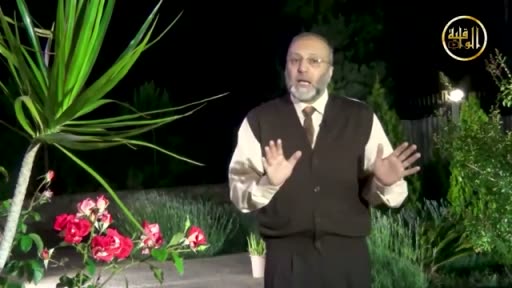
Peace and Allah’s mercy and blessings be upon you. Welcome to a new episode of your programme, Halaqa Online. First, on this blessed night—the twenty-seventh night of the blessed month of Ramadan—allow me to pray to Allah, Exalted is He, for myself and for you. It is a night of standing in prayer, bowing, prostration, night prayer and remembrance. We ask Allah, Exalted is He, to accept from us the acts of obedience we offer for our own sake during it, and to make us among those freed during this blessed month.
Dear brothers, in the previous episode we discussed the secret of revival. We had established that nationalism and patriotism are invalid as bonds for creating an elevated society, and that the bond which creates a revived society is the ideological bond: the bond of an ideology consisting of a creed from which a system emanates. We ended last week’s episode with the following question: Is every ideology like every other ideology, and every revival like every other revival? Or is there a correct revival which leads the human being to happiness, and another, incorrect revival which leads him to misery, despite the manifestations of revival that we see in societies which have adopted false ideologies? This is our topic today: the correct revival built upon the correct ideology.
The Human Being and the Search for Happiness
Brothers, by his nature and innate disposition, the human being seeks happiness, elevation and well-being. He strives for a dignified life in which his elevation above all other creatures is evident. Since ancient times, the human being has searched for the way to achieve this elevation and well-being in order to attain happiness. Thinkers, philosophers and legislators therefore began developing theories, creeds and ideologies for that purpose, and people followed them despite their different orientations, theories and philosophies.
But did all these people achieve their aims—or their aim and their cherished hope? The answer, of course, is no. They did not discover the way to the correct revival, and therefore to happiness.
If a person wishes to attain the correct revival and thus happiness, he must acquire sound human behaviour; for it is his behaviour that causes him either to achieve elevation or decline.
Behaviour and Vital Energy
What is behaviour? What do we mean by behaviour? Behaviour is the sum total of all actions a human being performs in his life and society; these actions, ultimately, stem from that vital energy possessed by man which lies latent within him. By ‘vital energy’ in man we refer to what drives him to perform the deeds he carries out daily at every moment.
This vital energy is the sum of the human being’s organic needs and instincts, which he feels a need to satisfy. He wants to eat and drink, to dress and own property, to defend himself, and to sanctify and venerate. These are among the needs that we see him striving to satisfy.
Allah, Exalted is He, says:
﴿ زُيِّنَ لِلنَّاسِ حُبُّ ٱلشَّهَوَٰتِ مِنَ ٱلنِّسَآءِ وَٱلْبَنِينَ وَٱلْقَنَـٰطِيرِ ٱلْمُقَنطَرَةِ مِنَ ٱلذَّهَبِ وَٱلْفِضَّةِ وَٱلْخَيْلِ ٱلْمُسَوَّمَةِ وَٱلْأَنْعَـٰمِ وَٱلْحَرْثِ ذَٰلِكَ مَتَـٰعُ ٱلْحَيَوٰةِ ٱلدُّنْيَا ﴾
‘Beautified for people is the love of that which they desire: women, sons, heaped-up sums of gold and silver, fine horses, cattle and cultivated land. That is the enjoyment of worldly life.’ [3:14]
The Method of Satisfaction Is Behaviour
The human being found that the means of satisfying these needs and desires exist throughout the things around him that have been subjected to his use, so he set out to obtain from them what he needs and wants. Here he found himself facing a problem: how should he make use of the things around him? In other words, how should he satisfy his needs and instincts? Making use of those things and satisfying the human being’s needs and instincts is not an automatic and instinctive process, as it is with an animal. The human being has a mind which presents him with many options and ways of making use of things and satisfying his needs.
If the human being chooses a particular way of making use of things and a particular method of satisfying his needs and instincts, then he has chosen a particular behaviour. This is behaviour: the manner the human being adopts to satisfy his desires; the rules which govern his conduct and actions; the reactions which issue from him; his positions towards the things and events he encounters; and his way of treating the problems he faces in life.
Concepts Guide Behaviour
Now that we know what behaviour is, we come to the fundamental question: What is the sound behaviour that leads to the correct revival and therefore to happiness? The answer begins as follows: if we want to find sound behaviour, we must first obtain correct thought. A person’s behaviour is linked to his concepts, and he conditions his behaviour in life according to his concepts about things.
Human behaviour, as we have established, is the sum of his relationships with the things and people around him. A person’s concept of those things determines his stance towards them. Thus, a person’s concept of someone he loves conditions his behaviour towards him—or he conditions his behaviour towards him—in contrast to his behaviour towards someone he hates and about whom he holds concepts of hatred. This also differs from his behaviour towards someone he does not know and about whom he has no concept. Therefore, if we want to elevate human behaviour, we must first create the correct concepts for him.
﴿ إِنَّ ٱللَّهَ لَا يُغَيِّرُ مَا بِقَوْمٍ حَتَّىٰ يُغَيِّرُوا۟ مَا بِأَنفُسِهِمْ ﴾
‘Indeed, Allah does not change the condition of a people until they change what is in themselves.’ [13:11]
The Viewpoint towards Life and the Great Knot
However, these concepts about things cannot come into existence unless they are based on thought about this worldly life—that is, unless they spring from a viewpoint towards life which explains to a person the meaning and purpose of his existence in this life. If he defines for himself the purpose of his existence in this world and the task that purpose requires of him, he can use it to view things from a fixed perspective and condition his behaviour towards them in a way that makes him consistent with himself.
Thought about this worldly life also cannot become firmly and productively established until thought exists about the universe, the human being and life; about what came before this worldly life and what comes after it; and about its relationship with what came before and what comes after. This is achieved by giving the comprehensive idea about what lies beyond the universe, the human being and life, because that idea is the intellectual basis upon which all thoughts about life are built. The human being senses and understands that life is one link in a connected chain and is therefore part of a whole.
Giving the comprehensive idea about these things therefore solves the great knot in the human being. This knot has pressed upon and troubled him ever since he appeared on earth, and it continues to trouble him until he solves it. Once this great knot is solved, all the other knots are solved, because they are secondary to it or branches of it.
The Creed, the Intellectual Basis and the Ideology
Once the human being obtains this solution, he has obtained the creed and the intellectual basis upon which every subsidiary thought about behaviour in life and the systems of life is built. In other words, he has obtained the ideology. In the terminology used by all people, an ideology is the fundamental thought upon which other thoughts are built. A thought cannot properly be called an ideology unless it is a fundamental thought from which all thoughts about life emanate. The fundamental thought is one that is not preceded by any thought whatsoever. It is confined to the comprehensive idea about the universe, the human being and life; there is no other fundamental thought. This thought is the basis in life and the human being’s only path to the revival he seeks.
Not Every Revival Is a Correct Revival
Most Western thinkers, historians and philosophers stop at studying revival, its causes and its explanation, but it would be wrong for us to follow them in that. History has given us several models of revival, as has contemporary history. Not every revival is like every other revival. There is a profound, fundamental difference between one revival and another.
It is not right for the human being to be content with seeking revival in general. He must seek the revival which leads to his well-being—that is, to his lasting tranquillity and happiness. In other words, since there is a correct revival and a corrupt revival, the human being must seek out the correct one.
The Correct Ideology and the Incorrect One
If the human being has obtained—has searched and realised—that the ideology is the secret of revival, then the correct revival must spring from the correct ideology. The correct ideology is the one based upon the correct creed, which convinces the mind and agrees with human nature, filling the heart with tranquillity. This creed gives the truthful answer and the correct idea about the universe, the human being and life. This ideology can be applied at any time and in any place, and it guarantees the human being the correct revival.
An ideology based on a false creed, however, is applicable only to the extent that it finds conditions in society which are favourable to and consistent with its proposition and direction. Its applicability often comes from the fact that it is itself a reaction to conditions or crises that have worsened in a particular society, as with the liberal capitalist ideology. Those responsible for it soon discover that it cannot continue to be applied, after society discovers that it conflicts with people’s minds and is incompatible with their nature. That society then quickly regresses again under a system which had itself once been the cause of its revival.
The Communist Ideology and Its Corrupt Revival
The nearest example is the Communist ideology. It produced a revival that could not last for more than a few decades—seventy years—because of the extent of its corruption. Its creed clashed with human nature and the mind when it denied the existence of the Creator, Exalted is He, and said: ‘There is no god, and life is matter.’
Human nature naturally inclines towards worshipping the Creator, the Arranger. The mind conclusively determines that the universe, the human being and life were all created by a Creator, because of the limitation and incapacity apparent in them and the signs of creativity and precision evident in them, which point to a wise Creator who created them perfectly.
Consequently, from this creed—the Communist creed—emanated a corrupt system: the socialist system. It raised the human being for a moment in the span of history, only to cast him into the abyss. It did not move from his chest until it had left him struck down, exhausted and powerless.
The Capitalist Ideology and Its Creed
The liberal capitalist ideology, which emerged as a break from the conditions of medieval Europe, is also a false ideology. Its creed—the separation of religion from life—is not a spiritual creed. After acknowledging that the human being was created by a Creator, although without stating this conclusively, it separated him from his Creator and told him: ‘The Creator created you on this earth, then withdrew from you and left you to manage your affairs however you wish.’ It thereby contradicted human nature: the human being sees himself as incapable, deficient and limited, and sees his Creator as the Arranger of all his affairs and his whole life.
If the creed that forms the foundation of the ideology is corrupt and false, the systems that emanate from it will naturally be invalid and failures, and the civilisation built upon it will lead the human being astray.
Islam Is the Basis of the Correct Revival
Islam, however, is an ideology which convinces the mind and agrees with human nature. Its creed, which Allah, Exalted is He, revealed to His Messenger Muhammad, may Allah bless him and his family and grant them peace, gave the correct comprehensive idea about the universe, the human being and life by establishing that they were all created by a Creator. It explained what came before this worldly life: the Creator, Allah, Exalted is He; and what comes after it: the Day of Resurrection. It defined the human being’s relationship with his Creator as the obligation to submit to His commands and prohibitions and to conduct life according to the system He revealed to His Messenger Muhammad, may Allah bless him and grant him peace. It linked the human being, while he lives on this earth, with the Day of Resurrection and what follows it by promising him Paradise if he entrusts his affairs to his Creator and submits to His commands and prohibitions, and by warning him of the Fire if he disobeys, rebels and sins.
Allah, Exalted is He, describes the human journey from the time people descended to the earth until they leave it on the Day of Reckoning, saying:
﴿ قُلْنَا ٱهْبِطُوا۟ مِنْهَا جَمِيعًا ۖ فَإِمَّا يَأْتِيَنَّكُم مِّنِّى هُدًى فَمَن تَبِعَ هُدَاىَ فَلَا خَوْفٌ عَلَيْهِمْ وَلَا هُمْ يَحْزَنُونَ وَٱلَّذِينَ كَفَرُوا۟ وَكَذَّبُوا۟ بِـَٔايَـٰتِنَآ أُو۟لَـٰٓئِكَ أَصْحَـٰبُ ٱلنَّارِ ۖ هُمْ فِيهَا خَـٰلِدُونَ ﴾
‘We said, “Descend from it, all of you. When guidance comes to you from Me, whoever follows My guidance—there will be no fear concerning them, nor will they grieve. But those who disbelieve and deny Our signs will be companions of the Fire; they will abide therein eternally.”’ [2:38–39]
Thus, this creed was convincing to the human mind, which the Noble Qur’an addresses by saying:
﴿ أَفِى ٱللَّهِ شَكٌّ فَاطِرِ ٱلسَّمَـٰوَٰتِ وَٱلْأَرْضِ ﴾
‘Is there doubt about Allah, Creator of the heavens and the earth?’ [14:10]
Likewise, this creed agreed with human nature, which inclines towards worshipping the Creator, the Arranger, and which the Noble Qur’an addresses by saying:
﴿ فَأَقِمْ وَجْهَكَ لِلدِّينِ حَنِيفًا ۚ فِطْرَتَ ٱللَّهِ ٱلَّتِى فَطَرَ ٱلنَّاسَ عَلَيْهَا ۚ لَا تَبْدِيلَ لِخَلْقِ ٱللَّهِ ۚ ذَٰلِكَ ٱلدِّينُ ٱلْقَيِّمُ وَلَـٰكِنَّ أَكْثَرَ ٱلنَّاسِ لَا يَعْلَمُونَ ﴾
‘So direct your face towards the religion, inclining to truth—the nature from Allah upon which He has created people. There is no change in the creation of Allah. That is the correct religion, but most people do not know.’ [30:30]
The Islamic Creed Is Spiritual and Political
Thus this creed—the Islamic creed—is a spiritual creed. In Islam there is no conflict between matter and spirit, or between matter and the spiritual aspect. If spirit is the awareness of the connection with Allah, Exalted is He, then Islam has connected matter with spirit by commanding the human being to conduct his material actions according to Allah’s commands and prohibitions. He thereby perceives his connection with Allah, Exalted is He, while performing those actions, and combines cultivating this world with seeking Allah’s pleasure.
At the same time, this creed was a political creed because a system for the human being in his life, society and state emanated from it. In this way, we understand the difference between the manifestations of revival in history. This leads us to the true explanation of why the Islamic revival is completely distinct from every other revival. This is our topic and what we have completed of it today. I shall leave you for a short break, after which I will return to answer any questions that may have been received during this episode. Peace be upon you.
Viewers’ Questions
Peace, Allah’s mercy and His blessings be upon you. A warm welcome once again to our segment where we respond to your esteemed questions.
Is the Human Being Composed of Matter and Spirit?
I begin with the first question sent by my brother Abu al-Rashid, who states it is well known that man consists of matter and spirit; if matter prevails over spirit, a person inclines to evil, whereas if spirit prevails over matter, he becomes closer to good. Where then lies the philosophy of behaviour you discuss within this understanding?
In truth, this philosophy is not the philosophy of Islam. It is the philosophy of the Gnostic creed, or, in other words, the creed of the philosophy of the unity of existence. It largely came from the eastern part of the world—from India and China—entered Muslim lands, and became mixed, in the minds of many Muslims, with Islam, its creed and its rituals.
Islam contains no idea that the universe, the human being and life are things made up of two components: matter and spirit. When people use the word ‘spirit’, what they mean is the human being’s awareness of his connection with Allah, Exalted is He. The spiritual aspect in things is not one of their components or a part of their composition. The spiritual aspect in things is their connection with Allah, the Creator, in that they are created by a Creator. The spiritual aspect in the universe is therefore not part of its composition; it is the fact that it was created by a Creator. The fact that the universe was created by a Creator is the spiritual aspect in the universe. The fact that the human being was created by a Creator is the spiritual aspect in the human being, and the fact that life was created by a Creator is the spiritual aspect in life. There is no such thing as the universe being composed of matter and spirit, or the human being, in this sense, being composed of matter and spirit.
Yes, the human being has the spirit that is the secret of life, about which Allah, Exalted is He, says:
﴿ وَيَسْـَٔلُونَكَ عَنِ ٱلرُّوحِ ۖ قُلِ ٱلرُّوحُ مِنْ أَمْرِ رَبِّى وَمَآ أُوتِيتُم مِّنَ ٱلْعِلْمِ إِلَّا قَلِيلًا ﴾
‘They ask you about the spirit. Say, “The spirit is of the affair of my Lord, and you have been given but little knowledge.”’ [17:85]
This spirit is the secret of life. It is present in the believer and the atheist, and it is also present in the animal. When it departs, a person’s life ends. This matter has nothing to do with a conflict between spirit and matter, and Islam contains no philosophy of conflict between spirit and matter.
Mixing Matter with Spirit
If we consider and establish that spirit is the human being’s awareness of his connection with Allah, Exalted is He, then the philosophy of Islam is that the Muslim should mix matter with spirit. I mentioned this briefly earlier in this episode, and we previously devoted an episode to this subject. When Islam commands the believer to conduct his actions according to Allah’s commands and prohibitions, while aware of his connection with Allah, Exalted is He, he has thereby mixed matter with spirit.
When a Muslim eats and drinks, he performs a material action and satisfies a material need. Yet he eats and drinks only what Allah, Exalted is He, has permitted—what Allah, Mighty and Majestic, has made lawful—and does so in the manner Allah has legislated. He also praises Allah for it. In this way, he mixes matter with spirit, because he senses the spiritual aspect and feels spirituality while eating and satisfying his need.
The same applies when a man has marital relations with his wife. Therefore, the Prophet, may Allah bless him and grant him peace, said: «وفي بضع أحدكم صدقة» — ‘In the sexual act of any one of you there is charity’ [Sahih Muslim, 1006]. They asked, ‘Would one of us fulfil his desire and receive a reward for it?’ He said, ‘Do you see that if he placed it in what is forbidden, would he not bear a sin? Likewise, if he places it in what is lawful, it earns him a reward.’
Neither Conflict nor Balance between Matter and Spirit
The philosophy of conflict between spirit and body—the claim that if spirit overcomes the body, the human being is elevated, and if the body overcomes spirit, the human being regresses—does not exist in Islam. It is an idea from the philosophy of Sufism which came from ancient religions that preceded Islam. It entered the minds and intellects of Muslims, and Muslims thought it was one of Islam’s concepts, although it has nothing whatsoever to do with Islam.
Islam did not condemn satisfying sensory, material and bodily needs and desires. It did not condemn satisfying needs and instincts. Rather, Islam commanded that these organic needs and instincts be satisfied according to the system legislated by Allah, Exalted is He—according to Allah’s commands and prohibitions. The human being thereby performs material actions which satisfy his needs and instincts according to Allah’s commands and prohibitions, and in this way mixes matter with spirit.
Accordingly, Islam contains no question of which should prevail: spirit or matter. Nor does it speak of a balance between matter and spirit, as if they were two separate things, with something that satisfies spirit and something else that satisfies matter. Rather, the human being satisfies all his organic needs and instincts—all of them—according to Allah’s commands and prohibitions. In this way, he is always mixing matter with spirit. This is Islam’s philosophy concerning matter and spirit.
Worship and Public Life
Brother Abdullah asks: ‘On this blessed night, Muslims flock to the mosques and perform many acts of obedience, devotions and spiritual practices. They then return to their lives and work. In your view, is this a contradiction in behaviour?’
If what is meant is simply their return to their lives and work, then this is not a contradiction in behaviour. Naturally, there is a time for worship and rituals, and another time for meeting life’s needs, earning a livelihood and carrying life’s responsibilities. That is natural.
The contradiction arises when a person leaves the night prayer, the acts of obedience in Ramadan, and the worship, prayers, prostration, bowing and remembrance, and then enters public life and conducts it—not according to the law of Allah, Exalted is He, but according to the laws of legislators, according to the laws and constitutions applied by taghut systems in Muslim lands. This is the contradiction: the Muslim separates, in his life, between rituals which he performs according to Allah’s commands and prohibitions, and relationships in society which he regulates according to systems devised by those who fabricate laws—the man-made legislators, the taghut—as mentioned in the Book of Allah, Exalted is He.
Our Ummah has, of course, been afflicted in this age and over the past century by this scourge—indeed, by this great calamity: people have actually practised the idea of separating religion from life, politics, the state and legislation. Many people have thought that what religion says is confined to worship, morals, rituals and family relationships, and that the relationships people form in society are the function of man-made law, legislators and constitutions. We seek refuge with Allah, Exalted is He, from being followers of taghut.
Does Changing Individuals Change Society?
Our dear brother al-‘Abid from Bayt al-Maqdis asks: ‘A person’s behaviour is controlled by his concepts. This is what I understood from what you said. Following on from that, if we want change, we must change individuals’ behaviour by changing their concepts. In other words, we must reform individuals so that society will be reformed. Is that what you mean?’
No, of course, that is not what I mean. The concepts we are discussing are concepts for the human being—not only in his capacity as an individual, but for the human being as such. He has individual concepts relating to the individual aspect of his life, and he also has concepts—and society has its concepts—relating to behaviour that forms relationships between people in society. If the concepts controlling a person’s behaviour are comprehensive concepts about all things and all of life, they control his individual behaviour and also his relationships in society.
These concepts affect the individual aspect of the human being’s life, and they also affect the relationships in his life. The human being has an individual aspect—he has an individual capacity on the one hand—and he also has another aspect relating to his life in society. In general, in his normal natural state, the human being cannot separate himself from the society in which he lives or dispense with relationships with other people. His concepts govern him in these relationships with people.
Thus, the concepts of Islam came to organise human life in general; they organised relations within society; they organised man’s relation with his Creator; and they organised man’s relation with himself. Consequently, changing these concepts reflects upon the individual aspect of a person’s life as well as reflecting upon social relations.
The Formation of Society and Comprehensive Change
Society is a group of people bound together by thoughts and emotions—and thoughts produce emotions of their own kind—and by systems which are supposed to agree with the concepts, indeed to express them, and to regulate people’s relationships in society according to the culture carried by that society.
Changing concepts is therefore a comprehensive change. This follows from the nature of an ideology, and our episode was about the ideology and the correct ideology. The nature of an ideology is that it gives a comprehensive idea about the universe, the human being and life. Part of this—and part of what emanates from the creed upon which the ideology is based—is a system for life. As we will explain further in the next episode, the ideology is a creed and a system. It is also an idea and a method.
Therefore, it cannot be inferred from what we said earlier in this episode that the matter is one of changing individuals, so that if the individuals change, society changes. When discussing the carrying of the da‘wah previously, we explained that changing individuals does not lead to changing society. Rather, the reverse is true: changing society is what generally leads to changing individuals, although changing society begins by changing a number of individuals so that they form a bloc which works to change that society.
Conclusion
Dear brothers, we shall suffice with this much tonight. Once again, we ask Allah, Exalted is He, to accept from us and from you on this blessed night our prayers, our recitations, our prostration, our bowing and our recitation of the verses of the Wise Reminder; and to make us among those freed during this blessed month. I invoke prayers and peace upon the Messenger of Allah, his family, his Companions and those loyal to him. Peace and Allah’s mercy and blessings be upon you.