Introduction
Therefore, the ideal aims to protect the society are not laid down by man, but instead by the commands and prohibitions of Allah ﷻ, which are constant, neither changing nor evolving. Thus the preservation of the humankind, mind, human dignity, human life, private property, religion, security and the state are all constant high-level goals that aim to protect society; they are not subject to change or development. Islam has laid down harsh punishments i.e. Ḥudūd and ’Uqubaat to preserve these constant goals. Therefore, the preserving of these goals is considered as an obligation, because they are commands and proscriptions from Allah ﷻ, not because they achieve some material values.
High-level goals for the individual and society
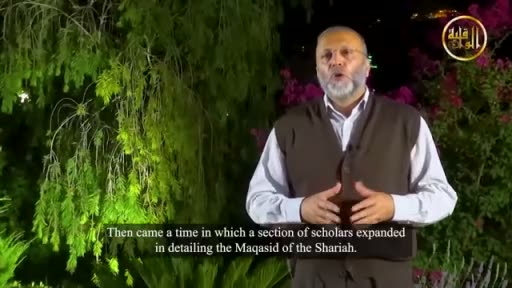
Peace and blessings of Allah be upon you; welcome, dear brothers, to a new episode of your programme Halaqa Online within our new series titled ‘Intellectual Leadership in Islam’. We are with you for this new session on the high-level goals of the individual and society between Islam and man-made doctrines and ideologies.
My brothers, one’s viewpoint on life determines the highest ideals and goals that the individual and society seek to achieve. These ideals and goals play the greatest role in giving societies their civilisational identity and way of life. The contemporary Western civilisation that dominates the world today separated religion from life, portrayed life as benefit and portrayed happiness as attaining the greatest possible share of physical pleasures. Likewise, the communist ideology, which tried to rival the capitalist ideology in shaping Western societies, left individuals to determine their own high-level goals in life. Personal freedom therefore became what individuals held most sacred in their lives, as they pursued the imagined happiness of attaining the greatest possible share of physical pleasures. The two ideologies then differed over the goals that the state should make its concern on society’s behalf.
High-level goals of secular capitalism
Secular capitalism, by contrast, defined the state’s role as the guardian of freedoms. Its function is to protect public liberties—personal freedom, freedom of belief, freedom of opinion, and freedom of property—to create space for individuals to pursue their worldly desires.
High-level goals of communist ideology
As for the communist ideology, it made the state’s function that of driving society towards communism, in accordance with its philosophy of the inevitable development of human society towards the peak of its progress, represented by communism. The state’s function, according to them, was therefore to prevent every factor that could delay this progress and to push society forward so as to accelerate the process of inevitable development towards communism. This led the state to suppress public freedoms, restrict religions—which they described as the opium of the people—abolish private property, prevent freedom of opinion and suppress everything it regarded as an obstacle to progress towards communist society.
High-level goals in Islam
Islam is entirely different. It portrays life as matter created by Allah, which must proceed according to His commands and prohibitions. It therefore made the Muslim’s highest goal—the goal through which his happiness is attained—the attainment of the Pleasure of Allah. It made the philosophy of life the mixing of matter with spirit. This is represented by the believer conducting his actions according to Allah’s commands and prohibitions, thereby satisfying his innate needs and requirements in accordance with those commands and prohibitions. Attaining the Pleasure of Allah thus becomes the believer’s ultimate goal.
As for the state’s function in Islam, it is the executive entity for Islam’s system and way of life, and it represents society in applying Islam and caring for people’s affairs through it. Its high-level goals for preserving society were therefore determined by the objectives that the Islamic Shari’ah legislated to achieve. These are fixed objectives for the Muslim, society and the state that represents society. They remain fixed because Islam, which Allah revealed, is fixed, and because the human nature created by Allah is fixed. The objectives of Islam, which the Shari’ah legislated to achieve and which became the high-level goals, are none other than the high-level goals of Islamic society and its state.
Objectives of the Shari’ah and High-level Goals
In the early period of Islam and its first centuries, Muslim scholars did not address the objectives of the Islamic Shari’ah in detail. They were satisfied with the obligation to obey Allah and adhere to His commands and prohibitions, and they stated that the Shari’ah came for the benefit of people in this world and the Hereafter. They cited Allah’s statement:
﴿ وَمَآ أَرْسَلْنَـٰكَ إِلَّا رَحْمَةً لِّلْعَـٰلَمِينَ ﴾
‘We have sent you only as a mercy to all worlds’ [21:107],
and His statement:
﴿ وَنُنَزِّلُ مِنَ ٱلْقُرْءَانِ مَا هُوَ شِفَآءٌ وَرَحْمَةٌ لِّلْمُؤْمِنِينَ ﴾
‘We send down from the Qur’an what is healing and mercy for the believers’ [17:82].
They also stated that turning away from Allah’s Shari’ah brings misery in this world and the Hereafter, citing His statement:
﴿ وَمَنْ أَعْرَضَ عَن ذِكْرِى فَإِنَّ لَهُۥ مَعِيشَةً ضَنكًا وَنَحْشُرُهُۥ يَوْمَ ٱلْقِيَـٰمَةِ أَعْمَىٰ ﴾
‘Whoever turns away from My remembrance will have a life of hardship, and We will raise him blind on the Day of Resurrection’ [20:124],
as well as many other verses and Prophetic hadiths.
A time then came when a group of scholars discussed the objectives of the Shari’ah in greater detail. They conducted an inductive survey of its rulings and sought to identify the goals they pursue and the benefits for people to which they lead. They concluded that Islam’s objectives are the preservation of the Deen, the mind, human life, wealth and lineage. However, close examination of the Shari’ah rulings shows that its objectives are not limited to these five. The preservation of human dignity, the state and security are also Shari’ah objectives for which multiple supporting rulings exist. Punishments classified among the Shari’ah hudud were even legislated for them, bringing the total to eight.
Preservation of the Deen
As for the preservation of the Deen, the Prophet, may Allah bless him and grant him peace, said: «من بدل دينه فاقتلوه» — ‘Whoever changes his Deen, kill him’ [Sahih al-Bukhari, 3017]. Indeed, Islam came so that people would have their Deen, by which they face their lives and through which they pass into the Hereafter. Furthermore, as we said earlier, Islam made the punishment for apostasy one of the hudud that the ruler must apply. It applies to everyone who leaves his Deen, in compliance with the hadith of the Messenger of Allah, may Allah bless him and grant him peace: «من بدل دينه فاقتلوه» — ‘Whoever changes his Deen, kill him’ [Sahih al-Bukhari, 3017].
Preservation of the mind
As for the preservation of the mind, Allah, may He be glorified and exalted, legislated the prohibition of alcohol and other rulings for its sake. He made drinking alcohol subject to a hudud punishment imposed on the drinker. The Prophet, may Allah bless him and grant him peace, said: «من شرب الخمر فاجلدوه» — ‘Whoever drinks alcohol, flog him’ [see Sunan Abi Dawud, 4485].
Preservation of life
As for the preservation of human life, Allah, may He be glorified and exalted, prohibited killing a person without right. For unlawful killing, He prescribed one of the severest punishments: the punishment for killing is killing—retaliatory punishment, qisas—unless the victim’s family pardon the offender and replace qisas with blood money, or grant a pardon. Allah says:
﴿ يَـٰٓأَيُّهَا ٱلَّذِينَ ءَامَنُوا۟ كُتِبَ عَلَيْكُمُ ٱلْقِصَاصُ فِى ٱلْقَتْلَى ﴾
‘O you who believe! Retaliatory punishment is prescribed for you in cases of murder’ [2:178].
Preservation of wealth
As for the preservation of wealth, this means preserving private property. Wealth naturally exists, and what is meant is preserving it for its owner. Islam prohibited theft and prohibited certain forms of acquiring wealth. It established lawful methods for acquiring wealth that a Muslim may not transgress, and it prescribed a hadd—a punishment—for the thief. This is one of the severe punishments. Allah says:
﴿ وَٱلسَّارِقُ وَٱلسَّارِقَةُ فَٱقْطَعُوٓا۟ أَيْدِيَهُمَا جَزَآءًۢ بِمَا كَسَبَا نَكَـٰلًا مِّنَ ٱللَّهِ ۗ وَٱللَّهُ عَزِيزٌ حَكِيمٌ ﴾
‘As for the male thief and the female thief, cut off their hands as recompense for what they earned and as a deterrent from Allah. Allah is Almighty, All-Wise’ [5:38].
Preservation of lineage
As for the preservation of lineage, this means preserving the human species. Allah says:
﴿ ٱلزَّانِيَةُ وَٱلزَّانِى فَٱجْلِدُوا۟ كُلَّ وَٰحِدٍ مِّنْهُمَا مِا۟ئَةَ جَلْدَةٍ ۖ وَلَا تَأْخُذْكُم بِهِمَا رَأْفَةٌ فِى دِينِ ٱللَّهِ إِن كُنتُمْ تُؤْمِنُونَ بِٱللَّهِ وَٱلْيَوْمِ ٱلْـَٔاخِرِ ۖ وَلْيَشْهَدْ عَذَابَهُمَا طَآئِفَةٌ مِّنَ ٱلْمُؤْمِنِينَ ﴾
‘The woman guilty of zina and the man guilty of zina—flog each of them with one hundred lashes. Do not let pity for them overcome you in Allah’s Deen if you believe in Allah and the Last Day, and let a group of the believers witness their punishment’ [24:2].
A severe punishment was therefore legislated for zina. This shows that, to preserve human lineage and the human species, rulings governing marriage were legislated and zina was prohibited as a means or method of satisfying the human instinct. A severe punishment—the hadd—was legislated for it. The hadd may be flogging, or it may be stoning to death.
Preservation of human dignity
As for the preservation of human dignity—which some jurists expressed as the preservation of honour—Islam prohibited violating people’s honour without evidence. For the offence of violating people’s honour and accusing them of zina without evidence, it prescribed one of the hudud: the punishment for false accusation of zina. Allah says:
﴿ وَٱلَّذِينَ يَرْمُونَ ٱلْمُحْصَنَـٰتِ ثُمَّ لَمْ يَأْتُوا۟ بِأَرْبَعَةِ شُهَدَآءَ فَٱجْلِدُوهُمْ ثَمَـٰنِينَ جَلْدَةً وَلَا تَقْبَلُوا۟ لَهُمْ شَهَـٰدَةً أَبَدًا ۚ وَأُو۟لَـٰٓئِكَ هُمُ ٱلْفَـٰسِقُونَ ﴾
‘Those who accuse chaste women and then do not produce four witnesses—flog them with eighty lashes, never accept their testimony thereafter, and it is they who are the defiantly disobedient’ [24:4].
This demonstrates Islam’s concern for preserving honour and defending human dignity.
Preservation of the State
As for the preservation of the state, the Prophet, may Allah bless him and grant him peace, said: «من جاءكم وأمركم على رجل منكم أو جميع على رجل واحد منكم، يريد أن يفرق جماعتكم، فاضربوا عنقه كائناً من كان» — ‘Whoever comes to you while your authority rests with one man from among you—or while you are united under one man from among you—and wants to divide your community, strike his neck, whoever he may be’ [see Sahih Muslim, 1852]. The Prophet, may Allah bless him and grant him peace, also said: «إذا بويع لخليفتين فاقتلوا الآخر منهما» — ‘If allegiance is pledged to two caliphs, kill the latter of them’ [Sahih Muslim, 1853]. This showed the importance of preserving the state’s unity, because the discussion concerns the ruler, and the ruler is the state. The point here is the obligation to preserve the state, its stability and its unity. For that purpose, a punishment involving a decisive measure was legislated: whoever attempts to break the Muslims’ unity by giving them more than one state or by dividing this state is to be killed.
Preservation of security
As for the preservation of security, many rulings were legislated for it. One of the most important is the punishment for highway robbers, which the jurists called the punishment for hirabah. It was derived from Allah’s statement:
﴿ إِنَّمَا جَزَٰٓؤُا۟ ٱلَّذِينَ يُحَارِبُونَ ٱللَّهَ وَرَسُولَهُۥ وَيَسْعَوْنَ فِى ٱلْأَرْضِ فَسَادًا أَن يُقَتَّلُوٓا۟ أَوْ يُصَلَّبُوٓا۟ أَوْ تُقَطَّعَ أَيْدِيهِمْ وَأَرْجُلُهُم مِّنْ خِلَـٰفٍ أَوْ يُنفَوْا۟ مِنَ ٱلْأَرْضِ ۚ ذَٰلِكَ لَهُمْ خِزْىٌ فِى ٱلدُّنْيَا ۖ وَلَهُمْ فِى ٱلْـَٔاخِرَةِ عَذَابٌ عَظِيمٌ ﴾
‘The recompense of those who wage war against Allah and His Messenger and strive to spread corruption on earth is only that they be killed or crucified, or that their hands and feet be cut off on opposite sides, or that they be exiled from the land. That is a disgrace for them in this world, and in the Hereafter they will have a great punishment’ [5:33].
Objectives are goals, not foundations for legislation
These are Islam’s eight objectives, which it made high-level goals for society and the state. They are fixed goals that cannot be diminished, increased or altered. Proper adherence to them through establishing Allah’s Shari’ah is what guarantees the achievement of these high-level goals. A very important point must be made here: Islam made these objectives into goals achieved by adhering to the Shari’ah, applying it properly and caring for people’s affairs through it. It did not make these objectives or goals a foundation for legislation. In other words, they are not a source on which jurists and mujtahids rely to produce rulings that achieve them. The sources and evidences of the Shari’ah rulings are the Qur’an, the Sunnah and what they direct to.
It is also incorrect for a group of contemporary intellectuals to make the objectives of the Shari’ah alone the constants and to make them a foundation for legislating rulings that achieve them, independently of the detailed Shari’ah evidences. They expressed this newly invented approach through a rule of their own invention: ‘Wherever there is benefit, there is Allah’s Shari’ah.’ In other words, they search for benefit and, if they find it, say: ‘Here is the Shari’ah.’ This is a serious error and the opposite of following Allah’s Shari’ah and adhering to His commands and prohibitions. A Shari’ah ruling is the Legislator’s address concerning people’s actions; it is not whatever people regard as beneficial and then call a Shari’ah ruling. The correct rule adopted by scholars and jurists is: ‘Wherever Allah’s Shari’ah is found, there is benefit.’ I say these words and ask Allah to forgive me and you. May Allah’s peace and mercy be upon you.
Questions and Discussions
Welcome back; we will now address the questions raised during today’s Halaqa Online.
What is the benefit of defining high-level goals?
I have a question from Brother Nazeer bin Saleh: ‘What is the benefit of specifying these high-level goals?’
Let me first say that the Islamic Ummah experienced the height of its revival before these objectives were described in detail. From this perspective, yes, there is no need for Muslims to describe the high-level goals, or what are called the objectives of the Shari’ah, in detail. Such a detailed description did not exist in the time of the Messenger of Allah, may Allah bless him and grant him peace, the Companions or the Followers. It appeared only later, when these objectives took shape. At one point, most of those who discussed them agreed that they were five. This means that the detailed account of the objectives appeared in the fifth century AH or towards its end. It therefore cannot be said that the objectives of the Shari’ah must be detailed before Islam and its Shari’ah can be applied and bear fruit. Islam bears fruit as soon as Muslims adhere to it in submission to Allah’s command, in obedience and worship, and are certain that this Deen puts their affairs right in this world and the Hereafter. Islam bears fruit and achieves these objectives whether people understand their details or not. Is there any need in the first place to describe these objectives in detail? Of course not, especially since they are in fact produced automatically in life by adhering to Allah’s Shari’ah, applying it and caring for people’s affairs through it.
Why do we now raise these objectives and discuss them in detail? As you have seen, this comes in the context of comparing Islam with man-made doctrines and ideologies—especially the capitalist ideology in our time. The purpose is for people to understand the vast difference between the nature of Islam and what Islam seeks to achieve, and what man-made ideologies seek to achieve. The most prominent of these today is capitalism, which communism previously tried to rival. We thus want to highlight the vast difference between the high-level goals that Islam wants society to achieve and the goals that capitalism seeks to establish in people’s lives.
Do other creeds have high-level goals?
Brother Salim Ali asks: Do other creeds have high-level goals like Islam? The word ‘creeds’ can have more than one meaning. We explained in previous episodes that creeds are of two kinds. The first are emotional, spiritual creeds that address the religious aspect in the spiritual-priestly sense of religion found in the Western conception. In other words, they are traditional spiritual-priestly creeds concerned only with regulating a person’s relationship with his Creator or, more generally, with what he worships. Their high-level goals are limited to goals beyond this worldly life or to attaining certain moral qualities in this life. They have no goals to be achieved in society through the state.
As for rational creeds, from which systems emerge, these are ideologies. Among the ideologies known historically up to our time, after Islam, the ideology that now dominates the world is capitalism. The ideology that tried to rival it and collapsed decades ago was communism. These two ideologies are based on two rational creeds, each of which presents its view of the universe, man and life: this worldly life, what came before it, what comes after it, and its relationship with what came before and what comes after. A system for life emerged from each creed, as we mentioned earlier. At the beginning of the episode, we gave the following example: What high-level goals does capitalism seek to achieve, and what high-level goals did communism seek to achieve? Political rational creeds therefore had high-level goals for society. Islam has its own high-level goals in this world and its supreme goal: to meet Allah, may He be glorified and exalted, while He is pleased with the person. The person thereby attains the ultimate goal—the Pleasure of Allah—which leads to a Paradise as wide as the heavens and the earth, under Allah’s Pleasure.
Does preservation of the Deen include other religions?
A question from Brother Bob John: ‘Peace be upon you.’ And upon you be peace, Allah’s mercy and His blessings. ‘Does preservation of the Deen mean preserving Islam alone, or preserving Islam and the other religions as well? An article in the constitution concerning non-Muslims states that disputes between non-Muslims are settled according to their religions, and that they are left to what they believe. Please clarify. May Allah reward you.’
My dear brother, when we tell people, ‘Leave your religions and embrace Islam,’ it does not make sense to say afterwards that Islam’s goal, or one of the objectives of the Shari’ah, is to preserve other religions. Islam did not come to preserve other religions. Islam came so that it would be the Deen—the dominant Deen:
﴿ هُوَ ٱلَّذِىٓ أَرْسَلَ رَسُولَهُۥ بِٱلْهُدَىٰ وَدِينِ ٱلْحَقِّ لِيُظْهِرَهُۥ عَلَى ٱلدِّينِ كُلِّهِۦ وَلَوْ كَرِهَ ٱلْمُشْرِكُونَ ﴾
‘He is the One who sent His Messenger with guidance and the Deen of truth to make it prevail over every other Deen, even though the polytheists dislike it’ [9:33; 61:9].
What is meant by preservation of the Deen is therefore Islam—the preservation of Islam. Allah, may He be glorified and exalted, prescribed the punishment for apostasy for the person who leaves Islam. He did not prescribe the punishment for apostasy for someone who leaves his own religion and embraces Islam or another religion.
It is true that Allah, may He be glorified and exalted, prohibited compelling people to embrace Islam and prohibited putting people under pressure to abandon their religions. The Prophet, may Allah bless him and grant him peace, said: «من كان على يهوديته أو نصرانيته فلا يفتن عنها» — ‘Whoever remains upon his Judaism or Christianity must not be put under pressure to leave it’ [see Kitab al-Amwal by Abu Ubayd]. When he was asked about the Magians, he said: «سنوا بهم سنة أهل الكتاب» — ‘Treat them according to the practice applied to the People of the Book’ [Al-Muwatta’, 756]. Thus, we do not put people under pressure to abandon their religions, meaning that we do not force them to leave their religions and embrace Islam. But this does not mean that we are charged or commanded with preserving their religions. We protect them as subjects of the Islamic State: we defend them, retaliatory punishment is imposed upon anyone who attacks them, and they are subjects entitled to full care. Part of caring for them, and part of what Allah, may He be glorified and exalted, has legislated, is that we do not compel them to embrace Islam. Allah says:
﴿ لَآ إِكْرَاهَ فِى ٱلدِّينِ ۖ قَد تَّبَيَّنَ ٱلرُّشْدُ مِنَ ٱلْغَىِّ ﴾
‘There is no compulsion in the Deen. Right guidance has become distinct from error’ [2:256].
The Prophet, may Allah bless him and grant him peace, also said: «من كان على يهوديته أو نصرانيته فلا يفتن عنها» — ‘Whoever remains upon his Judaism or Christianity must not be put under pressure to leave it’, or words to that effect.
The fact that we do not compel anyone to embrace Islam does not imply that we preserve other religions or seek to establish them. We invite them to Islam while denying ourselves the right to force conversion. What we uphold and punish apostasy from is Islam alone. Therefore, preservation of religion specifically refers to preserving Islam.
Rules for Non-Muslims and Protecting Society
Brother Bob John also asks: If non-Muslims form a distinct community within society, and if Islam has established specific legal rulings for them, are these particular rulings intended as safeguards for their own community?
Islam worked to integrate all people into Islamic society and commanded that Islam’s systems and rulings be applied to everyone. Excluded from these rulings are those concerning food and clothing, drinks and clothing, and what is called personal status in our time—namely, marriage, divorce and inheritance.
Here, we do not apply their rulings ourselves; rather, we leave them to apply their own rulings, because this falls under allowing them to remain upon their religion. In other words, we do not put them under pressure to leave their religion. The Shari’ah attached to allowing them to remain upon their religion—or to not putting them under pressure to leave it—that they be left with their places of worship, acts of worship and foods. We therefore do not force them, or prevent them, from eating pork or drinking alcohol. We do not compel them to follow our religion’s rulings on marriage, nor do we compel them to follow our inheritance rulings; they inherit from one another according to their own laws.
This is not about recognising the existence of other societies. Rather, Islam does not want these people to embrace Islam under compulsion, because someone who embraces Islam under compulsion has not truly embraced Islam; he has embraced hypocrisy. Allah, may He be glorified and exalted, does not want people to act hypocritically and does not want hypocrisy. Hypocrisy arose among people who wanted to gain a favourable position in society. Islam does not want hypocrisy to exist in this society; it wants people to embrace Islam sincerely.
If people were forced to embrace Islam, hypocrisy would arise. This is not a matter of preserving other societies. It is a matter of addressing people kindly and debating with them in the best manner so that they embrace Islam out of conviction. Muslims must, however, continue inviting these people to Islam without coercion until they prefer to embrace Islam, if Muslims are able to do so.
Islam’s concern, therefore, is not to maintain other societies and other ways of life. It should be noted that religions do not have ways of life: religions other than Islam address spiritual, family and personal matters, but do not address systems for life. These matters were therefore left to their adherents because they are part of, indeed central to, their religions. Putting them under pressure to abandon these matters, or compelling them to follow Islam’s rulings instead, would put them under pressure to leave their religion. Allah, may He be glorified and exalted, prohibited us from doing that—that is, from forcing them to leave their religions.
Conclusion
These are the questions received up to this point. I ask Allah, may He be glorified and exalted, to reward me and you for these blessed sessions, by His permission; to increase us in knowledge and action; and to make our knowledge and actions sincerely for His noble countenance. I invoke Allah’s blessings and peace upon the Messenger of Allah, his family, his Companions and those loyal to him. May Allah’s peace, mercy and blessings be upon you.