Introduction from The System of Islam
Capitalism sees that the state only supervises the liberties. So if someone infringed upon the freedom of another person, then the state will act to prevent the infringement, because it exists to secure the liberties. However, if someone did not infringe upon the freedom of another person even if he exploited him and took away his rights, but with his consent, then there would be no infringement upon freedoms and the state would not then interfere. Therefore, the state exists to secure the liberties. Islam considers that the system is implemented by the individual believer motivated by his piety (taqwa) of Allah ﷻ, by the state through the appreciation of the community of its justice, by the co-operation of the nation (Ummah) with the ruler through al-amr bil maruf wa nahiy anil munkar (enjoining the good and forbidding the evil) and by the authority of the state. The state takes care of the community’s affairs but not the individual’s affairs unless he was unable to do so. The system does not evolve at all. The state has the authority to adopt the rules (AHkaam Shar’iyyah) when there is more than one opinion of ijtihaad on an issue.
Public Freedoms or Adherence to Shari’ah Rulings?
Peace be upon you, and the mercy of Allah and His blessings. Welcome, my brothers, to a new episode of your programme Halaqa Online. We remain within the subject of intellectual leadership in Islam, comparing Islam’s ideas about governance, society and life in general with other man-made ideas—especially those of contemporary Western civilisation, which rests on the separation of religion from life. Today we address a matter of great importance: public freedoms versus adherence to Shari’ah rulings.
The Origins of Public Freedoms in Western Civilisation
The concept of public freedoms, which dominates the world today, continues to spread and gain considerable influence. The West and its followers present it as a self-evident truth to which all people must submit. This concept is purely Western. It arose in the West after the separation of religion from life, when they said that neither religion, the church, religious scholars nor the priesthood would have any further authority over the individual and society. The right to choose the way of life would belong to the human being alone.
From this came the idea—indeed, the very foundation of the Western system of government—that sovereignty belongs to the people. For the people to be given sovereignty and the right to determine… the right to determine their own destiny, they first had to be granted freedom to express themselves fully. Thus, the concept of public freedoms arose in the West and became a basis for legislation. They even defined the state’s function as protecting freedoms, saying: “The state’s function is limited to protecting freedoms.” They call these the public freedoms.
The Four Public Freedoms
They deliberately divided these public freedoms primarily into four categories: freedom of belief, freedom of opinion, personal freedom, and freedom of ownership.
Freedom of Belief and Opinion
By freedom of belief, they meant that a person may adopt whichever religion he wishes. Neither the state nor society may intervene against someone who adopts any religion or changes his religion whenever he wishes. By freedom of opinion, they meant that a person may express any opinion without objection and without being prevented from expressing his opinion or thought.
Personal Freedom
As for personal freedom—perhaps the most prominent of the freedoms held sacred in the West—it means that a person has the right to live his private life however he wishes and to choose whatever conduct he wants.
He has the right to eat and drink whatever he wishes. He may consume anything, whether halal or haram; for them, halal and haram are not a criterion at all. He may wear whatever he wants and conduct his private life as he pleases: marry, commit indecency or choose… Men may marry men and women may marry women. He has the right to do whatever he wants in his private life without anyone intervening. This is what they call personal freedom.
Freedom of Ownership
Freedom of ownership is a pillar of the capitalist system. It means that a person may own whatever he wishes, however he wishes and by whatever method he chooses, and may dispose of his wealth however he wants, without any control, restriction or condition.
The State’s Role in Protecting Public Freedoms
The same applies to all the freedoms. As they say, one person’s freedom ends where another’s begins. This means that the moment one individual infringes upon another—according to their concept of infringement—his freedom ends. The state’s function, they say, is therefore to protect the freedoms by preventing people from infringing upon one another or restricting one another’s freedom.
The West began spreading this concept of public freedoms—which formed the basis of Western legislation—as something sacred. Indeed, public freedoms may be the only thing it regards as sacred.
Dressing Western Freedoms in Islamic Garb
Decades ago—long ago—intellectuals in the Islamic world seized upon this idea. Instead of viewing it as an idea that emanated from the creed of separating religion from life, grew in the soil of Western civilisation, is not a universal idea suitable for all people and cannot serve as a basis for legislation, they said: “We are not against freedoms; we support them.” They continued: “Precisely because we adhere to our Islam, we tell you that Islam supports public freedoms.” They then began seeking evidence from Islam for each of the public freedoms, or each type of public freedom, found in the West.
Regarding freedom of belief, they said: “Our Islam says:
﴿ لَآ إِكْرَاهَ فِى ٱلدِّينِ ﴾
‘There is no compulsion in the Deen.’ [2:256]
Muslims may not compel people to embrace Islam; therefore, this is freedom of belief.”
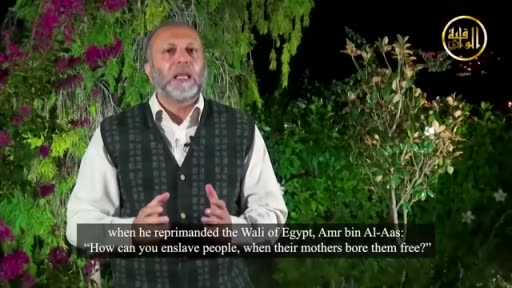
Then they turned to personal freedom. They quoted the words of Umar ibn al-Khattab, may Allah be pleased with him, when he rebuked Amr ibn al-As, the governor of Egypt: ‘When did you enslave people, when their mothers gave birth to them free?’ They said that this concerns the freedom of individuals—personal freedom.
Then when they turned to the issue of freedom of opinion, they began searching for verses and hadiths commanding people to speak truth, encouraging them to enjoin good and forbid evil, and holding rulers accountable; saying this is freedom of opinion: Islam grants such freedom by allowing people to hold rulers accountable, express their opinions, enjoin good, and forbid evil. They said this constitutes freedom of opinion in Islam.
As for the matter of freedom of ownership, they stated that Islam permits Muslims to own property; individual ownership is protected in Islam and indeed constitutes one of the objectives of Shari’ah. Thus, freedom of ownership belongs to Islam.
Thus, they adopted the public freedoms that emanated from the Western creed of separating religion from life. They adopted them, began finding a place for them in Islam and clothed them in Shari’ah evidence and Shari’ah rulings.
The Linguistic and Terminological Meanings of Freedom
The truth is that the question of freedoms must not be approached through the linguistic meaning of the word “freedom”. The word has a linguistic meaning with a real application in the Islamic Shari’ah: freedom as the opposite of slavery. The Islamic Shari’ah contains rulings that regulate freedom and slavery. These have no connection to the concept of public freedoms, which forms a basis of Western legislation.
In fact, this concept left its mark on society and produced a society with a particular identity and way of life known as contemporary Western civilisation. Is this way of life, adopted by the West and characterised by public freedoms, the way of life brought by Islam? Does it express Islamic civilisation?
Islam’s Position: Adherence to Allah’s Commands and Prohibitions
Islam is completely different. Islam rests on the creed that there is no deity but Allah and that Muhammad is the Messenger of Allah. This creed requires the Muslim, in this life and within Muslim society—the Islamic society—to be bound by Allah’s commands and prohibitions.
Islam made it the state’s function to safeguard the way of life brought by Islam. What Islam brought enables people to attain the best way of life—the way Allah Most High has approved for His servants:
﴿ ٱلْيَوْمَ أَكْمَلْتُ لَكُمْ دِينَكُمْ وَأَتْمَمْتُ عَلَيْكُمْ نِعْمَتِى وَرَضِيتُ لَكُمُ ٱلْإِسْلَـٰمَ دِينًا ﴾
‘Today I have perfected your religion for you, completed My favour upon you, and chosen Islam as your religion.’ [5:3]
This is the way of life brought by Islam, which we discussed in several previous episodes. The Muslim is addressed with the duty to care for and preserve this way of life, and society is likewise addressed with the duty to preserve it.
The state represents this society, expresses it and derives its authority from it. Its function is to preserve the way of life brought by Islam. For that way of life to be guaranteed and present in reality, everyone must adhere to Allah’s commands and prohibitions.
The Western Criterion and the Islamic Criterion
Western civilisation generally rests on the creed of separating religion from life. This required people to be free in everything and gave rise to the concept of public freedoms. Islam brought something different: society’s conduct, its relationships and even the individual’s conduct must be directed by Allah’s commands and prohibitions.
In the West, the state’s function is to protect freedoms. In Islam, the default regarding human actions is adherence to the Shari’ah ruling. In the West, by contrast, the default regarding human actions is freedom: people are free in what they do and are restricted only by the controls they devised for themselves—the rule that one person’s freedom ends where another’s begins.
Islam states that the default regarding human actions is adherence to the Shari’ah ruling. If people adhere to the Shari’ah ruling and organise their relationships in society according to Allah’s commands and prohibitions—that is, according to the system ordained by Allah, Glorified and Exalted be He—a way of life emerges that befits the human being, elevates him and secures well-being and happiness for him. In other words, the way of life that Allah approves for His servants is established.
The State’s Function Is Neither to Protect Freedoms nor to Suppress People
Accordingly, the state’s function is not to protect freedoms. At the same time, no one should imagine that we are calling for a state of repression or an assault on people’s rights. Neither public freedoms nor, conversely, repression, violations of people’s rights or restrictions based on anything other than what Allah has revealed constitute the default in Islam.
The concept of freedoms is not part of Islamic thought, is not a basis of legislation and is not a criterion for human actions. Nor is it a standard by which the state, society or even individuals are held accountable.
The default is that the state safeguards the way of life brought by Islam. It does not allow people to act however they wish, according to their whims and desires, while being told not to approach personal freedom, freedom of ownership, freedom of opinion or freedom of belief. Let us measure the concept of public freedoms against Shari’ah, instead of accepting the regrettable claim by some Muslims that the public freedoms brought by the West are guaranteed in Islam.
The Four Freedoms Measured Against Shari’ah: Freedom of Belief
Some said that freedom of belief exists in Islam and is protected by Islam. What evidence did they use? As we mentioned earlier, they said:
﴿ لَآ إِكْرَاهَ فِى ٱلدِّينِ ﴾
‘There is no compulsion in the Deen.’ [2:256]
Some regarded the preservation of religion as one of the objectives of the Shari’ah. They said that this corresponds to the freedoms introduced in Western society, specifically freedom of belief. They claimed that Islam came to guarantee everyone the right to adopt whichever religion they wish. This is incorrect.
Islam has forbidden us from compelling people to embrace Islam. This is not based on the theory of public freedoms or freedom of belief. The basis of this ruling is not that Islam guarantees freedoms; rather, the ruling that forbids us from compelling people to embrace Islam is based on the Islamic creed itself. The Islamic creed requires us to obey Allah’s command:
﴿ لَآ إِكْرَاهَ فِى ٱلدِّينِ ﴾
‘There is no compulsion in the Deen.’ [2:256]
Therefore, we do not compel people to embrace Islam.
But this does not mean freedom of belief. The Muslim is required to remain steadfast in his creed. If he apostatises, the prescribed punishment for apostasy is applied unless he renounces his apostasy. Where, then, is freedom of belief in relation to this Shari’ah ruling in Islam?
Freedom of Opinion
If we turn to freedom of opinion in Islam, Allah, Exalted is He, says:
﴿ مَّا يَلْفِظُ مِن قَوْلٍ إِلَّا لَدَيْهِ رَقِيبٌ عَتِيدٌ ﴾
‘Not a word does a person utter without having a vigilant observer ready to record it.’ [50:18]
In Islam, a person may utter a word: «وإن المرء ليتفوه بالكلمة من غضب الله، لا يلقي لها بالاً، فتهوي به في جهنم سبعين خريفاً» — ‘A person may utter a word that incurs Allah’s wrath, paying it no heed, and because of it fall through Hell for seventy autumns’ [see: Sahih al-Bukhari 6478; Jami‘ al-Tirmidhi 2314]. They asked: ‘Are we accountable for what we say, O Messenger of Allah?’ He said: ‘Woe to you! «وهل يكب الناس على مناخرهم في جهنم إلا حصائد ألسنتهم؟» — What else casts people upon their noses in Hell except the harvests of their tongues?’ [Jami‘ al-Tirmidhi 2616].
In Islam, a Muslim may say only what pleases Allah, Glorified and Exalted be He. He may not speak in a manner that violates Shari’ah. Whoever says something contrary to Shari’ah is stopped and held accountable under its rulings.
No one has the right simply to say, for example, “I believe nationalism is suitable for organising life and the state,” or, “I believe the ruler should go beyond Shari’ah and apply some man-made systems.” Anyone who says something contrary to Shari’ah is held accountable. A person may not say whatever he wishes. If, for example, he attacks people’s honour by accusing someone of zina, the prescribed punishment for false accusation is imposed to protect human dignity.
Under the freedom of opinion on which Western legislation is built, a person may attack sacred things without suffering harm. Writers there may mock the Book of Allah and the Prophet of Allah, while Muslims are denied the right to object because this is treated as freedom of opinion.
Personal Freedom
As for personal freedom, has Islam guaranteed the personal freedom of which the West speaks? Why does Islam hold a person accountable for committing indecency? Does Islam not flog the one who drinks alcohol? Does it not flog the one who commits zina? Is the Muslim not bound by Shari’ah in his private conduct? Anyone who violates Shari’ah rulings in his private conduct—by committing zina, drinking alcohol, eating pork or committing another violation—is held accountable and punished either with a hadd punishment or ta’zir. Therefore, the concept of personal freedom does not exist in Islam.
Freedom of Ownership
As for freedom of ownership, it is incorrect to say that the Islamic economic system recognises freedom of ownership. Islam regulates ownership; it does not leave ownership under the heading of freedom. A Muslim therefore has no right to own anything that belongs to public ownership.
Unlike the capitalist system, Islam does not permit individuals to own everything. There are also methods by which a Muslim may not acquire property. He may not acquire or increase his wealth through unlawful means, even with the consent of others. A Muslim may not acquire property through riba, increase his wealth through riba or gambling, or use contracts that Allah, Glorified and Exalted be He, has forbidden. Where, then, is freedom of ownership? Shari’ah rulings permit some things and forbid others.
Halal and Haram as the Criterion for Actions
Thus, the criterion for actions in Islam is not freedom or public freedoms; it is halal and haram. Whatever is halal is permitted, and whatever is haram is forbidden and may not be committed.
The state safeguards these Shari’ah rulings—or, more precisely, applies them and manages people’s affairs through them. The state in Islam is not a guardian of freedoms; it is the executive entity for the way of life brought by Islam. This way of life consists of concepts about life and the way of living that emanates from them, brought by the Islamic Shari’ah—the law of Allah, Glorified and Exalted be He.
The State and the Upholder of Allah’s Limits
This is expressed with utmost precision in a hadith of the Messenger of Allah, may Allah bless him and grant him peace: «مثل القائم على حدود الله والواقع فيها كمثل قوم استهموا على سفينة، فأصاب بعضهم أعلاها وبعضهم أسفلها، فكان الذين في أسفلها إذا استقوا من الماء مروا على من فوقهم، فقالوا: لو أنا خرقنا في نصيبنا خرقاً، ولم نؤذ من فوقنا. فإن يتركوهم وما أرادوا هلكوا جميعاً، وإن أخذوا على أيديهم نجوا ونجوا جميعاً» — ‘The example of the one who upholds the limits of Allah and the one who falls into them is like that of people who drew lots for places on a ship. Some took the upper part and others the lower part. Whenever those in the lower part needed water, they passed by those above them. They said, “If only we made a hole in our own share without harming those above us.” If they leave them to what they want, they will all perish; but if they restrain them, they will be saved, and all will be saved’ [Sahih al-Bukhari 2493].
This hadith is clear: the one who upholds Allah’s limits is the ruler. The Islamic state’s function is to prevent people in society from violating the law, because if they do so, they destroy themselves and everyone else. If the state restrains them and prevents them from breaching society’s system and way of life, everyone is saved. This way—the Islamic way of life—is the way in which humanity finds salvation and its best way of living.
Conclusion of the Presentation
This is what I wanted to say in this episode. I ask Allah, Glorified and Exalted be He, to benefit me and you and to increase us in knowledge and deeds. Peace be upon you, and the mercy of Allah and His blessings.
Questions and Discussions
Peace be upon you, and the mercy of Allah and His blessings. Welcome back. We will answer some of the questions we received during the episode.
Are Permissible Acts a Form of Public Freedoms?
Our brother Nadhir bin Salih asks: Can permissible acts be regarded as a form of public freedoms?
My dear brother, the issue is not to treat the word “freedoms” according to its linguistic meaning. If we were speaking of freedom in its purely linguistic sense, we could say that a Muslim is free to do or refrain from whichever permissible acts he wishes. Here, however, the term “public freedoms” has a specific terminological meaning.
Its meaning is that no one has the right to restrict an individual in their life, nor intervene in the creed they hold, nor interfere with their personal conduct; neither religion nor law imposes any restriction whatsoever on their personal life—whether regarding opinion, belief, wealth, or how they own property. The core issue is that public freedoms mean a person is restricted only by limits they have set for themselves, based on the principle that an individual’s freedom ends where another individual’s begins.
We therefore do not say that Islam guarantees public freedoms in permissible matters. A permissible act is permissible because Allah, Glorified and Exalted be He, made it permissible. Shari’ah evidence from Allah’s revealed address indicates that some things are permissible, so they are permissible because Allah permitted them. When a Muslim chooses to perform or refrain from a permissible act, he does so while adhering to Allah’s law. He knows what is permissible and chooses from it as he wishes; he knows what is obligatory and undertakes it in obedience to Allah, Most High; and he knows what is haram and abstains from it. If he does not comply, the state—the executive entity of Islam’s system—compels him to do so.
Should We Speak of Shari’ah-Restricted Freedoms to Find Common Ground?
Brother al-‘Abid asks: What is wrong with saying that there are freedoms restricted by Shari’ah, for the sake of finding common ground? The same applies to human rights: the UN human-rights charter contains things that agree with Islam. First…
It is neither Islam’s practice nor its method to seek common ground with other religions, systems and ideologies. Islam is a complete and independent ideology, self-sufficient and in no need of other ideologies. Rather, it works to remove those ideologies and replace them in reality.
It is said that we can give and take, benefit and provide benefit, so that the ideas and legislation brought by the various doctrines and ideologies intermingle. According to this claim, we can introduce into Islam—or add to Islam—something from elsewhere because it agrees with Islam, or adapt it until it agrees with Islam.
Islam rejects this, and it falls under the words of Allah Most High:
﴿ لَكُمْ دِينُكُمْ وَلِىَ دِينِ ﴾
‘For you is your religion, and for me is my religion.’ [109:6]
It is not possible. Islam does not call for ideas, religions and ideologies to intermingle. It is a complete Deen, independent of all others, and has no need to seek common ground with them.
Even if some ideas are similar, Islam’s ideas and rulings are founded on, or emanate from, the Islamic creed, while their ideas and systems are likewise connected to their creed. More important than an idea is the foundation on which it rests. We are therefore not concerned with searching for points shared by us and other ideologies, because we want to spread our ideas as ideas from Islam—not as common ground.
Thus, there is no need to state that public freedoms are limited by the Shari’ah ruling; rather, what is restricted by the Shari’ah ruling are people’s actions.
As I said in answer to the previous question, the term “public freedoms” does not carry a linguistic meaning here. It has an intellectual, terminological meaning connected to the viewpoint introduced by the secular creed of separating religion from life. We must understand it on this basis, not linguistically. We should not speak of freedoms restricted by Shari’ah; human actions are bound by Shari’ah rulings through the revealed address.
Human Rights Between Islam and the West
This also applies to human rights. Human rights are not a universal concept in the sense that there is one view of human rights that the entire world can hold. So long as the world differs in its intellectual backgrounds, intellectual foundations and creeds, its views of human rights will differ. Each person views the human being and his rights on the basis of his own view of life.
The West’s view of life—the view of Western civilisation—has no connection to Islam’s view of life. Islam therefore has its own view of human rights and duties, and the West has its own. We are not concerned with searching for similarities and differences between Islam’s view of rights and the West’s view.
Islam brought Shari’ah legislation. The Shari’ah rulings governing accountable acts classify human actions into five categories: permissibility (mubah), obligation (wajib), recommendation (mandub), prohibition (haram) and dislike (makruh).
These Shari’ah rulings brought by Islam represent Islam’s view of rights and duties. Whatever Islam permits a person is a right for him; whatever it obliges him to do is one of his duties and may also, at times, be a right for him; and whatever it forbids him is haram for him.
Islam did not merely come with what is called human rights; it came detailing duties that the person must fulfil, prohibitions which he may not approach, and rights to which he is entitled and from which no one may withhold them.
Conclusion
My dear brothers, these were the questions received during our gathering this evening. I ask Allah, Glorified and Exalted be He, to accept from me and from you and to make our knowledge and deeds sincere for His Noble Face. I send prayers and peace upon the Messenger of Allah, his family, his Companions and all who follow his path with excellence until the Day of Judgement. I leave you in Allah’s care. Until we meet again, Allah willing, in another episode of your programme Halaqa Online. Peace be upon you, and the mercy of Allah.