Introduction from the book The System of Islam
The intellectual leadership of Islam agrees with man’s innateness (fiTrah). In spite of its depth, it is comprehensible and easily accessible. Man quickly opens his mind and heart to it, devotes himself to it in order to understand it, and to become deep in its details with passion and appreciation. This is because religiousness is innate in man. Every man is religious by his nature and no power can remove from him this innateness (FiTrah), because it is deeply rooted in him. Man, by nature, feels that he is deficient and that there is a power more perfect than him that deserves to be sanctified. Religiousness is the need for the Creator, the Arranger, that arises from the natural inability in the human form. It is a constant instinct that has a specific reaction, which is the sanctification (taqdees). Accordingly, humankind is religious and has always worshipped something throughout the ages. Humanity has worshipped man, planets, stones, animals, fire and other things. Islam, however, with its creed came to lead humanity away from worshipping of creatures to the worship of Allah ﷻ who created everything.
Political Creeds and Human Nature
Peace be upon you and Allah’s mercy and blessings. Welcome, my dear brothers, to another episode of your programme Halaqa Online. We continue our series on intellectual leadership in Islam. Today I will speak with you about an extremely important topic: political creeds and human nature.
The Meaning of Political Creeds and Human Nature
What do we mean by political creeds? And what do we mean by human nature? By political creeds, I refer to those creeds that form a comprehensive understanding of the universe, humanity, life—and what precedes this worldly life and follows it—as well as their relationship with both. These are intellectual creeds from which a system of living emerges. Certainly, we do not mean here spiritual priestly creeds—such as Christianity, Judaism, Buddhism, and others—that do not produce any system for living.
In this age, the term political creed applies exclusively to three creeds. The first is the Islamic creed, which is political as well as spiritual. The second is the capitalist creed—the creed of separating religion from life, today called secularism—which dominates the world today. The third is the communist creed, which tried to compete with the creed of separating religion from life during the last century, but disappeared before that century ended. This is what I mean by political creeds, and this is what I specifically mean by human nature in today’s topic.
Human nature here means the feeling of need: the intense, urgent need for the Creator and Arranger that arises from man’s awareness of his natural inability. By nature, man feels weak, deficient and in need. He therefore needs someone to make up for this deficiency, weakness and need. This is why man has always turned to someone who can make up for his weakness.
Religiousness Is Innate in Human Beings
This human nature has always existed. It is the basis of what is found in man and is now called the instinct of religiousness. Ever since man first existed on this earth, he has been religious by nature.
Whether one adheres to the correct creed and embraces true religion, or fails to do so; whether he worships Allah alone or instead worships other aspects of creation—becoming an idolater who venerates idols and statues—the human being has been religious by nature since ancient times until this day. He always worships something and sanctifies something.
Study civilisations, study human history: you will find that all peoples have worshipped someone or something. If they were guided to worship Allah by following the prophets of Allah, then their instinct of religiousness was fulfilled in its proper form—by directing them toward Allah through worship, sanctification and reverence.
If nations do not follow the prophets of Allah, if people do not adhere to them, they will invent religions. Within these religions, they take gods other than Allah as objects of worship: they worshipped the sun and moon, the seas and rivers, idols, heroes, even transforming some prophets into deities worshipped alongside Allah.
Sanctification and Taking an Object of Worship
By his very nature, man is inclined towards religiousness; by his very nature, he sanctifies. If this sanctification and religiousness are not openly expressed in worship, they still appear as veneration for someone else—elevating them to the level of divinity.
When a person sanctifies another human being to such an extent that he regards him as his source of inspiration in life—and believes that his words alone define the meaning of existence and purpose—then, at this point, he has effectively worshipped that individual, whether consciously or unconsciously.
We also find those who sanctify themselves and their own desires. Allah, glorified and exalted be He, says about such a person:
﴿ أَفَرَءَيْتَ مَنِ ٱتَّخَذَ إِلَـٰهَهُۥ هَوَىٰهُ ﴾
‘Have you seen him who has taken his desire as his deity?’ [45:23]
By his nature, man must take something as an object of worship, whether openly or otherwise. It is part of human nature that man is religious, sanctifies and reveres, and seeks someone who can make up for his weakness and deficiency.
A Sound Creed Must Agree with Human Nature
A creed cannot be sound for man—guiding him to understand the meaning of his life and to solve his problems in life—if it clashes with his human nature and does not agree with it.
The Creed of Separating Religion from Life
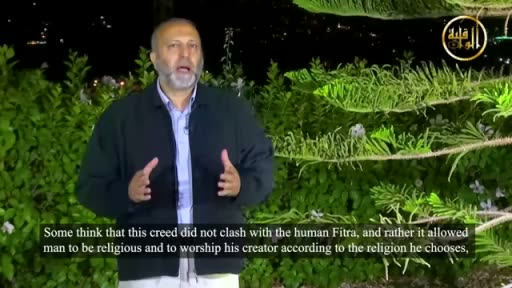
More than two centuries ago, the modern Western civilisation arose. It rules and dominates the world today and is founded on the creed of separating religion from life. Some people think this creed does not clash with human nature because it allows a person to remain religious and worship his Creator through whichever religion he chooses. They therefore argue that this creed does not clash with human nature.
This is what the Westerners claim—that is what the West’s intellectual leaders assert: they have not denied religion but separated it from life. Whoever wishes to be an atheist may do so; whoever wishes to be religious may do so; whoever wishes to adopt a heavenly faith may do so, and whoever wishes to remain pagan may do so. Consequently, this creed leaves the path open for people to be religious while worshipping whatever they desire. They therefore claim that this creed does not contradict human nature or the instinct of religiousness within them—but such claims are false.
Why Secularism Clashes with Human Nature
Why? Because the instinct of religiousness, that innate human disposition which Allah—exalted is He—has created in man: this innate disposition does not merely demand belief in the Creator’s existence or submission to His existence alone. Rather, it is a feeling of need for the Creator and Arranger—the Creator who shaped humanity and manages its affairs, guiding humans toward the truth of their being, the meaning of their existence, their origin and destiny, and the correct way of living that aligns with their innate nature—leading them to success in this world and the Hereafter.
When the creed of separating religion from life says, ‘The Creator created man, but after creating him He left him to manage his own affairs,’ it leaves man like an orphan deprived of both parents in this life. It tells him: The Creator exists, and you may establish a relationship with Him if you wish, but He does not guide you to a way of life, explain the meaning of life to you, or give you legislation that organises your life and your relationships with others. Thus, although secularists acknowledge Allah, He has no place in man’s life, his relationships with other people, or the organisation of his life. This is why the creed of separating religion from life contradicts human nature, clashes with it and fails it. It tells man: Your Lord created you, then left you to live as you wish and manage your affairs as you please—so decide for yourself how to manage them. This creed therefore fails to satisfy man’s instinct of religiousness: the human nature upon which Allah created mankind.
The Practical Impact of Secularism in the West
This pertains to the theoretical aspect of the creed that separates religion from life; hence, in practice, people at that time believed this creed would not hinder their religiousness or the observance of their religious lives—meaning their relationship with Allah.
That may have been the case at first. Over time, however, the creed of separating religion from life competed with the religious creeds in the West—especially Christianity, the creed of the Western peoples—until it pushed them out of life. Anyone who visits Europe today finds its churches empty. Religiousness has almost disappeared from Western lands, and even what remains is largely a hollow formality with no effect on life.
Viewpoint towards Life and Conduct
What replaced the Christian creed? The creed of separating religion from life. It presented a viewpoint towards life different from the one presented by Christianity and all other religious creeds. This new viewpoint came to govern people’s conduct, the criteria by which they judged their actions, and their understanding of happiness.
It is one’s viewpoint towards life that shapes human conduct in daily existence. The capitalist creed—the doctrine of separating religion from life, secularism—presented a perspective on life entirely distinct from the religiousness that had prevailed among Christians before this new ideology took hold. As a result, it came to dominate their outlook and manner of living.
This is why people there began to experience a spiritual crisis, which in turn led to psychological crises. People no longer enjoyed the warmth of religious creed, the warmth of family, or the warmth of human relationships. Psychological crises spread, mental health clinics became crowded, and the rates of attempted and completed suicide rose in the West.
All this happened because the creed that took hold of people’s thinking and their viewpoint towards life separates the Creator from His creation in worldly life. It makes no connection between Creator and creation in the way people live, but tells man: This is your life, so choose your own way of living. People therefore chose a way of life in which happiness meant obtaining the greatest possible share of physical, sensory and material pleasures, and material benefit became their criterion in life.
Starving the Instinct of Religiousness and Diverting It
That is why this creed has replaced religiousness, leaving the Western man’s instinct for religiousness starved—he now finds nothing to satisfy it. Has that instinct vanished from him? No, for it is part of human nature itself; it cannot disappear even if ignored. So how does he satisfy it? How can a Westerner fulfil his innate need for religiousness?
In the past, the European would go to church and enter the confessional booth to confess to a priest, believing that by doing so he was confessing directly to Allah. He felt he had established a connection with Him, repented before Him, and found relief through this confession.
What has happened now? Most Westerners, when facing psychological distress, go to the psychologist’s clinic instead. Rather than confessing to a priest in the church confessional, they confess their burdens to a psychiatrist on his couch within the clinical setting.
The instinct of religiousness shifted from the church, priesthood, and Christianity to what they imagine is science—psychology—and then to psychologists, psychiatrists, and psychological clinics.
They revered power, fame, dominance and logic. The instinct of religiousness was therefore redirected towards admiration for other things instead of submission to Allah, worship of Him and reverence for Him. This is the crisis caused by the capitalist creed, which separated religion from life and separated the Creator from His creation in worldly life.
The Communist Creed and Its Clash with Human Nature
The communist creed competed with it in the twentieth century, attempting to replace it. States were established for this creed—then more states followed.
The communist creed, which declares there is no deity and that life consists solely of matter, was even more at odds with human nature than the capitalist creed; whereas the latter separated man from his Creator in this worldly life, the former outright denied the existence of Allah.
It told humanity: You are merely evolved matter with no origin in creation—no one created you; you are nothing but developed material. Thus did it clash with human nature.
The champions of this creed tried to impose it on people by force. Its pioneers declared that religion was the opium of the masses. On this basis, they persecuted and abused followers of religions, closed mosques and pursued religious people. They saw religiousness as an obstacle to progress, because the idea of evolution formed a basis of communist thought and legislation.
A Corrupt Creed Produces a Corrupt System
The capitalist creed and the communist creed have both clashed with human nature. Consequently, this is sufficient to say that these two creeds are corrupt, for they cannot resolve humanity’s fundamental problem or untie its biggest knot.
They addressed—or tried to untie—this greatest knot incorrectly. The two political creeds therefore produced false systems, because whatever is false at its foundation remains false in what arises from it. Legislation is a branch of creed: if the creed is false, its legislation must also be false.
We do not need to examine Western legislation or the systems invented by communists in order to declare them corrupt. If the creeds that gave rise to these systems are themselves corrupt, then any laws and institutions derived from them must also be corrupt. Where the capitalist creed is corrupt, its resulting legislation is likewise corrupt; where the communist creed is corrupt, so too are the systems that emerged from it.
The Islamic Creed Is Both Spiritual and Political
As for Islam, it built the Muslim’s thought upon the Islamic creed. This creed is both spiritual and political at the same time.
The creed is: There is no deity but Allah; Muhammad is the Messenger of Allah. ‘There is no deity but Allah’ means that there is no Creator but Allah, no Legislator but Allah, no guide for man but Allah, and no one worthy of worship but Allah. Islam therefore denies that anyone other than Allah, glorified and exalted be He, is truly worthy of worship.
Among the meanings of servitude in Islam is that man must submit entirely to Allah throughout his life in this world, deriving all guidance and legislation solely from Him, glorified be He.
Mixing Matter with Spirit
Consequently, Islam’s viewpoint towards life is that the Muslim blends matter with spirit—that is, he conducts his material affairs according to Allah’s commands and prohibitions while remaining conscious of his connection with Him, the Exalted. This constitutes the spiritual aspect.
The spiritual aspect: The human being recognises his connection with Allah, the Mighty and Sublime. By virtue of this awareness of his bond with Him, he conducts his affairs in accordance with Allah’s commands and prohibitions.
The Muslim therefore mixes matter with spirit and satisfies his human nature not only through prayer, fasting, pilgrimage, remembrance and zakat, but also by carrying out every action according to Allah’s commands and prohibitions. Allah, exalted be He, says:
﴿ فَأَقِمْ وَجْهَكَ لِلدِّينِ حَنِيفًا فِطْرَتَ ٱللَّهِ ٱلَّتِى فَطَرَ ٱلنَّاسَ عَلَيْهَا ۚ لَا تَبْدِيلَ لِخَلْقِ ٱللَّهِ ۚ ذَٰلِكَ ٱلدِّينُ ٱلْقَيِّمُ وَلَـٰكِنَّ أَكْثَرَ ٱلنَّاسِ لَا يَعْلَمُونَ ﴾
‘So direct your face towards the religion, inclining to truth: the fitrah of Allah upon which He created mankind. There is no change in Allah’s creation. That is the upright religion, but most people do not know.’ [30:30]
The Spiritual Impulse Behind Commitment to the Islamic System
Man-made systems emerged from man-made creeds that establish no connection between man and Allah, glorified and exalted be He. They are lifeless, rigid systems, and people follow them only out of fear of the police or prosecution under the law. There is no inner motive to obey such laws.
As for Islamic legislation—which regulates human conduct and interpersonal relations within Islamic society—the impetus behind its observance is not merely state enforcement and punishment for disobedience. Rather, individuals adhere to it in obedience to Allah, seeking His pleasure and fearing His chastisement. These are laws of a spiritual nature, founded upon spiritual principles, emerging from a spiritual creed: spiritual yet also political, as they establish a system that attends to the affairs of people in this life.
I say this, my noble brothers. May Allah forgive me and you.
Questions and Discussions
Welcome back once again so that we may address the questions raised during this session of Halaqa Online.
The Impact of Separating Religion from Life on Mental Health
First, my noble brothers, I shall read a contribution—not a question—from my brother Abu Ayman, who has made a beautiful observation on the topic of this episode.
He says: ‘You are right, Sheikh Ahmad. A Norwegian newspaper reports today that suicide attempts among lesbian women have risen, at a rate of one woman in every four. A quarter of lesbian women repeatedly attempt suicide, and the cause is attributed to their psychological condition.’
Indeed, this confirms that the political creed of separating religion from life—which they claim does not contradict religious creeds and can coexist alongside people’s faith and religiosity—is false. For it is this very creed that has shaped humanity’s viewpoint towards life, leading them to live according to it, thereby undermining religious creeds and excluding them from people’s lives, resulting in this outcome.
Does Human Nature Lead to the Correct Creed?
Brother Abdullah asks whether a person follows their human nature (fitra) to arrive at the correct Islamic creed or if the process is reversed. Is not fitra the instinct of religiousness? If so, should one fear that a person’s judgment on the truthfulness of the creed becomes influenced by this instinct? In other words: Should one fear that human judgment—shaped by this instinct—affects the correctness of the creed? Consequently, this would create distance from detachment and objectivity in creedal research.
Human nature (fitra) does not lead to creed. In today’s session—and in earlier sessions on The Path of Faith—I addressed this topic. I did not say that human nature is the path to faith, for it does not think. Human nature is a fundamental need, an innate hunger we have described through the instinct of religiousness.
The intellect dictates that if a creed contradicts human nature (fitra), or clashes with it, then it is false. For the purpose of creed is to resolve humanity’s greatest problem—its biggest knot—not to deepen its difficulties. If a creed opposes human nature, this means it has intensified man’s problem.
Human nature is a tangible reality. A creed must express reality, describe it accurately, and convey its truth—it cannot contradict reality without becoming invalid. For the correct idea aligns with reality; if an idea opposes or fails to match reality, it becomes false.
Human nature is a definitive tangible reality. If a creed denies it outright—or even contradicts it without explicit denial—then that creed is invalid and does not harmonise with the truth of creation, humanity, or life.
It is reason—not human nature—that speaks; reason declares that a creed which contradicts or opposes human nature is false.
Human nature, however, requires the correct creed to satisfy it properly and guide humanity aright. It is reason that directs man toward the true creed.
Two Conditions for a Sound Creed
From here, we say that a creed’s validity depends on two conditions: it must be based on reason, and it must conform to human nature.
The issue is conformity with human nature—not guidance through it. Otherwise, one might argue that all people must reach the truth, since Allah has created them upon a single innate disposition. If this innate disposition were uniform among humanity, why then do people diverge into countless schools of thought? It is because they used their intellects to follow their desires rather than directing reason toward discovering the truth.
The Term Creed and Its Relation to Faith
Brother Al-Abid asks: The word ‘creed’ appears neither in the Book nor in the Sunnah. What, then, made all schools agree upon it? Is it because the term accurately describes what it denotes, or for some other reason? And is the word ‘creed’ broader than the word ‘faith’ (iman)?
Yes, the word ‘creed’ appears neither in the Book nor in the Sunnah. It is a linguistic derivation that scholars adopted at one point as a technical term for what a person firmly affirms. The Qur’an uses the words faith and affirmation, and the Prophetic Sunnah likewise speaks of them.
Whoever embraces and firmly affirms belief in Allah, His Messenger, His Books, the Last Day, the angels and divine decree has believed in Islam.
At one point, Muslim scholars agreed upon a new technical term that is not required by the Shari’ah. Even if Muslims stopped using the word ‘creed’ today, this would not mean turning away from Islam.
The scholars say: There is no dispute over terminology. People are permitted to coin new terms by which they may express their thoughts.
At a certain time, the scholars coined the term creed to convey what a person believes in; thus, it often became synonymous with the term—or word—or phrase of faith.
Creeds and Legislation
Scholars often used the word ‘creed’ to divide Islam into two areas: creeds and legislation. The field of creeds deals with firm affirmations whose place and basis are in the heart.
Legislation concerns people’s actions and consists of the Shari’ah rules: the Legislator’s address relating to people’s actions. The discourse of creed therefore concerns the heart, while the discourse of legislation concerns actions.
This means that this is a term upon which people have agreed—the Muslims and Muslim scholars—in matters of creed. As we mentioned earlier, it is permissible for people to introduce new terms by which they may express their thoughts.
The Broad Use of the Term Creed
In our time, the word ‘creed’ is not exclusive to Muslims; rather, it is a widely used term that generally refers to viewpoints towards life.
More precisely, it conveys the overarching concept of the universe, humanity, and life. Thus one speaks of the capitalist creed as a creed of separating religion from life, or the communist creed as a creed that denies God and regards life as mere matter.
It also encompasses religious creeds—such as the doctrine of the Trinity among Christians or other beliefs held by Jews. Thus this term sometimes refers to both Islamic and non-Islamic creeds, while in Muslim culture it may exclusively denote the creeds of Muslims.
That is, the affirmations contained in Islam. In Islamic culture, the word ‘creed’ generally refers to definitive affirmations, and this is the usage we adopt. Reports in Islam that are established definitively are called creed. Reports that are not definitive must still be affirmed on the basis of predominant probability, but not with absolute certainty. The issue is simply one of terminology—nothing more and nothing less.
Conclusion
My brothers, these are the questions raised during this session. I ask Allah, glorified and exalted be He, to accept it from me and from you. I thank you for your attentiveness, and I ask Allah to increase me and you in knowledge and action and to make our knowledge and actions sincere for His Noble Countenance. May peace and blessings be upon the Messenger of Allah, his family, his companions and those who are loyal to him. And may Allah’s peace and mercy be upon you.