Introduction
Peace be upon you and Allah’s mercy and blessings. Welcome to a new episode of your programme, Halaqa Online, dear brothers. In the previous episode, we discussed the implementation of Islam and responded to those who claim that Islam was never implemented. They use this as an introduction to their claim that Islam is a theory incapable of implementation. We responded to them. Today, we turn to a related subject. Someone might say: ‘You implemented the Islamic Shari’ah and implemented Islam as an ideology and civilisation. How effective, then, was Islam in history, and how successful was Islamic intellectual leadership in history?’ That is the subject of today’s episode, which we devote to answering these people.
You will notice that in this episode I draw extensively on statements by Orientalists—historians, Western historians, Orientalists and non-Orientalists. Why? Because someone might say: ‘You are praising your own history and civilisation.’ No one disparages their own ideology, civilisation and history. But when the observer who speaks and gives testimony comes from another nation—a historian, an Orientalist, and so on—he is not biased in favour of Islamic civilisation or Islam. So listen to the testimonies that will follow in this episode.
The Universality of Islamic Civilisation
Brothers listening, brothers watching: although Islamic civilisation arose in the Arab lands, specifically in the Hijaz, this does not mean at all that its identity is Hijazi or Arab. It means only that it first took root there and then spread beyond it. From the day this civilisation was born, it had a universal human character, for the first Islamic society was not formed on a racial, national or regional basis. Its Qur’an declares clearly:
﴿ وَمَآ أَرْسَلْنَـٰكَ إِلَّا رَحْمَةً لِّلْعَـٰلَمِينَ ﴾
‘We have sent you only as a mercy to all worlds.’ [21:107]
And it says:
﴿ قُلْ يَـٰٓأَيُّهَا ٱلنَّاسُ إِنِّى رَسُولُ ٱللَّهِ إِلَيْكُمْ جَمِيعًا ٱلَّذِى لَهُۥ مُلْكُ ٱلسَّمَـٰوَٰتِ وَٱلْأَرْضِ ۖ لَآ إِلَـٰهَ إِلَّا هُوَ يُحْىِۦ وَيُمِيتُ ۖ فَـَٔامِنُوا۟ بِٱللَّهِ وَرَسُولِهِ ٱلنَّبِىِّ ٱلْأُمِّىِّ ٱلَّذِى يُؤْمِنُ بِٱللَّهِ وَكَلِمَـٰتِهِۦ وَٱتَّبِعُوهُ لَعَلَّكُمْ تَهْتَدُونَ ﴾
‘Say, O mankind, I am Allah’s Messenger to you all—He to whom belongs the dominion of the heavens and the earth. There is no deity but Him; He gives life and causes death. So believe in Allah and His Messenger, the unlettered Prophet who believes in Allah and His words, and follow him so that you may be guided.’ [7:158]
Its Messenger, may Allah bless him and grant him peace, explains this further: «يا أيها الناس، إن ربكم واحد، وأباكم واحد، ألا لا فضل لعربي على عجمي، ولا لعجمي على عربي، ولا لأسود على أحمر، ولا لأحمر على أسود إلا بالتقوى». [Musnad Ahmad, 23489] This means: ‘O mankind! Your Lord is one, and your father is one. An Arab has no superiority over a non-Arab; a non-Arab has no superiority over an Arab; a black person has no superiority over a red person, and a red person has no superiority over a black person, except through piety.’
A Rapid Spread That Astonished Historians
My brothers: after Islamic civilisation had established its roots in the Arabian Peninsula and fortified its foundations there, the time came for it to spread beyond. This expansion was not of the gradual kind known in history—taking centuries to bear fruit—but rather a swift and astonishing spread that left even the most observant historians bewildered.
Testimonies by Stoddard, Vaglieri, Le Bon and Massignon
The Western Orientalist Lothrop Stoddard says: ‘The news of Islam’s rise is almost the most astonishing news recorded in human history. Islam appeared among a people whose existence had previously been weakened and in a land of low standing. Before ten decades had passed since its appearance, it had spread across half the earth, tearing apart lofty and far-reaching kingdoms, demolishing ancient religions over which ages and generations had passed, changing what lay within nations and peoples, and building a modern, firmly structured world: the world of Islam.’
The Italian Laura Veccia Vaglieri says of Islam’s rapid spread: ‘History had never before witnessed a phenomenon like this. It is difficult to comprehend the speed with which Islam achieved its conquests and transformed from a religion embraced by a few enthusiasts into a religion believed in by millions. The human mind still stands bewildered, unable to discover the hidden forces that enabled a group of rough warriors to defeat peoples vastly superior to them in civilisation, wealth, experience and ability to wage war.’
The renowned Orientalist and historian Gustave Le Bon describes the event as follows: ‘The truth is that these brave people, who answered Muhammad’s call, may Allah bless him and grant him peace, and became one Ummah, established a State that attained the extent of the Roman State in less than two centuries. This State appeared to be the most awe-inspiring and civilised of all the States on earth.’
Massignon says: ‘This type of man and this type of civilisation are indebted to Muhammad. He turned the dust cloud of the Arab tribes into an Ummah, the scattered, feuding clans into a State, and a dialect that was barely written into the language of a world civilisation.’ Massignon continues: ‘To him, to his first military campaigns towards the desert oases with their astonishing toughness—to those expeditions—can be traced the vast growth that extended Islam, with the Arab conquest, to the lands of the Iranians and Turks, India, the Balkans, China, Malaysia and Sudan.’ This concludes Massignon’s words.
Civilisational Conquest and the Melding of Peoples
We are not speaking here about the Islamic military conquests that preceded this civilisational conquest. History has known military conquests no less rapid and extensive than the Islamic conquest, such as the conquests of Alexander of Macedon, Genghis Khan and Hulagu. What history had not known before Islam, however, was that rapid civilisational spread. Its result was not only the destruction of empires, the defeat of armies and the disappearance of ruling systems. Its result was the wholesale transformation of peoples and nations away from their religions, creeds, languages, legislation and ways of life, so that together they became one Ummah with one creed, one body of legislation, an integrated culture and one principal language: Arabic, the language of the Qur’an. They submitted beneath the banner of one Khaleefah, lived a life of a new style and a different pattern, and together formed a new society: the society of Islamic civilisation.
Albert Hourani’s Testimony
In Albert Hourani’s words: Islam’s appearance in the world was not an ordinary event. It is likely that history had never seen a new religious movement from a remote region sweep through some of the most important centres of power and civilisation in the known world within a single generation. It then proved to be more than a passing barbarian invasion or a fashion that receded as quickly as it had advanced. On the contrary, it left its mark on 1,300 years of history, on a quarter of the world and on every sphere of civilisation and society.
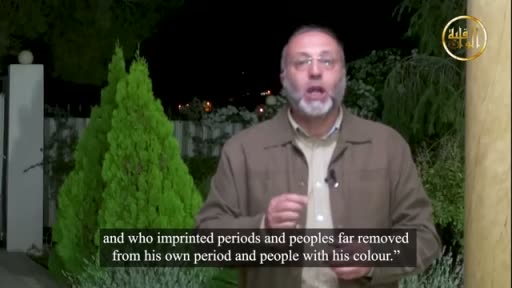
Hourani continues: What began as religious preaching quickly led to the establishment of a state. When the state collapsed, it left behind a literary culture, a legislative system and a system for society’s life. Most astonishing of all, this vast movement of peoples, ideas, laws and institutions appears, in the final analysis, to have sprung from one man who came from the farthest edge of the civilised world of his time and stamped his mark on ages and peoples far removed from his own age and people. He means Muhammad, the Messenger of Allah, may Allah bless him and grant him peace. How did this happen?
Forming One Ummah from Different Peoples
The Muslims conquered Iraq, which was inhabited by a mixture of Christians, Mazdakites and Zoroastrians, as well as Arabs and Persians. Persia was conquered; it was inhabited by non-Arabs, a small number of Jews and Romans, and it followed Zoroastrianism. Syria was conquered; it was a Byzantine province shaped by Roman culture and Christianity, inhabited by Syrians, Armenians, Jews and some Romans. North Africa was conquered; it was inhabited by Berbers and controlled by the Byzantine Romans. Christian Andalusia was conquered, as were Sindh, Khwarazm and Samarkand with their different religions and ethnicities. These many regions differed in nationalities, languages, religions, traditions, customs, laws and cultures, and consequently in mentality and disposition. Melding them together and forming from all of them one Ummah united by one religion, one language, one culture and laws of one kind was therefore difficult and arduous. Success in this was extraordinary. It never occurred through anything other than Islam and was achieved only by Islamic civilisation.
Once all these peoples came under the Islamic banner and entered Islam, they became one Ummah: the Islamic Ummah.
Hamilton Gibb’s Testimony
Hamilton Gibb, a renowned Orientalist, says that Islamic history moved in the opposite direction to European history in an astonishing way. Both arose on the ruins of the Roman Empire in the Mediterranean basin, but there was a fundamental difference between them. Europe emerged gradually and unconsciously after several centuries of chaos caused by the barbarian invasions. Islam, by contrast, sprang suddenly from Arabia and, with almost unbelievable speed, established in less than a century a new empire in Western Asia and along the southern and western shores of the Mediterranean. Gibb continues: After Islam had established a political system encompassing all the breakaway regions—including Persia, which had spent centuries in political conflict with Rome, supported by a rival religious creed—it faced another task: bringing these regions into a shared cultural and religious system founded on its comprehensive universal concept. To achieve this, it had to resist and weaken as far as possible the influence of the previous universal concept—Christianity, in Gibb’s words—in Western Asia and the southern half of the Mediterranean basin; destroy Zoroastrianism and the secondary religions in Persia and Mesopotamia; and erect a barrier against the spread of Buddhism in Central Asia. This concludes Gibb’s words, and that is indeed what Islam achieved.
Jacques Risler’s Testimony
Let us hear the continuation of this discussion. Jacques Risler says: Despite the diversity of the races and peoples that made up Islam in the Umayyad era—the seventh and eighth centuries CE—the Muslims had, of course, begun to acquire shared characteristics. They behaved in almost the same way despite the differences that might separate townspeople from Bedouins or the rich from the poor. This was because one firmly rooted creed elicited the same responses from different people. The spirit of the Qur’an regulated daily conduct, created a vibrant atmosphere and, by penetrating people’s thoughts, succeeded in unifying the form of their mentalities and temperaments. These are Jacques Risler’s words.
Spread Through Da’wah, Not the Sword
The immense spread of Islamic civilisation and the melding of peoples into it did not result from military conquest in itself, nor was it achieved by the sword. There is an enormous difference between purely military expansion, which aims to conquer lands and countries, and civilisational expansion, which aims to conquer hearts, minds and consciences. If the weapons of the former are the sword and spear, the latter can be achieved only through thought, dialogue, da’wah and reasoned argument.
Gustave Le Bon, author of The Civilisation of the Arabs, says that force was not a factor in the spread of the Qur’an, for the Arabs left the conquered peoples free in their religions. If some Christian peoples embraced Islam and adopted Arabic as their language, it was because they saw the justice of the conquering Arabs—meaning the Muslims—a justice unlike anything they had seen from their former masters, and because of Islam’s simplicity, which they had not known before. Le Bon adds: ‘The Qur’an, then, did not spread by the sword; it spread by da’wah alone. By da’wah alone, it was embraced by peoples who later conquered the Arabs, such as the Turks and Mongols.’ This concludes Le Bon’s words.
The Conquerors’ Justice and Respect for Peoples’ Creeds
The intermingling of the conquering Muslims with other people was one of the most influential factors in those people’s entry into Islam and their melding with the other Muslims. As Gustave Le Bon also says, from the earliest events they came into contact with the native inhabitants of neighbouring lands, whose conquerors had tyrannised them for many centuries and who were ready to welcome gladly any conqueror who eased life’s burden for them. The path the Khaleefahs had to follow was clear. They knew how to refrain from forcing anyone to leave their religion, how to avoid using the sword against those who did not embrace Islam, and how to declare everywhere that they respected peoples’ creeds, customs and habits. In return for protecting them, they were content to take a small jizyah, lower than the taxes they had paid to their former masters. Le Bon continues: the Arabs went to great lengths to remain within these conditions and abide by them. The Egyptians—the Copts, who had suffered greatly from the oppression of the Christian officials of the Caesars of Constantinople—therefore loved them and eagerly embraced the Arabs’ religion and language. Results such as these, Le Bon says, are not achieved by force. This concludes Le Bon’s words.
The Unity of the Islamic Society
Dear brothers, when the people of these lands entered Islam, they melded with the conquerors and became one Ummah. Jacques Risler expresses this truth as follows—and these are not al-Qasas’s words now; Jacques Risler says: ‘The person who embraced Islam spoke and wrote Arabic and appeared to be an Arab.’ Risler says that this was a momentous event in the history of Islamic civilisation. That unifying force also abolished political borders and, in a way, gave a uniform character to different lands spread across three continents, with no barrier separating them from that point onward. Everywhere—and I am still reading Jacques Risler’s words—everywhere, the Muslim found the same religion, the same prayers and the same laws. Thanks to these rites, he felt at home everywhere, whether while travelling beyond the borders or in his dealings with merchants from foreign lands. This concludes Risler’s words.
Economic and Social Justice
Let us now speak briefly about the economic sphere—the economic sphere. Islamic history recounts living conditions whose justice history has rarely witnessed; indeed, it has never witnessed such justice. By its nature, the Islamic economic system distributed wealth well, so that throughout most periods of its history Islamic society was almost free of real misery. This arose from Islam’s economic policy, which aims to guarantee the complete satisfaction of every individual’s basic needs and enable them to satisfy luxuries as far as they are able. Medical treatment, for example, was guaranteed free of charge to everyone.
Hospitals and the Treatment of Slaves
The British historian Will Durant, author of the book—indeed, the encyclopaedia—The Story of Civilisation, says that Islam led the entire world in preparing sound hospitals and supplying them with what they needed. For example, the bimaristan—that is, the hospital—which Nur al-Din, meaning Zengi, founded in Damascus in 1160 CE continued for three centuries to treat patients without charge and provide them with medicine free of cost. Historians say—and these are still Durant’s words—that its fires remained burning without going out for 267 years.
This justice did not even exclude the enslaved people who were owned within Islamic society. That is natural, since the Messenger, may Allah bless him and grant him peace, instructed people to treat the slave well. Therefore, as Will Durant himself testifies, the master generally treated his slave so well that the slave’s position was no worse than that of a worker in a nineteenth-century European factory. Indeed, Durant says, he may have been better off than that worker because his life was more secure. This concludes Durant’s words.
Economic Prosperity in Andalusia
The Islamic lands witnessed astonishing economic prosperity of which not one of the States existing at the time could even dream. As one example, it is enough to mention what Durant himself reported about the economy of Andalusia. He said that revenues in the days of Abd al-Rahman III reached—listen carefully to the figure—12,540,000 gold dinars. I repeat the figure: 12,540,000 gold dinars. Durant says it is most likely that this figure for Andalusia exceeded the combined revenues of the governments of the Latin Christian lands—meaning most of Europe. These revenues, Durant continues, came not so much from high taxes as from good governance, agricultural and industrial progress, and flourishing trade. This concludes Durant’s words on this point.
The Justice of Islamic Rule
His words clearly show that the Islamic State was not a colonial State and that the Islamic economy was not based on draining peoples’ lifeblood or plundering the resources and wealth of their lands. Rather, peoples who entered Islam’s fold enjoyed the justice of the Islamic economy even if they did not enter Islam. The Orientalist Stanley Lane-Poole says in his book The Moors in Spain: ‘Throughout its history, Andalusia never enjoyed rule as merciful and just as it did in the days of the Arab conquerors.’ Durant again mentions that Christians in Andalusia often preferred Muslim rule to Christian rule. He also says that regions which came under Ottoman rule, such as Rhodes and Greece, and which had been under the Byzantines or Venetians—even Hungary itself—considered their conditions under Suleiman, meaning the Ottoman Sultan Suleiman the Magnificent, better than they had been in the days of the Habsburgs, a ruling family in the Austro-Hungarian Empire that played a major role in Europe for hundreds of years.
Science and Material Civilisation in Islamic Civilisation
In the field of science, dear brothers—in the field of science—Islamic history recorded contributions and achievements in technology, discoveries in medicine, innovations in the arts and architecture, and other matters of material civilisation that made the Islamic lands a magnificent museum and a captivating sight for everyone arriving from East or West. Durant, author of The Story of Civilisation, says that in the tenth century the region between Bukhara and Samarkand in Central Asia—he is now speaking about that distant edge of the Islamic world—was considered one of the four earthly paradises. What were the other three? They too were in the Islamic world: southern Persia, southern Iraq and the region around Damascus in the Levant. Four earthly paradises in the lands of the Islamic world, Durant says. He continues: Western Asia under Muslim rule attained a level of industrial and commercial prosperity that Europe did not reach before the sixteenth century. This concludes Durant’s words.
Material Civilisation in the Service of Humanity
Material civilisation was harnessed—or material civilisation, dear brothers, was harnessed—in Islamic society to serve humanity. It was not harnessed to annihilate and humiliate peoples, as contemporary Western civilisation has done. According to the renowned German philosopher Sigrid Hunke in her book The Sun of the Arabs Shines on the West—a title referring to the Islamic world and Islamic civilisation—what the Islamic world did in this field played a saving role of great significance in world history. Western scholars themselves testify that the scientific and technological edifice, and the sciences of medicine, physics, chemistry, engineering and similar fields that the West has reached today, were largely founded on the theories and achievements realised by the Islamic world during its revival. Sigrid Hunke herself says: ‘The Muslims presented the most precious gift: the correct method of scientific research.’ This is the experimental method that the West claims to have invented and that, Hunke continues, paved the West’s way to discovering the secrets of nature and mastering it today. These are the words of Hunke, the German philosopher.
Returning to the British historian Will Durant, he says that when Roger Bacon introduced this method to Europe five hundred years after Jabir had announced it, the light that guided and illuminated his path came from the Arabs of Andalusia. That light itself was only a spark from the light of the Muslims in the East. These are Durant’s words.
What Europe Lost When the Conquests Did Not Reach It
Dear brothers, the nations that the Islamic conquests did not reach—the Islamic conquests did not reach—have every right to lament their fate. Those conquests saved peoples who were on the verge of entering the world of the Middle Ages, whose horrors, darkness and decline Europe endured for more than a thousand years. Gustave Le Bon says—and these are Gustave Le Bon’s words:
It is stated with certainty that, after the conquest of Spain, the Umayyad commander Musa ibn Nusayr considered returning to Syria—not by going backwards. He considered returning to Syria through the lands of Gaul, or Gallia—that is, the French and Germany—seizing Constantinople and subjecting the ancient world to the rulings of the Qur’an. Nothing prevented him from undertaking that great work except the Khaleefah’s order that he return to Damascus. Le Bon continues: Had Musa ibn Nusayr succeeded—had Musa ibn Nusayr succeeded in doing so—he would have made Europe Muslim, achieved religious unity for the civilised nations and probably saved Europe from the era of the Middle Ages, which Spain did not experience thanks to the Arabs.
These are Le Bon’s words. He continues elsewhere: ‘Let us assume, for argument’s sake, that the Christians had been unable to repel the Arabs, and that the Arabs had found the climate of northern France no colder or rainier than Spain’s, so they had been content to settle there permanently. What would have happened to Europe?’ He answers—the answer is Le Bon’s: ‘Christian Europe, then still barbarous, would have experienced the same flourishing civilisation that Spain experienced under the banner of the Arab Prophet. A Europe thus refined would not have witnessed the atrocities that occurred there, such as the wars of religion, the St Bartholomew’s Day massacre, the injustices of the Inquisition, and all the events unknown to the Muslims that drenched Europe in blood for several centuries.’
Summary of Testimonies
These are testimonies by Western historians, philosophers and thinkers about the impact Islamic intellectual leadership had on history, how much it gave humanity, and how much it contributed in various fields: material civilisation, science, technology and similar areas. How, after that, can anyone say that Islamic intellectual leadership had no impact on history? Only someone who hates Islamic civilisation—indeed, Islam itself—would say that. I say these words and ask Allah, Glorified and Exalted, to grant you and me acceptance and success. I invoke blessings and peace upon the Messenger of Allah, his family, his Companions and those loyal to him. Peace be upon you and Allah’s mercy.
Questions and Discussions
Peace be upon you and Allah’s mercy. Welcome back. We will answer a few questions received during the episode.
The West’s Awareness of the Success of Islamic Intellectual Leadership
Sister Aisha Zaatari asks: ‘Peace be upon you and Allah’s mercy and blessings.’ And peace be upon you and Allah’s mercy and blessings. She asks: ‘Does the West, through its politicians and thinkers, still understand the success of Islamic intellectual leadership and therefore harbour and display this great hostility towards Islam?’ Most certainly.
The hostility towards Islam in the West is simply the hostility of people who know Islam properly. They know Islamic history and have read it properly. They know the nature of the Islamic mentality that was able to change the face of history for hundreds of years. They realise that if the Islamic Ummah were to return today, stand on its feet again, revive its Islamic life and civilisation, reunite the Islamic Ummah in one State and carry Islam as a message to the world, their civilisation would collapse before it. They know this perfectly well. By collapse, I do not mean only the material and economic aspect. I mean that Western peoples’ confidence in their culture, civilisation and way of life would collapse, because they already question the value or meaning of the life they live. As soon as they see this way of life standing before them, they will be astonished by it and begin to join it. Western civilisation will collapse from within when the form of Islamic civilisation appears and is manifested as a reality on the ground. The West knows this perfectly well.
That is why they began a process—or a project. They began a vast effort to demonise Islam and distort its image, so as to erect a barrier and prevent those peoples from approaching Islam. They demonised Islam’s image so that Westerners would not think of approaching or embracing Islam. What, then, if a State were established for Islam and its civilisation stood as a witness in reality? Yes, they know this perfectly well. Whoever reads the books of the Orientalists—some of whom are classified among the strategic planners of Western policies—will see this. Foremost among them was Bernard Lewis, who died a few months ago. He was regarded as the elder of the neo-conservatives in the United States. He was British by origin and American by upbringing. Like many other Orientalists, he studied Islam meticulously, read Islamic history meticulously, knew what Islam is and what Islamic civilisation is, and described it far more precisely than writers from among the Muslims themselves. They know Islam properly, and that is why they are utterly hostile to it.
The Responsibility to Work for the Establishment of the Khilafah
Badr al-Duja asks—or perhaps she asks; I do not know: ‘Peace be upon you and Allah’s mercy and blessings.’ And peace be upon you and Allah’s mercy and blessings. The question is: Are today’s peoples blamed for neglecting the work to restore the Khilafah, just as those in whose time it fell are blamed, even though they were closer to its glorious reality?
Everyone who falls short in establishing Islam and implementing Islam’s rulings is sinful. It is well known that Islam’s rulings cannot be implemented in full and that the Islamic way of life cannot exist without a State that implements Islam. Therefore, from the fall of the Islamic State until today, those who fall short in working to establish the Khilafah are sinful—sinful—because the command to establish Islam is addressed to the Muslims. It is therefore the responsibility of all Muslims. Someone might say—and we responded to this in the previous episode—that establishing the Islamic State is a collective obligation (fard kifayah) and therefore not something every Muslim is required to perform. We say: yes, it is a collective obligation, but if the required sufficiency is not achieved, everyone who turns away from completing it is sinful. As long as the Islamic State has not been established, the sufficiency has not been achieved. Consequently, Muslims who do not work for it are sinful, because they see that it has been delayed and has not been established. Every Muslim today who does not work to establish the Islamic State, through which Islam is implemented and Islam is carried as a message to the world, is unquestionably sinful.
Conclusion
These are the questions we received during this episode, dear brothers. I ask Allah, Glorified and Exalted, to accept from me, to accept from you that you followed it, and to place abundant good in it. O Allah, teach us what benefits us, benefit us through what You have taught us, increase us in knowledge, and make our knowledge and deeds sincere for Your Noble Countenance. In the name of Allah, the Most Gracious, the Most Merciful.
﴿ وَٱلْعَصْرِ إِنَّ ٱلْإِنسَـٰنَ لَفِى خُسْرٍ إِلَّا ٱلَّذِينَ ءَامَنُوا۟ وَعَمِلُوا۟ ٱلصَّـٰلِحَـٰتِ وَتَوَاصَوْا۟ بِٱلْحَقِّ وَتَوَاصَوْا۟ بِٱلصَّبْرِ ﴾
‘By time! Indeed, mankind is in loss, except those who have believed, done righteous deeds, urged one another to the truth and urged one another to patience.’ [103:1–3]
Peace be upon you and Allah’s mercy and blessings.